If you’re trying to reduce plastic in your kitchen, a soap cage probably looks like the perfect zero waste solution. It promises simple, old-fashioned dishwashing with nothing more than a bar of soap and hot water. No plastic bottles.
No synthetic liquid detergents. Just a basic bar soap swished through the sink.
It sounds ideal.
I bought one months ago to test whether a soap cage could realistically replace regular dishwashing liquid in a modern kitchen. I wanted something affordable, low-waste, and simple — ideally using a basic bar soap from the supermarket. At just a few dollars for an eight-pack, it seemed like a frugal and sustainable win.
But after weeks of using it, I ran into something I wasn’t expecting: soap scum build-up on my dishes.
That’s when I realised the real issue isn’t necessarily the soap cage itself — it’s the type of soap you use in it.
In this honest soap cage review for zero waste dishwashing, I’ll walk you through how it works, what I liked, what frustrated me, why bar soap can leave residue, and the best soap to use if you want clean, scum-free dishes. I’ll also cover what to avoid — because not all “natural” bar soaps perform the same way in your sink.
If you’re considering switching to a dishwashing bar or trying to make your kitchen more zero waste, here’s what you should know before you do.
💡 This post may contain affiliate links (including eBay and Amazon Associates). If you buy through them, I may earn a small commission at no extra cost to you. I only recommend things I trust.
Watch: Do You Need a Soap Cage for Dishes?
Want to see how the soap cage works?
Come along with me in the video below as I test it out. 👇
What Is a Soap Cage (And Why People Use It)?
A soap cage is a small metal or mesh holder designed to contain a bar of soap while you swish it through running water. It’s an old-fashioned tool that was traditionally used for hand washing laundry and dishes.
The concept is simple:
- Place a bar of soap inside.
- Run hot water.
- Swish the cage around to create soapy water.
- Wash dishes as normal.
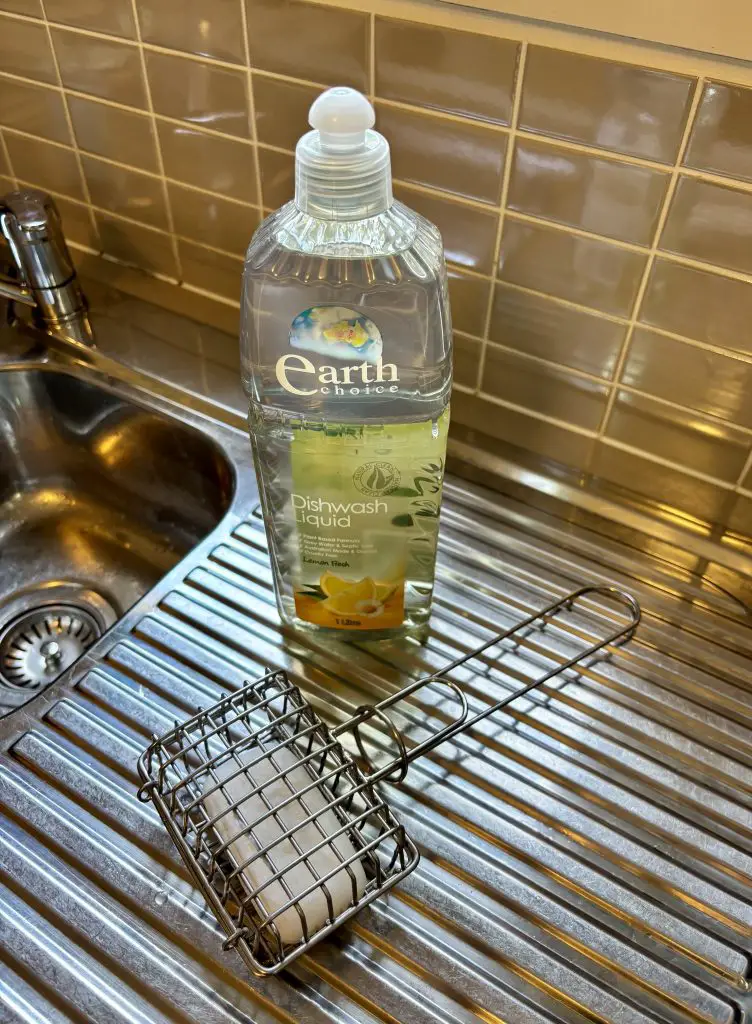
For anyone trying to reduce plastic, it’s appealing because it replaces bottled dishwashing liquid with bar soap, which can be bought in cardboard packaging or even package-free. Hence, it has made a comeback in the zero waste world.
A soap cage + bar soap is:
- Plastic-free
- Low waste
- Simple
- Frugal
At least in theory.

My Honest Soap Cage Test
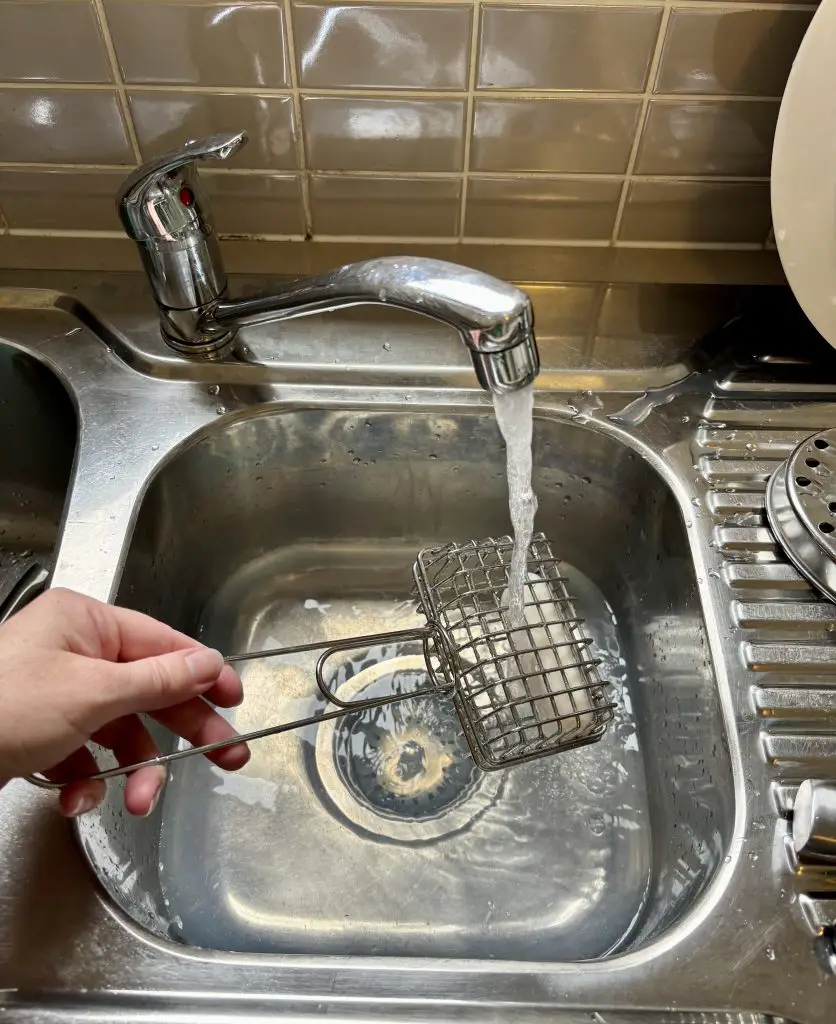
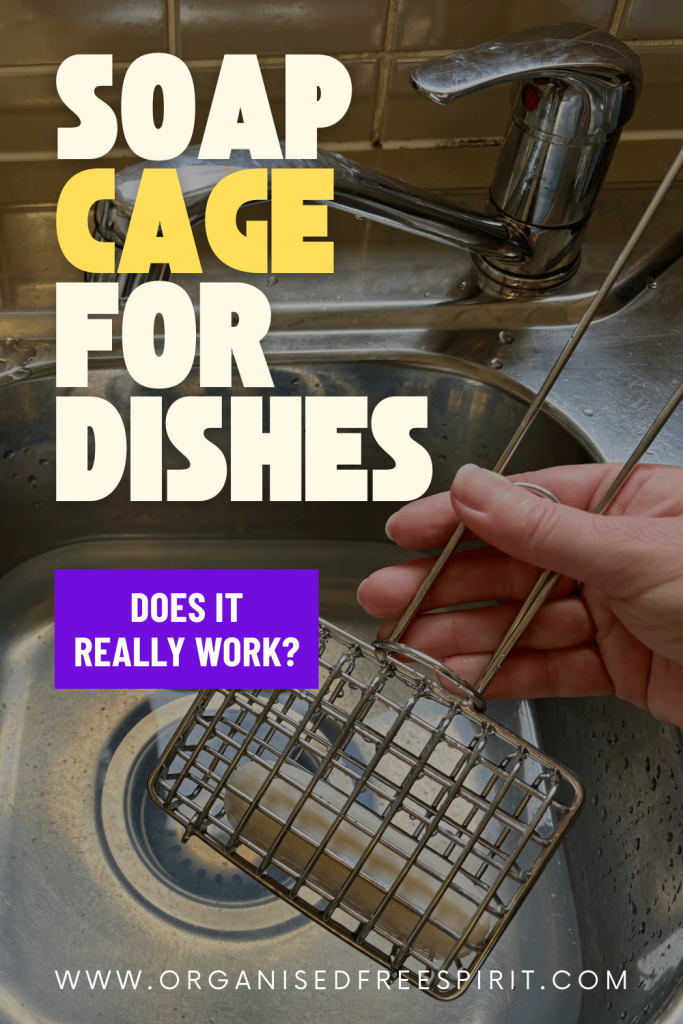
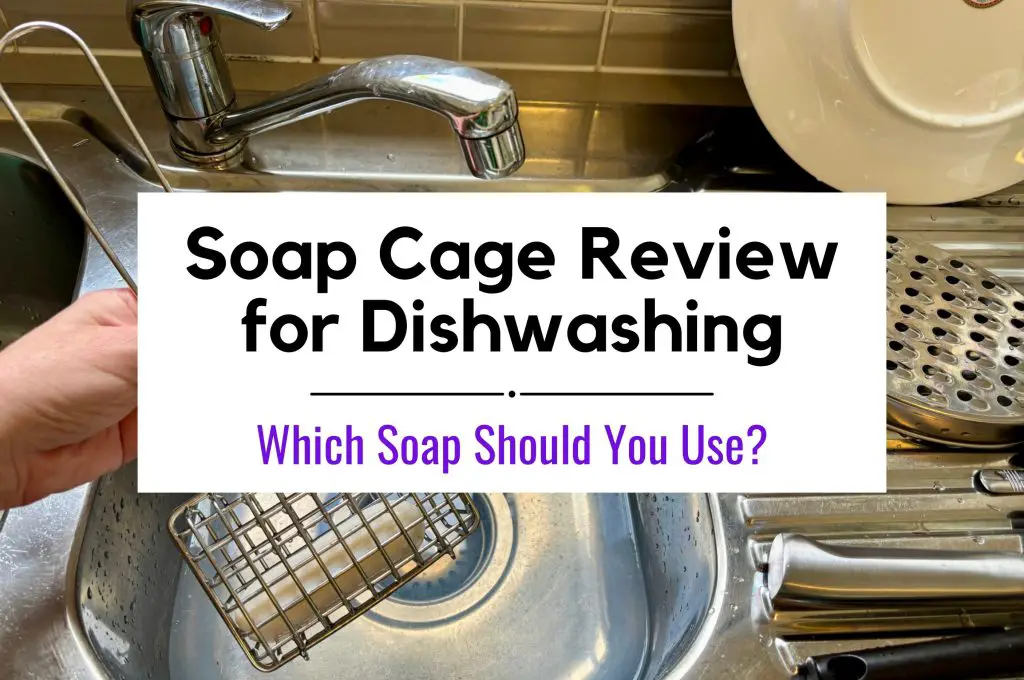
In all my excitement about ditching dishwashing detergents and plastic bottles, I bought myself a stainless steel soap cage online.
| Where to Buy |
|---|
| ➤ Soap Cage on eBay → ➤ Soap Shaker at Adventure Awaits → |
I used a basic Woolworths brand pure bar soap (very affordable — $4.20 for an 8-pack), since that’s what I already had in the cupboard. Ingredient-wise, it was mostly traditional saponified oils with added fragrance.
Here’s what I found.
✔ What I Liked
1. It’s incredibly simple.
There’s no measuring, no squeezing bottles. Just hot water and soap.
2. It’s frugal.
Pure bar soap is cheap. Especially compared to boutique zero waste dish bars.
3. It’s good for soap ends.
This is honestly where the cage shines. All those little leftover slivers? Toss them in and use them up.
4. It reduces plastic packaging.
If you choose cardboard-wrapped bars, you can eliminate dishwashing plastic entirely.
So far, so good.
But then came the issue.
❌ What I Didn’t Like
After a few weeks, I noticed soap scum subtly starting to build up on my dishes.
Soap scum was particularly evident on:
- Glassware
- Cutlery
- Dark plates
So, I started rinsing the dishes under water in the second sink after washing them. Wiping them thoroughly with a tea towel also helped. But these two things alone weren’t stopping the residue from still slowly accumulating over time.
I knew that I’d eventually have to soak the items in white vinegar to remove the buildup.
This is exactly the reason I stopped using the dishwasher, because I was sick of having to do regular vinegar baths to remove the white dishwashing powder residue.
That’s when I realised the real issue wasn’t the soap cage.
It was the soap I was using.
Why Soap Scum Happens (And Why It’s Not Your Fault)
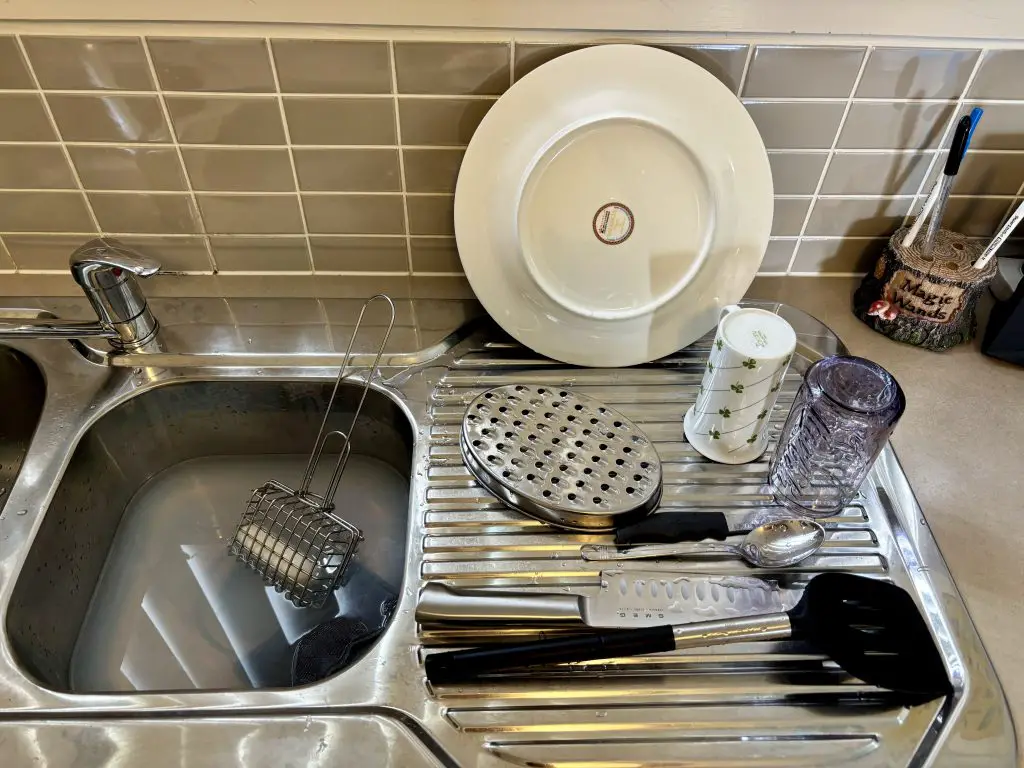
Traditional bar soap is made by saponifying oils (like coconut or palm oil) with sodium hydroxide. That’s what creates “real” soap.
The problem is what happens in hard water.
Hard water contains minerals like:
- Calcium
- Magnesium
When real soap reacts with these minerals, it forms an insoluble residue — what we call soap scum.
That white film on dishes? It’s a chemical reaction.
🧼 It’s not because you didn’t rinse properly.
🧼 It’s not because the soap is “bad quality.”
It’s just chemistry.
The harder your water, the worse the buildup will be.
So if you live in a hard water area, using a traditional body bar soap for dishes will almost always lead to some residue over time.
The Best Soap to Use in a Soap Cage
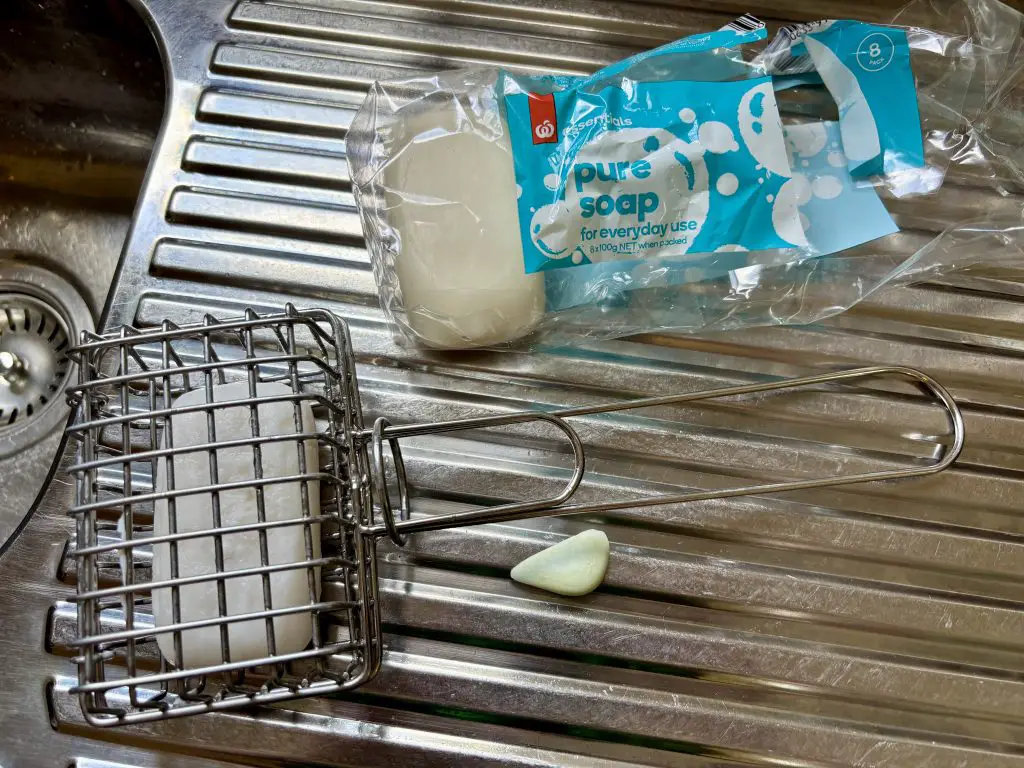
This is the part that matters most. If you want to make a soap cage work well, you need the right type of soap.
❌ What to Avoid
If you’re washing dishes with bar soap, avoid:
- Basic body soap bars made only from saponified oils
- Heavily fragranced bars
- Moisturising bars (they often leave more residue)
- Bars without any water-softening ingredients
While these are perfectly fine for skin, they’re not designed to cut grease or rinse clean on dishes.
In hard water, they will almost always leave buildup.
✖️ Saponified Ingredients to AVOID (Traditional Soap – may leave residue in hard water):
- Sodium cocoate → from coconut oil
- Sodium palmate → from palm oil
- Sodium palm kernelate → from palm kernel oil
- Sodium olivate → from olive oil
- Sodium tallowate → from animal fat
✅ What Works Better
If you want cleaner, scum-free dishes, look for the following things.
1. Dish-Specific Bars
Some bars are formulated specifically for dishwashing, not bathing.
2. Surfactant-Based Bars
These may include ingredients like:
- Sodium coco sulfate (SCS)
- Sodium lauryl sulfate (SLS)
- Sodium laureth sulfate (SLES)
While these sound “synthetic,” they are often derived from coconut and are much better at cutting grease and rinsing clean.
3. Bars With Chelators
Ingredients like:
- Sodium citrate
- Pentasodium pentetate
- Tetrasodium etidronate
These bind to minerals in hard water, reducing soap scum formation.
This type of formulation behaves more like dishwashing liquid — but in solid form.
They typically:
- Cut grease better
- Rinse cleaner
- Leave less residue
- Reduce the need for vinegar soaks
The downside? They’re usually more expensive than supermarket body soap.
✅ Not Saponified Ingredients to LOOK FOR (Detergent Bars – rinse cleaner, cut grease better):
- Decyl glucoside
- Sodium lauryl sulfate (SLS)
- Sodium laureth sulfate (SLES)
- Sodium coco sulfate (SCS)
- Cocamidopropyl betaine
Bar Soap Examples
Below are five examples of bar soaps available in Australia, both in supermarkets and online. I’ve included whether or not they’re useful for dishwashing and the costs associated with buying them.
| Bar Soap Name | Contains | Good for Dishwashing? | Price (per 100g) |
|---|---|---|---|
| Woolworths Pure Soap ($4.20 – 800g) | Sodium Palmate / Sodium Palm Kernelate or Sodium Tallowate / Sodium Cocoate, Glycerine, Fragrance | ❌ No | $0.53 – Local supermarket |
| Sunlight Pure Soap ($4.80 – 500g) | Sodium Palmate / Sodium Palm Kernelate or Sodium Tallowate / Sodium Cocoate, Glycerin, Fragrance, Etidronic Acid | ❌ No | $0.96 – Local supermarket |
| The Dishwash Block (Biome) ($28 – 280g) | Plant oils & extracts, citric acid, Tassie sea salt, essential oils | ✅ Yes | $10.00 + Shipping |
| Lemon Dish Bar Soap (Ecostore) ($6 – 125g) | Sodium Coco Sulphate, Sodium Palm Kernelate, Sodium Palmate, Glycerin, Caprylyl/Capryl Glucoside | ✅ Yes | $4.80 + Shipping |
| Dish & Laundry Bar Soap (Green Bee Reusable – Etsy) ($9.95 – 100g) | Sodium Laureth Sulfate, Sodium Lauryl Sulfate, Sodium Stearate, Lemon Myrtle Oil | ✅ Yes | $9.95 + Shipping |
Is a Soap Cage Even Necessary?
This is where I get very honest. You don’t technically need a soap cage.
You could:
- Hold the bar in your hand
- Swish it directly in the water
- Rub it onto a dish brush
The cage is helpful for:
- Using up soap ends
- Keeping your hands from holding a slippery bar
- Containing small pieces
- Standing the cage up to allow the soap to dry – although a soap dish will work just as well
But is a soap cage essential? In my opinion, no.
It’s useful — but not necessary.
And at around $25–$35, it’s something to consider carefully if you’re trying to be frugal or keep your kitchen space more minimalist.
Is It Actually Frugal?
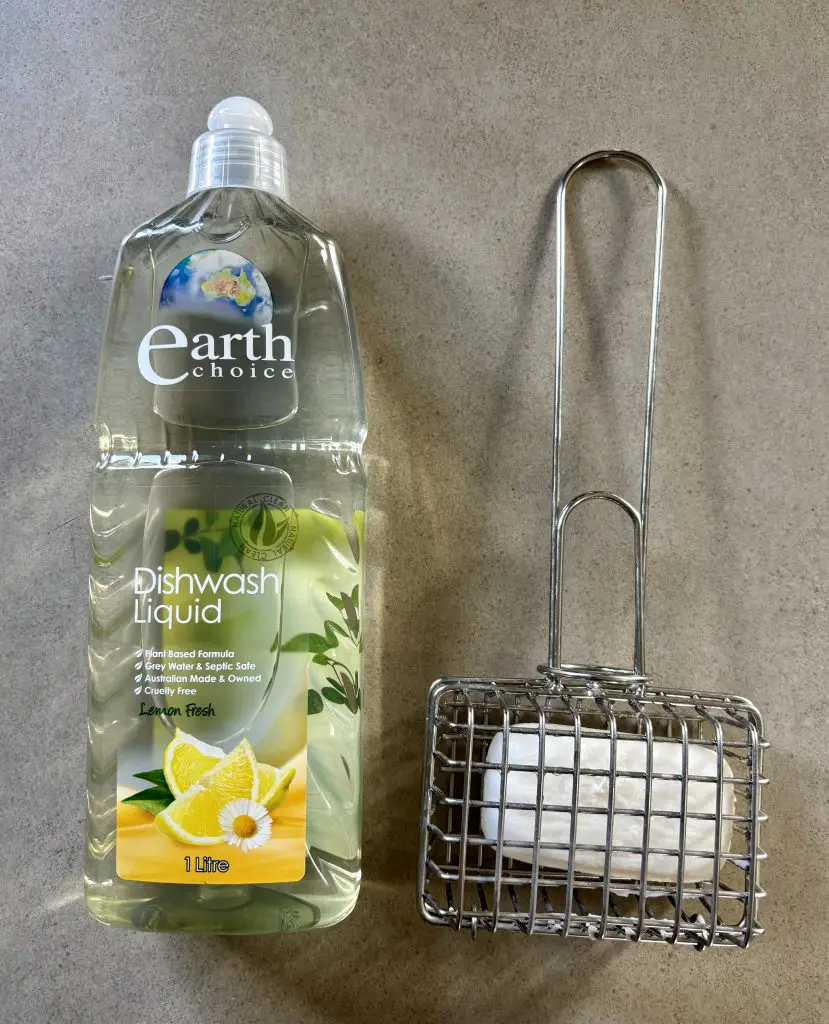
Let’s look at the soap cage with bar soap practically.
Supermarket bar soap:
Very cheap. But may cause buildup → more rinsing → occasional vinegar soaks.
Specialty dish bar:
More expensive upfront. Better performance. Less residue.
Liquid dishwashing soap:
Convenient. No scum issues. But comes in plastic.
The hidden costs of basic bar soap include:
- Extra water from rinsing
- White vinegar for removing buildup
- Time spent dealing with residue
So while a cheap bar seems like the most frugal option, it may not always be the most efficient and will cost you more in time.
Who a Soap Cage Is Best For
A soap cage may work well if:
- You have soft water
- You want to eliminate plastic bottles
- You already use bar soap around the house
- You want a way to use up soap scraps
- You enjoy simple, traditional systems
In soft water areas, traditional soap performs much better.
Who Should Probably Skip It
You might want to reconsider if:
- You live in a hard water area
- You’re sensitive to residue
- You don’t want to rinse twice
- You value speed and convenience
In these cases, a well-formulated dish bar or even finishing your existing liquid soap first may make more sense.
Final Verdict
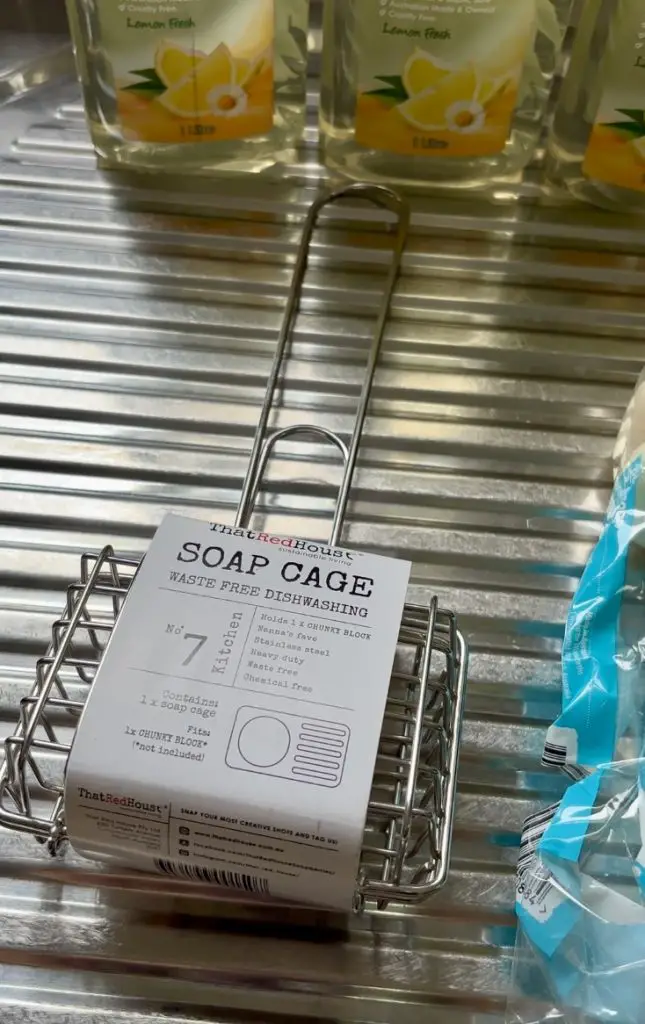
🧼 Is a soap cage a legitimate zero waste dishwashing solution?
Yes.
🧼 Is it necessary?
No.
The real determining factor isn’t the cage — it’s the soap you put inside it.
If you use a basic body soap in hard water, you’ll likely deal with soap scum. If you use a properly formulated dishwashing bar with mineral-binding ingredients, you’ll have a much better experience.
For now, I’m finishing the liquid dish soap I already have (because using what you own is always the most sustainable option). In the future, I will experiment with a better-formulated dish bar inside the cage.
| 🌿 READ NEXT: Trialling Filthy Clean’s Dishwasher Sheets → |
But if you’re considering switching, focus less on the gadget and more on the ingredients.
That’s what truly determines whether your zero waste dishwashing setup works… or leaves you scrubbing off white residue weeks later.
More on Zero Waste
Pin It