Disposable period products have only been around for a tiny fraction of human history, yet they now make up a huge amount of household waste.
Thankfully, there are plenty of modern zero waste period options that are reusable, affordable, and far better for both your body and the environment.
In this guide, you’ll learn about five sustainable menstrual product alternatives, how they work, and how to choose the best zero waste option for your lifestyle — whether you’re just starting out or ready to ditch disposables completely.
Options for Zero Wast Periods:
- Menstrual Cups
- Cloth Pads & Liners
- Period Underwear
- Cloth Tampons
- Organic Cotton Tampons (low-waste, not fully zero waste)
The benefits of transitioning to zero waste periods are many.
Not only will you be reducing the amount of waste that you’re personally producing, but you will be keeping toxic chemicals out of and away from your body. Yep, you read that right. There are chemicals involved in the production of menstrual items that can cause various cancers and also increase cramping. No thanks!
A zero waste period will allow you to be much more self-sufficient. No longer will you have to rely on having a stash of supplies from the supermarket on hand or stress when it’s Saturday night, your period arrives, and you realise you’re all out of pads!
As a modern society, we have become way too reliant on the supply chain meeting our every need and have forgotten how to be self-reliant with what we’ve got on hand.
Benefits of Zero Waste Periods:
- Cheaper long-term – no ongoing monthly costs for disposables
- More sustainable – drastically reduces landfill waste
- Health-conscious – avoids unnecessary chemicals and synthetic materials
- Self-sufficient – no last-minute supermarket runs when your period arrives
💡 This post may contain affiliate links (including eBay and Amazon Associates). If you buy through them, I may earn a small commission at no extra cost to you. I only recommend things I trust.
Options for Zero Waste Periods
Menstrual Cups
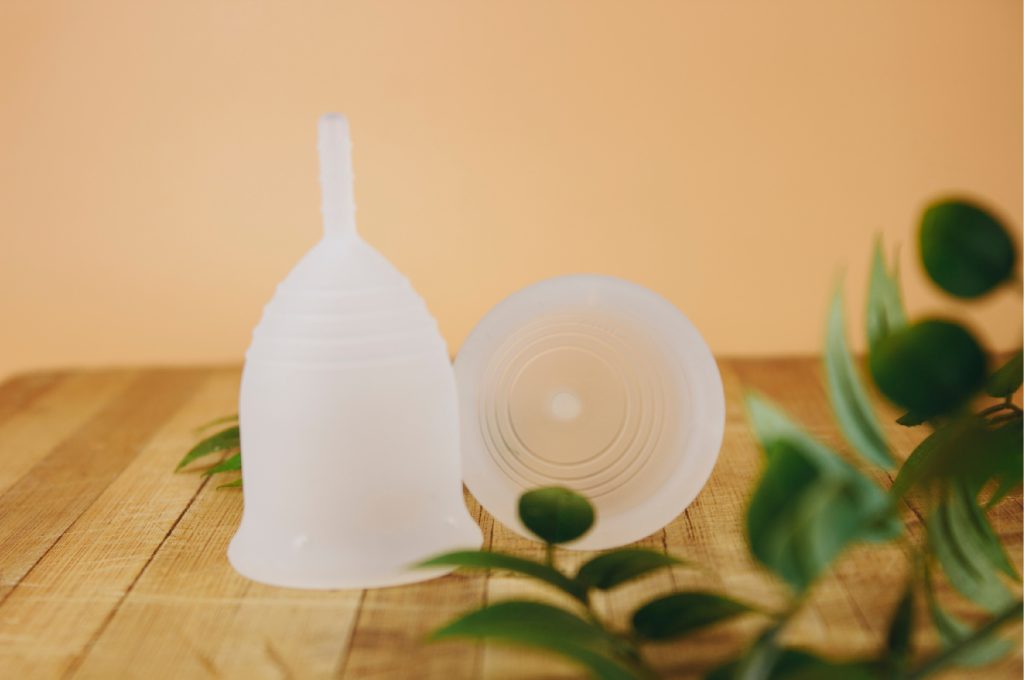
Menstrual cups are a soft, silicone piece that is inserted into the vagina to catch the blood. Once inserted, the rim of the cup will suction to the vagina wall and can safely stay in place for up to 12 hours!
The cup can take some getting used to when it comes to insertion, and admittedly, they’re not for everyone. A bit of organic coconut oil is helpful as a lubricant while you’re trying to figure it out.
To remove the cup, use the stem to pull it down and press on one side of the cup to release the suction.
You can empty the cup into the toilet and rinse it at the sink, then reinsert it if need be. You can also remove and rinse while you’re in the shower.
If you find yourself needing to empty your menstrual cup in a public toilet, just use a bit of toilet paper to give it a quick clean, then reinsert it until you get home.
| MENSTRUAL CUPS | |
|---|---|
| Made From | Medical grade silicone, latex or rubber |
| How Often to Change | Good for up to 12 hours |
| How to Clean | 1. Empty blood into toilet or down the sink 2. Rinse under cold water 3. Sterilise clean menstrual cup in a pot of boiling water on the stove before next period |
| Where to Buy | • Menstrual Cups (eBay) → • Menstrual Cups (Amazon) → |
Cloth Pads & Liners
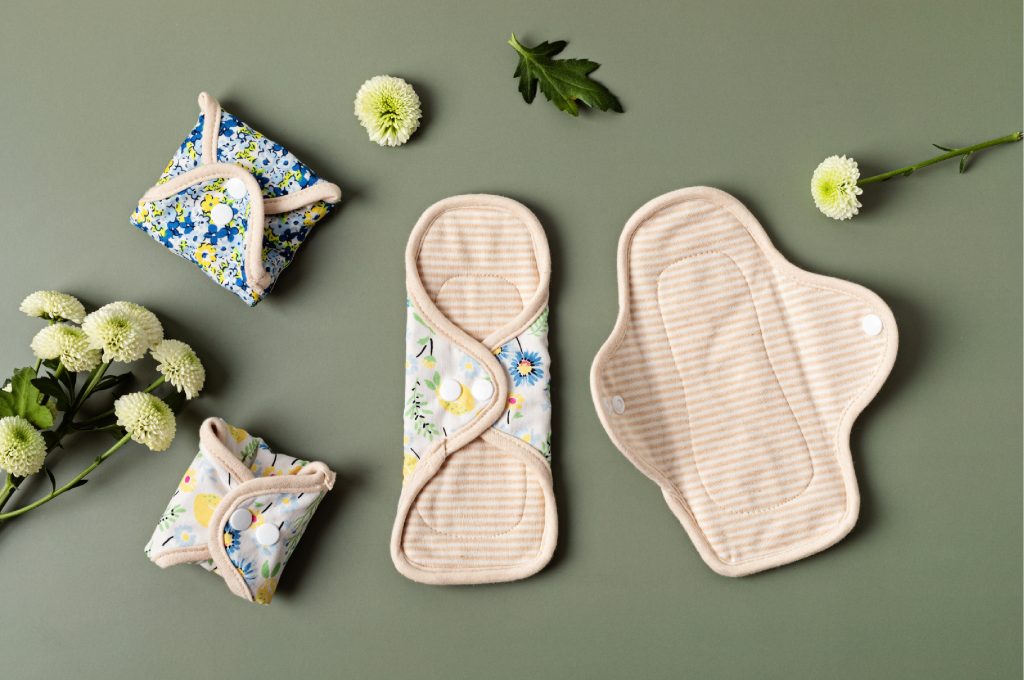
Reusable cloth pads and liners are fantastic!
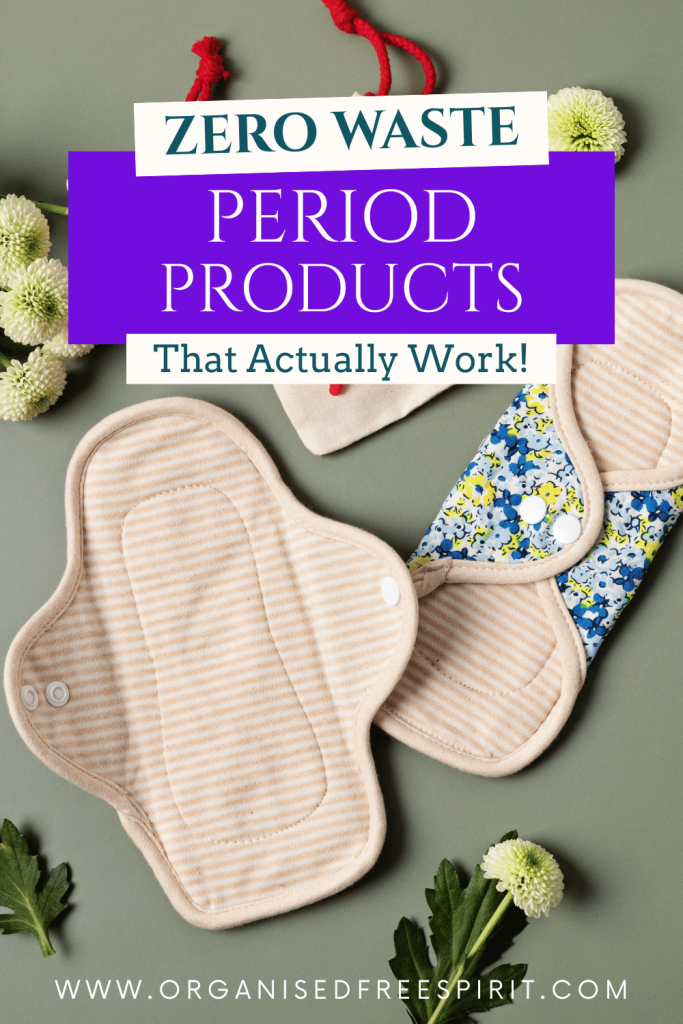
The pads are generally made from natural fibres, such as cotton, hemp and bamboo. They fasten to your underwear with a snap clip, instead of the adhesive backing you’d find in the disposable variety. You just use them as you would a normal pad or liner.
I’ve found that making sure you’re wearing a nice, firm pair of underwear helps to keep the pad snug and in place during the day.
I used to use them overnight when I had my period and was going to bed (these days I prefer period undies – more on them next).
Once you’re finished using the cloth pad, you can either throw it into a bucket of water to soak or just rinse it under a cold tap. Hang to dry or leave soaking in the bucket until you next put a load of washing on. Throw used cloth pads into a lingerie bag, then put them through a cold wash with the rest of your laundry. Hang to dry.
There are many different size and style cloth pads on the market to suit all sizes and flows.
| CLOTH PADS & LINERS | |
|---|---|
| Made From | Natural fibres (cotton, hemp, bamboo) |
| How Often to Change | Every 4–6 hours (depending on flow) |
| How to Clean | 1. Soak in bucket of cold water or rinse under cold water 2. Hang to dry until you’re ready to wash 3. Throw into a lingerie bag and wash on cold with regular laundry |
| Where to Buy | • Cloth Pads (eBay) → • Cloth Pads (Amazon) → |

Period Underwear

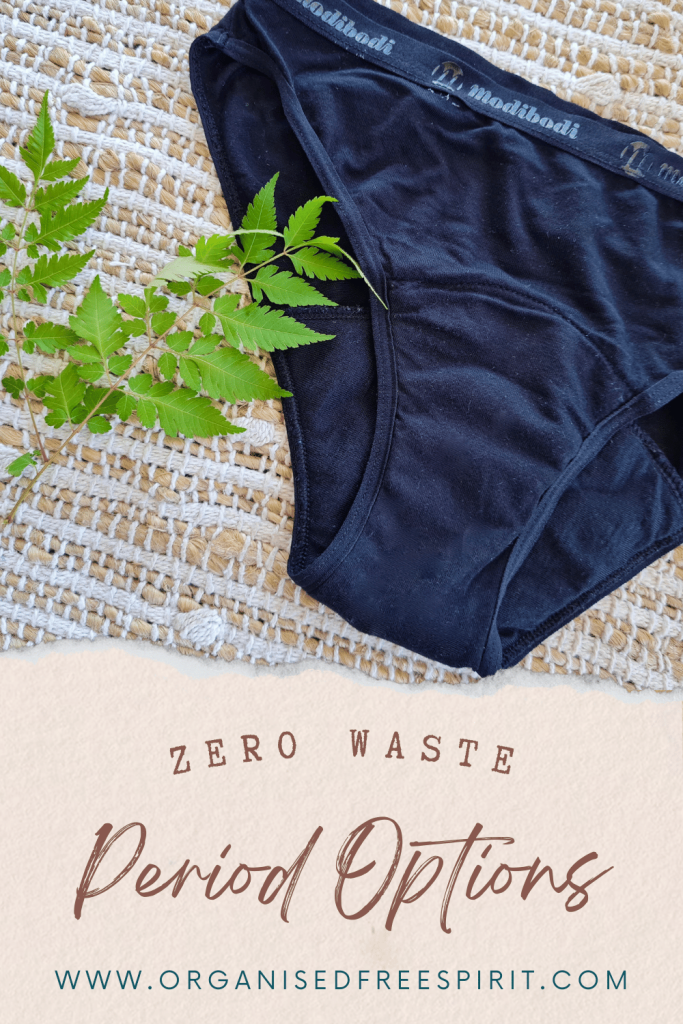
Period Underwear are literally undies that have an in-built absorber (kinda like a pad). They’re actually really comfy and feel much less bulky than wearing a pad with normal undies. Plus, you don’t have to worry about leakages.
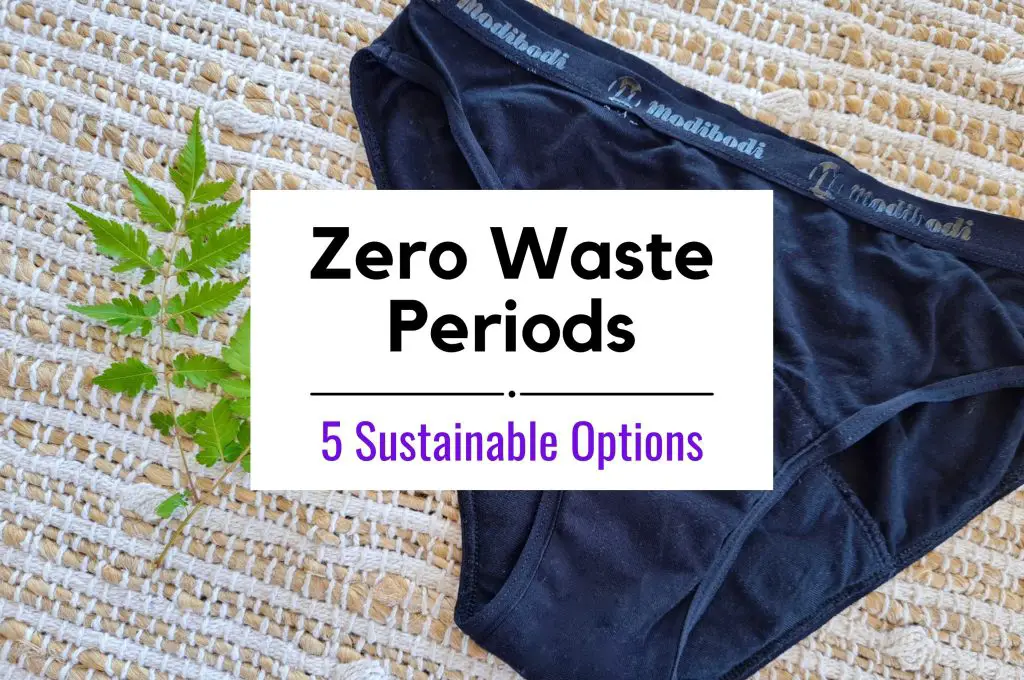
Modibodi are an Australian brand, which I’ve been using myself for a few years. I still have my original pair of period undies and love them.
Period Underwear are great for:
- Day or night time use
- Period, pee, perspiration and pregnancy
- Multiple styles, sizes and absorbencies
My teenage daughter also uses period underwear and has had no trouble with them. These panties make the transition into womanhood so much easier for young girls, rather than having to deal with disposable pads in public toilets.
| PERIOD UNDERWEAR | |
|---|---|
| Made From | Can be a mix of bamboo, cotton, merino wool or synthetic fibres |
| How Often to Change | Every 4–6 hours (depending on flow) |
| How to Clean | 1. Rinse under cold water 2. Hang to dry until you’re ready to wash 3. Throw into a lingerie bag, wash on cold with regular laundry |
| Where to Buy | • Period Underwear (eBay) → • Period Underwear (Amazon) → |
Cloth Tampons
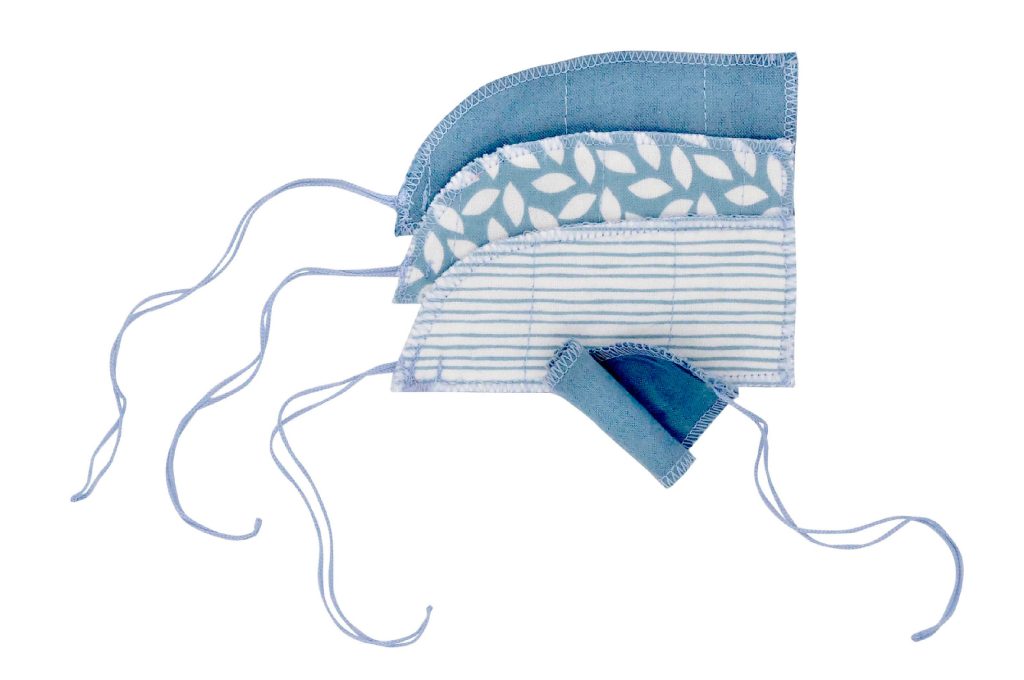
A cloth tampon is basically a piece of fabric with a string attached to one end. You roll it up to resemble a normal tampon, then insert it as usual. They also come in the crochet variety (mostly sold by handmade businesses on Etsy).
To remove the cloth tampon, use the string to pull it out.
When washing the tampon, rinse it under cold water until the water runs fairly clear, then lay it out to dry. When you’re ready to do a load of washing, put all of your little cloth tampons into a lingerie bag and wash them in cold water as normal. Hang to dry.
Once your period is finished for the month and all of your cloth tampons have been washed, they’ll need to be sterilised ready for next month. To do this, you throw them into a pot of boiling water for 10 minutes, then hang them to dry.
I haven’t personally tried cloth tampons as yet, so if you’re looking for an honest review, here’s the rundown from a lady who used a crochet tampon for the first time.
Things to note with cloth tampons:
- May not last as many hours a a regular tampon for those with a heavy flow.
- Can be tricky to insert due to them absorbing moisture as they go in.
- Need to rinse after use (not always convenient when out and about).
- Need to boil clean cloth tampons in a pot for 10 minutes to sterilise.
| CLOTH TAMPONS | |
|---|---|
| Made From | 100% organic cotton & should be Oeko-Tex certified (guaranteed free from chemicals) |
| How Often to Change | Every 2–6 hours (depending on flow) |
| How to Clean | 1. Rinse under cold water 2. Lay to dry until you’re ready to wash 3. Throw into a lingerie bag and wash on cold with regular laundry 4. Hang to dry 5. Sterilise in pot of boiling water for 10 mins |
Organic Cotton Tampons
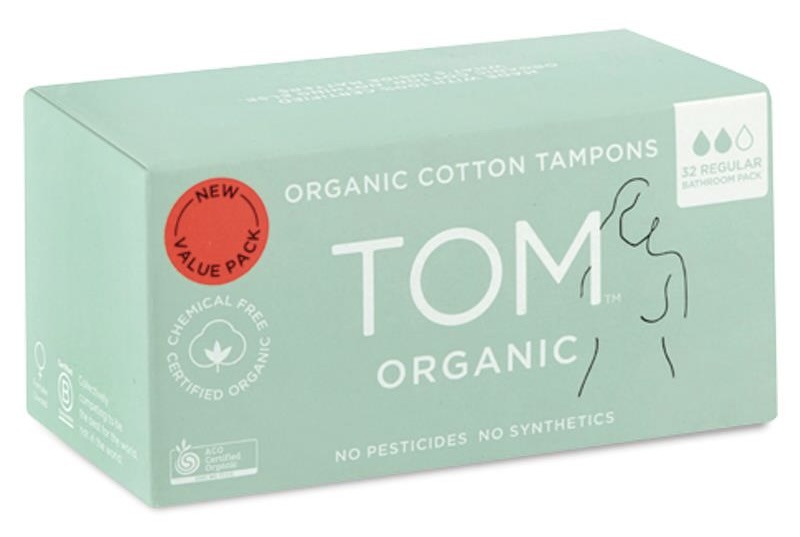
If you’re really not keen on making the move from regular tampons, that’s totally okay. Simply making the switch from regular tampons to organic cotton tampons will still make an impact.
Organic cotton tampons are free from bleaches, chlorine, coatings, pesticides and perfumes. With cervical cancer on the rise, we certainly don’t need any of those nasties inserted alongside our most sensitive bits!
How long does it take a tampon to break down?
- Organic Cotton Tampon: 6 months – 5 years
- Regular Tampon: 500 – 1000 years
If you have a compost system at home, you can break up or cut up your organic tampons and add them to the compost. Even if your tampons end up in a landfill, they’ve got a better chance of breaking down than a non-organic tampon.
Tom Organic is a great organic tampon brand, which is available in supermarkets – easy to pick up while shopping.
| ORGANIC COTTON TAMPONS | |
|---|---|
| Made From | 100% organic cotton |
| How Often to Change | Every 4–6 hours (never exceed 8 hours) |
| Where to Buy | • Organic Tampons (eBay) → • Organic Tampons (Amazon) → |
Donate Your Unused Period Products
It’s hard to imagine, but ‘period poverty’ is a real thing in Australia. Thousands of women and young girls across the country just do not have the money or access to the necessary products required for their monthly cycle.
Share the Dignity is an Australian women’s charity helping to provide period supplies for women experiencing homelessness, fleeing domestic violence or doing it tough.
Here’s how you can help Share the Dignity:
- Donate your leftover (unused) period products to their twice-yearly collection drives
- Donate extra (unused) items – pads, tampons, period underwear, menstrual cups
- Sponsor a bag of items that will go to someone in need
- Make a financial donation
- Register your workplace or business as a donation collection point
Find all of the information you need over at Share the Dignity.
If don’t live in Australia, google “period donations” and see if you can find a local charity to donate your unused period products to.
How Women Managed Periods Before Disposable Products
Women have been menstruating forever, yet disposable period products are a very recent invention. For most of history, periods were managed using reusable materials — though the topic itself was rarely discussed or documented.
Menstruation was heavily stigmatised, with shame and secrecy reinforced by religious beliefs and social norms. Periods were often associated with impurity, superstition, or even witchcraft, which meant very little accurate information was recorded about how women actually managed their cycles.
In medieval times, many women are believed to have simply bled into their clothing and attempted to conceal it, sometimes using herbs to mask the smell of blood. Others used rags or scraps of fabric to absorb menstrual flow — a practice that would later inspire the term “on the rag.”
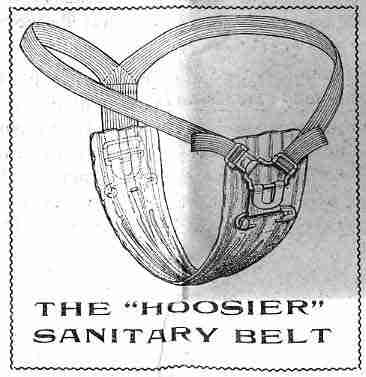
By the late 1800s, reusable solutions became more structured with the invention of the Hoosier Sanitary Belt, a garment designed to hold washable cloth pads in place. Not long after, the first disposable pads were introduced, followed by tampons in the 1920s and adhesive disposable pads in the 1970s.
While disposable period products eventually became the norm, today’s zero waste period movement is really a return to what women did for centuries — managing menstruation with reusable, self-sufficient solutions that don’t rely on single-use products.
More Eco Beauty & Body
Pin It