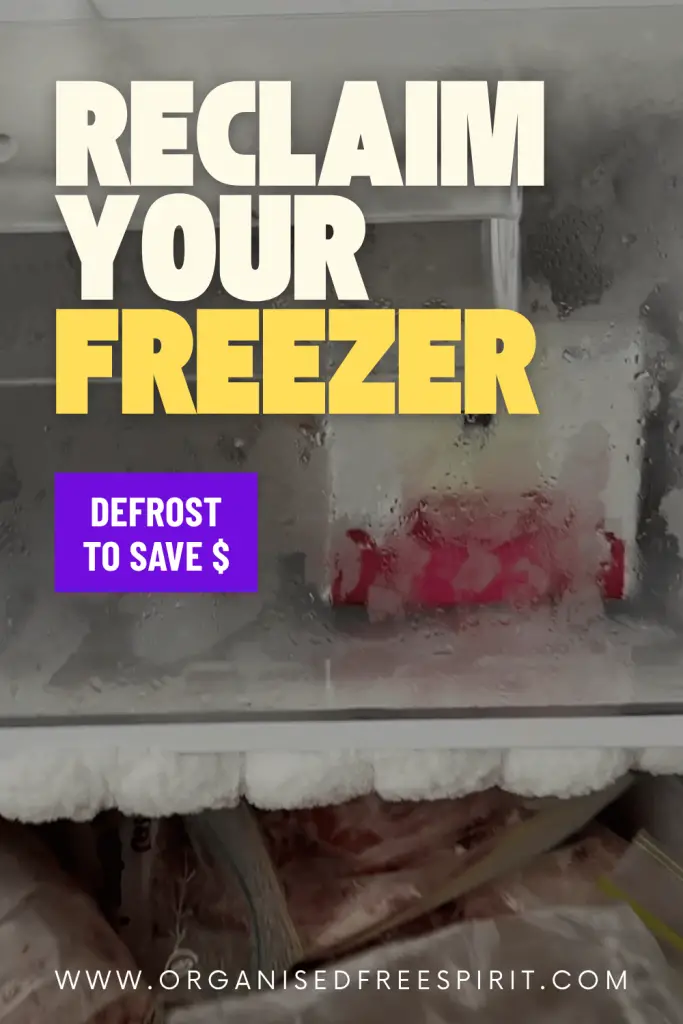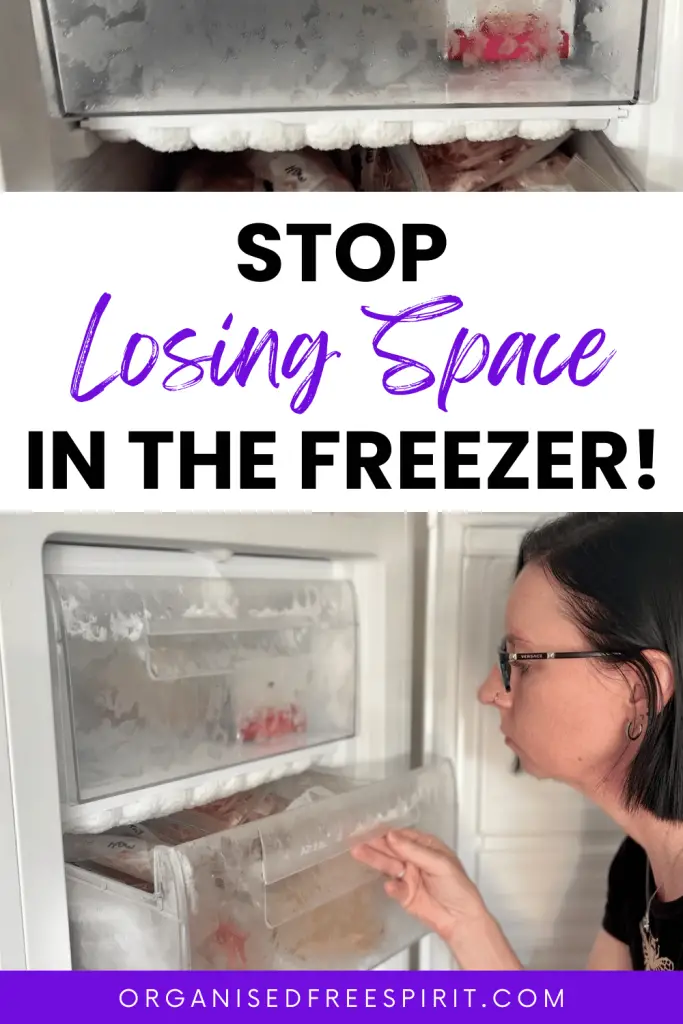
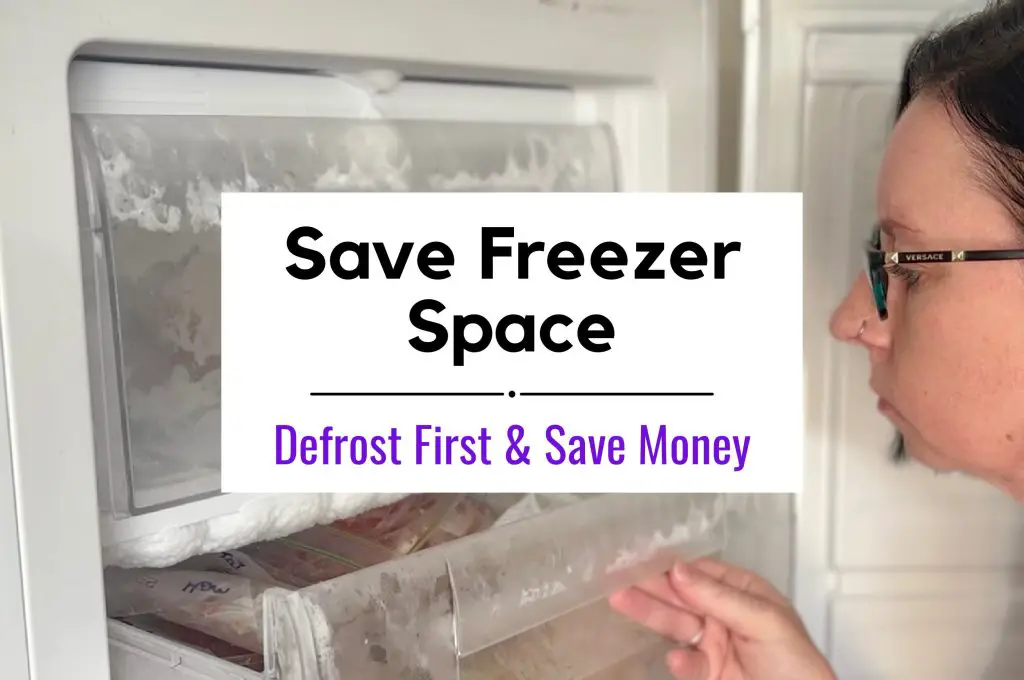
If your freezer feels full but somehow never seems to have enough usable space, freezer frost build-up could be sneakily wasting more room than you realise.
That was exactly what I realised over the last few months. I was trying to stockpile food and stay on top of grocery prices, but I was actually losing around 30% of my freezer to solid ice. And when that much space is taken up by frost, it doesn’t matter how carefully you shop – your storage capacity is already compromised.
On top of that, freezer frost build-up can also make your freezer less energy efficient over time, because the appliance has to work harder when ice is taking up space and restricting airflow.
So before I bought anything else or added more groceries into the mix, I finally decided to defrost the freezer properly!
And it ended up saving money, reducing food waste, and creating a lot more usable food storage space than I expected.
Watch: Before You Stockpile, Do This First
Come along for the ride as I empty my spare freezer, switch it off and defrost it over the course of a day – ready for a full restock. 👇
Defrosting Your Freezer Reveals How Much Storage Space You’re Actually Losing
Defrosting your freezer reveals just how much storage space frost build-up can slowly take away over time.
At first, it never looks serious. A bit of ice here, a slightly stiff drawer there. Nothing that feels urgent.
But freezer frost builds slowly and consistently, and because it happens gradually, you don’t notice the impact until it becomes a real problem.
In my case, my garage freezer had gotten to the point where drawers were becoming tricky to pull out properly, and sections were being taken over by thick ice build-up.
This was also the first full defrost I’ve had to do for this freezer in about five years, which shows just how slowly it all accumulates.
You don’t realise how much storage space you’ve lost until you finally reclaim it!

Before You Stockpile Food, Defrost Your Freezer First
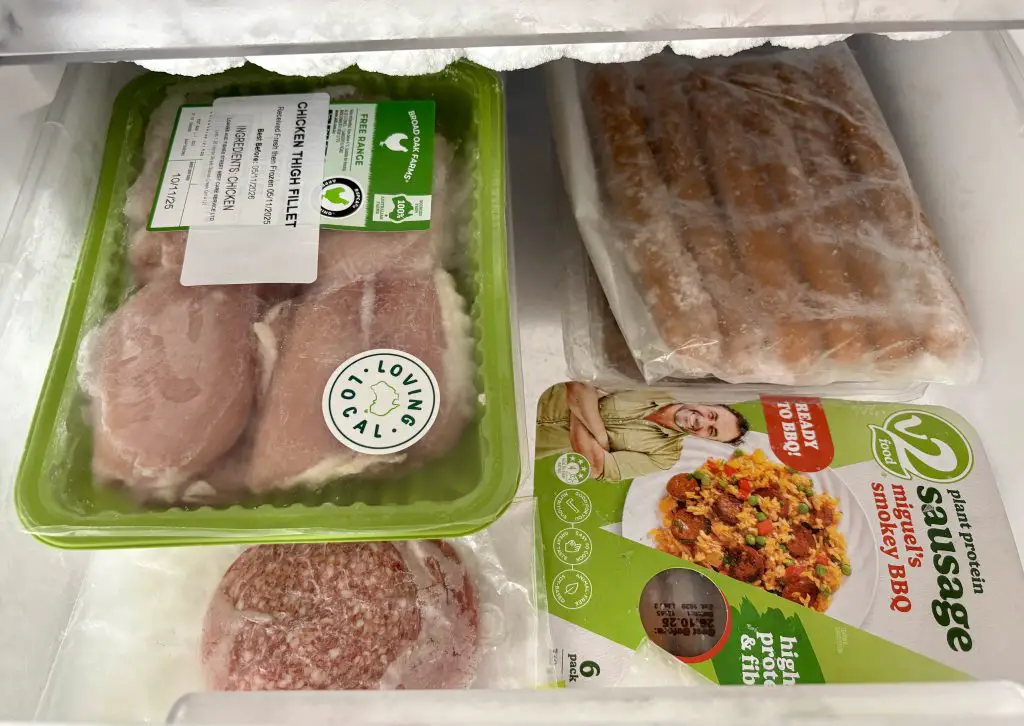
Before you start stockpiling food, defrosting your freezer can make a bigger difference than buying more groceries ever will.
This was the part I kept putting off.
I kept thinking:
- “Now isn’t the time to empty the freezer”
- “I should be adding food, not removing it”
- “I’ll deal with it later”
But freezer organisation and stockpiling only really work when your storage space is actually usable.
This is especially important if you’re trying to stockpile food, because freezer storage space is only useful if it’s accessible and not taken up by ice.
So instead of immediately defrosting everything, I spent a few weeks intentionally eating down what was already in the freezer.
I focused on eating through:
- Older frozen meals
- Forgotten containers
- Random ingredients at the back
- Bits & pieces that had been sitting there too long
And I stopped overbuying groceries. Only buying what I needed to complete meals using what I already had.
That alone saved loads on groceries, reduced food waste, and naturally decluttered the freezer all at the same time.
How Freezer Frost Build-Up Quietly Increases Food Waste
Freezer frost build-up increases food waste because it reduces visibility, access, and organisation.
When freezer space becomes tight or awkward to use, food gets pushed into corners, forgotten, or buried behind ice build-up.
I also realised I had far too many frozen vegetables that had slowly accumulated from the pre-packed trolleys I get from local discount grocery stores (see article below for more on those).
So I passed some of those frozen veggies on to others instead of forcing everything back into an already overcrowded freezer.
Because once freezer disorganisation creeps in, food waste usually follows – not because food goes bad quickly, but because it becomes harder to actually see and use what you have.
How I Prepared to Defrost My Freezer Without Wasting Food
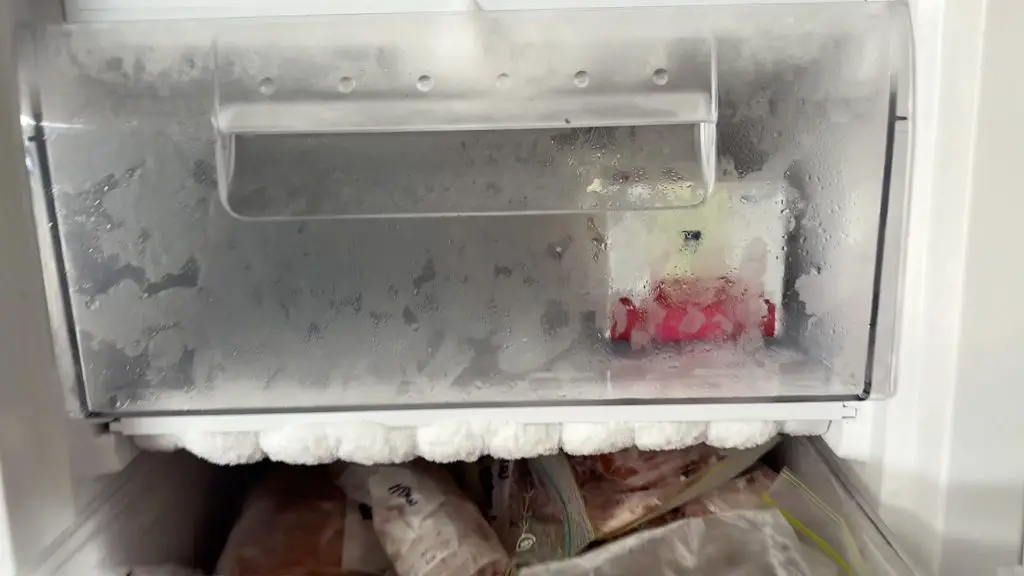
Preparing to defrost your freezer properly is what prevents food waste during the process.
Rather than just throwing everything out and starting again, stop buying groceries and eat through what you’ve got to help clear it out.
Because my garage freezer was still full, I had to slowly work it down first rather than switching it off immediately.
Here’s what I did over multiple weeks:
- Planned meals around freezer food first
- Avoided unnecessary grocery top-ups
- Moved fridge-stable items into the fridge temporarily
- Esed older frozen items before newer ones
- Cleared out freezer clutter where possible
Things like butter, bread, and diced ham were moved into the fridge so they could be used quickly instead of being wasted.
It was just a very intentional reset of how I was shopping and cooking for a while, so I could clear out the spare freezer.
How to Defrost a Freezer Step-by-Step
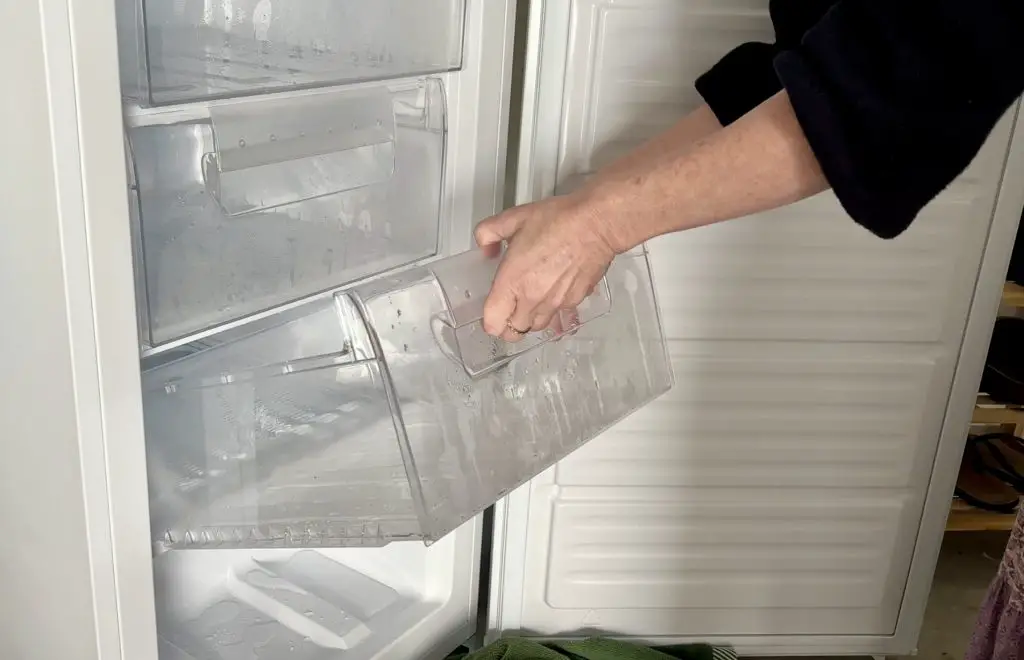
Defrosting a freezer is a pretty simple process; it just requires a chunk of your time.
Freezer defrosting process:
- Emptied leftover items & stored them in my kitchen freezer
- Switched the freezer off at the wall
- Removed drawers & shelves
- Placed towels around the base & inside the bottom to catch water
- Left the freezer door open
- Let the ice melt naturally
- Continuously wrung out towels as they absorbed the water
- Wiped out all drawers & shelves
- Allowed freezer to completely dry
- Restarted the freezer & let it cool down overnight
- Restocked with food the next day
There’s no complicated technique involved. Most of the process is just waiting for the ice to melt properly.
The actual hands-on work is mostly just wringing out wet towels so the water doesn’t pool all over the floor.
It’s also important to let the freezer completely dry out before switching it back on, otherwise any leftover water in there will freeze up again and create more ice.
How Long Does It Take to Defrost a Freezer?
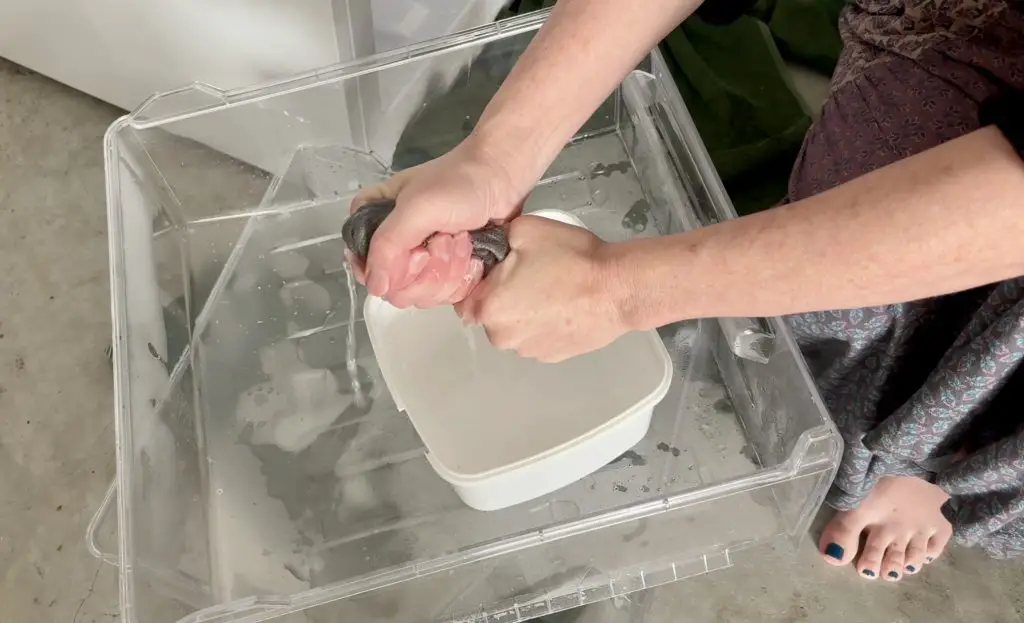
A freezer can take anywhere from 2 hours to a full day to defrost, depending on how thick the ice build-up is and the size of your freezer. For me, it was a full day for a full-sized standing freezer.
How long it takes to defrost a freezer depends on:
- Thickness of ice build-up
- Freezer size and type
- Room temperature
- How long it’s been since the last defrost
Thin frost might melt relatively quickly, while heavy ice build-up can take most of a day to fully clear.
The important thing is not to rush it. Letting the ice melt naturally makes the process safer and easier, and helps prevent damage to the freezer.
Common Mistakes When Defrosting a Freezer
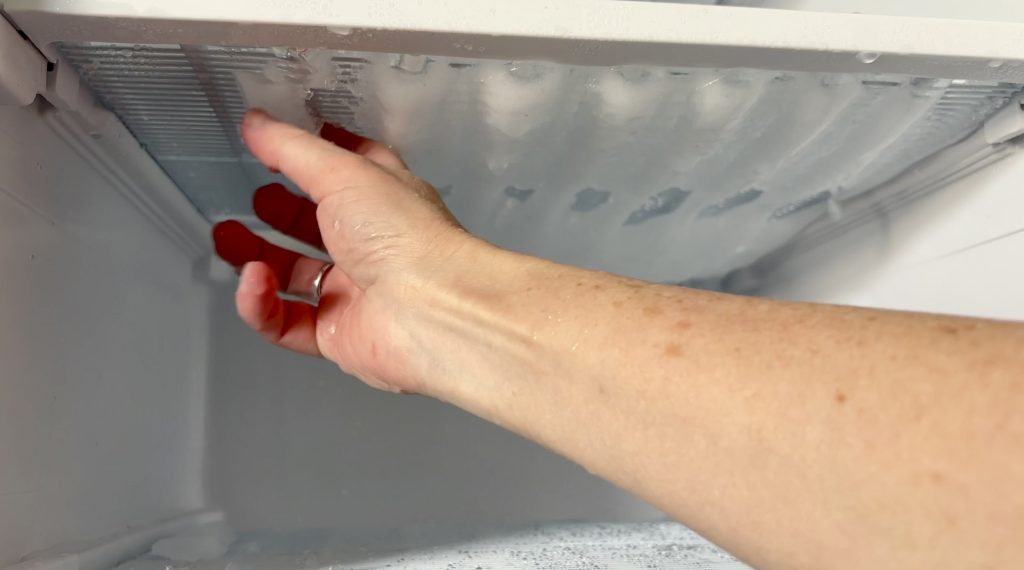
There are a few common mistakes that can make defrosting a freezer harder than it needs to be.
Common freezer defrosting mistakes:
- Chipping ice off with a knife, which can damage the freezer
- Not planning where frozen food will go beforehand
- Forgetting to protect floors with towels or containers
- Restarting the freezer before everything is fully dry
- Not using the opportunity to declutter and reorganise
Defrosting a freezer itself isn’t difficult – but rushing it or skipping preparation can create unnecessary stress and mess. So pick a day when you don’t have to go anywhere and be patient.
Why Defrosting Your Freezer Creates More Usable Food Storage Space
Defrosting your freezer creates more usable food storage space by removing hidden ice that has been sneakily taking up volume over time.
Once I finished the process, the difference was immediate.
The drawers slid properly again. Everything fit better. And suddenly, I had full access to the space instead of working around frozen ice walls.
It honestly felt like gaining extra freezer storage space without buying anything new – just by removing what didn’t belong there in the first place.
It’s easy to think you’re running out of freezer space and need to buy an extra one.
Oftentimes, you don’t need another freezer at all – you just need to make full use of the space inside the one you’ve already got!
Key Takeaway: Defrosting Your Freezer Can Save Money Without Buying Anything

🌿 Key takeaway: Defrosting your freezer is one of the simplest ways to save money, reduce food waste, and improve food storage space without buying anything new.
For me, it ended up being a full reset.
I used up food I already had, stopped unnecessary grocery spending for a while, and ended up with a freezer that actually works properly again.
It also made me more intentional about stockpiling, because there’s no point filling a freezer if a portion of it is being wasted on ice build-up.
Quick Summary
- Freezer frost build-up reduces usable food storage space over time
- Defrosting your freezer can help save money on groceries
- It also helps reduce food waste and improve organisation
- Most of the process is passive waiting, not active work
- Regular defrosting keeps your freezer running efficiently
- You may not need more freezer space – just less ice
Final Thoughts on Defrosting Your Freezer for Better Food Storage and Savings
Defrosting your freezer might not be the most exciting household task, but it has a much bigger impact than most people expect.
Defrosting the freezer helps to:
- Save money on groceries
- Reduce food waste at home
- Improve freezer organisation for long-term food storage
- Maximise usable food storage space
- Make stockpiling far more efficient
I’m genuinely glad I finally did it.
Now, when I do a freezer restock, I’m working with 100% usable space – without all that hidden ice build-up silently stealing space in the top of every drawer.
Next time, I won’t leave it 5 years before the next defrost!
| 🌿 READ NEXT: How to Freeze Everything & Save Money → |
Pin It