
When the weather starts to cool down, it’s easy to assume you need a whole new winter wardrobe. The shops change over, new styles appear everywhere, and suddenly what you already own can start to feel a bit… meh.
But in most cases, the problem isn’t actually a lack of clothes – it’s a lack of clarity and inspiration with what you already have.
This is where a simple winter wardrobe audit or capsule-style check can completely change how you approach seasonal clothing. Instead of defaulting to shopping, you start by shopping your own wardrobe first.
And often, you’ll discover you already have more than enough to get through winter comfortably… without spending much (or anything) at all.
Watch: Shopping My Wardrobe for Winter
Come along with me as I go through my wardrobe for winter, see what I’ve got, plus create some outfit ideas. 👇
Why Shopping Your Wardrobe Before Winter Saves Money
Most clothing spending doesn’t happen because we truly need something – it happens because we think we’re missing something.
Winter is especially good at creating that feeling. Clothes are stored differently, layers change, and it becomes easy to forget what’s already there.
This is one of the biggest hidden drivers of unnecessary clothing spending: out of sight really does become out of mind.
When you pause to check your wardrobe first, you naturally:
- Avoid buying duplicates
- Reduce impulse purchases driven by seasonal change
- Get more wear out of what you already have
- Identify actual wardrobe gaps instead of assumed ones
- Save money on clothes without really trying
But the biggest change is mental.
You stop approaching winter as a “what do I need to buy?” season, and start seeing it as a “what do I already own?” reset.
That perspective alone can significantly reduce seasonal spending.

How to Organise Your Wardrobe for Winter
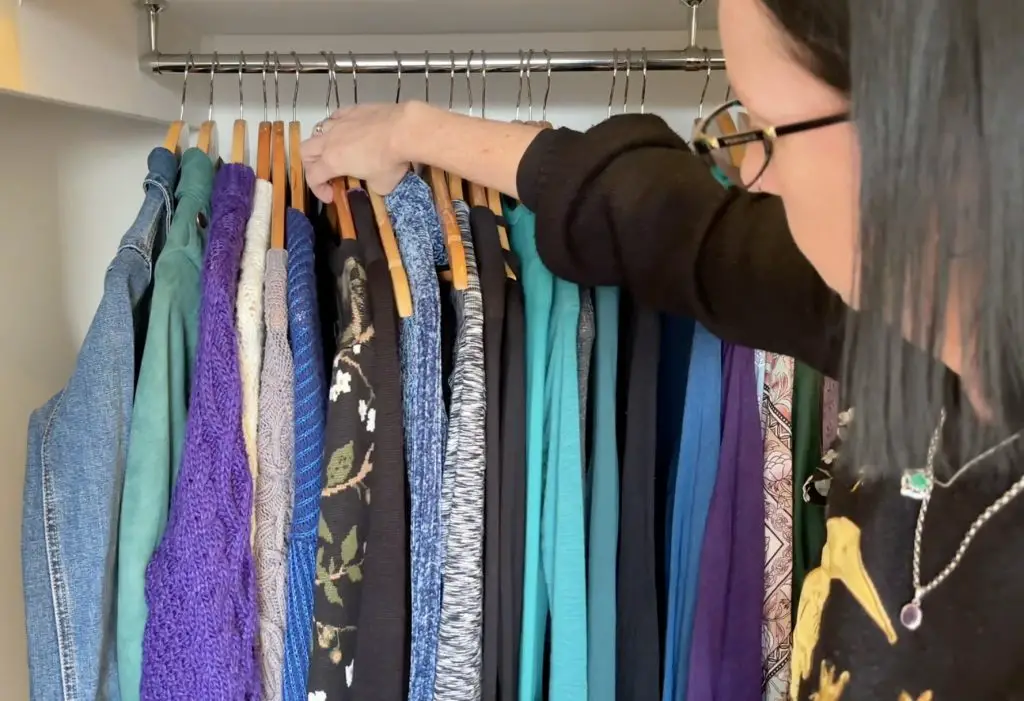
Before you start analysing outfits or making decisions, it helps to reset your physical space so it suits the season you’re actually in.
I’m not talking about full declutter – think of it more as a seasonal wardrobe reset.
Lightweight summer clothing can be moved slightly out of sight so your winter pieces are easier to see and access.
Small wardrobe reset:
- Bring winter layers forward
- Clear visual clutter from shelves
- Store obvious summer-only items away (in boxes/suitcases/drawers)
This simple winter wardrobe changeover is less about organisation and more about reducing overwhelm.
Because fewer choices and less clutter equate to calmer and easier decision-making.
Your brain is no longer trying to process everything at once – just what actually applies to the season you’re in.
Check Your Winter Clothes Category by Category

Once your wardrobe is visually simplified, it becomes much easier to understand what you’re working with.
Instead of looking at everything as one overwhelming collection, break it down into categories. This is the foundation of a proper wardrobe audit.
Category examples:
- Jeans and pants
- Jumpers and knitwear
- Jackets and coats
- Long sleeve tops
- Dresses and skirts
- Shoes and boots
- Everyday home wear/ pajamas
As you move through each category, you’re not making decisions yet – just taking stock of what you’ve already got.
This is where patterns usually start to appear:
- Some categories are more than covered
- Others have duplicates you rarely wear
- A small number of items get worn the most
Some questions to ask yourself as you look through everything:
❓ Do I wear this regularly in winter?
❓ Does it layer easily with other items?
❓ Would I buy this again today?
❓ Is it comfortable for my actual daily life?
❓ Does it work with at least 2–3 outfits?
Once you can clearly see everything you’ve already got, the winter wardrobe process becomes easier.
Be Honest About What You Actually Wear

This is the point where you can get real with yourself about the items of clothing you own and how they authentically fit into your life (or not as the case may be).
It’s easy to keep clothes for “someday…”
🌈 “Someday they’ll fit better.”
🌈 “Someday I’ll wear them more”
🌈 “Someday they’ll feel right again.”
But in reality, winter wardrobes don’t work on “someday.” They work on repetition, comfort and practicality.
So don’t just focus on what you own, but take note of what you actually use.
A simple way to think about it:
- Clothes you reach for weekly
- Clothes you wear occasionally
- Clothes you rarely or never wear
Most wardrobes naturally have a small “core group” doing most of the heavy lifting, while everything else rotates in and out very occasionally – or not at all, if you’re honest with yourself.
You don’t need to rush decisions here. But seeing this clearly helps you understand your real wardrobe, not your ideal one.
🌿 In my own winter wardrobe check, I’ve found a stash of round-the-house jumpers I completely forgot I owned.
Since I clearly wasn’t loving them or wearing them, it was time for them to go to the Op Shop.
If you do want to do a full declutter, check out the post below.
How to Create Winter Outfits From Clothes You Already Own
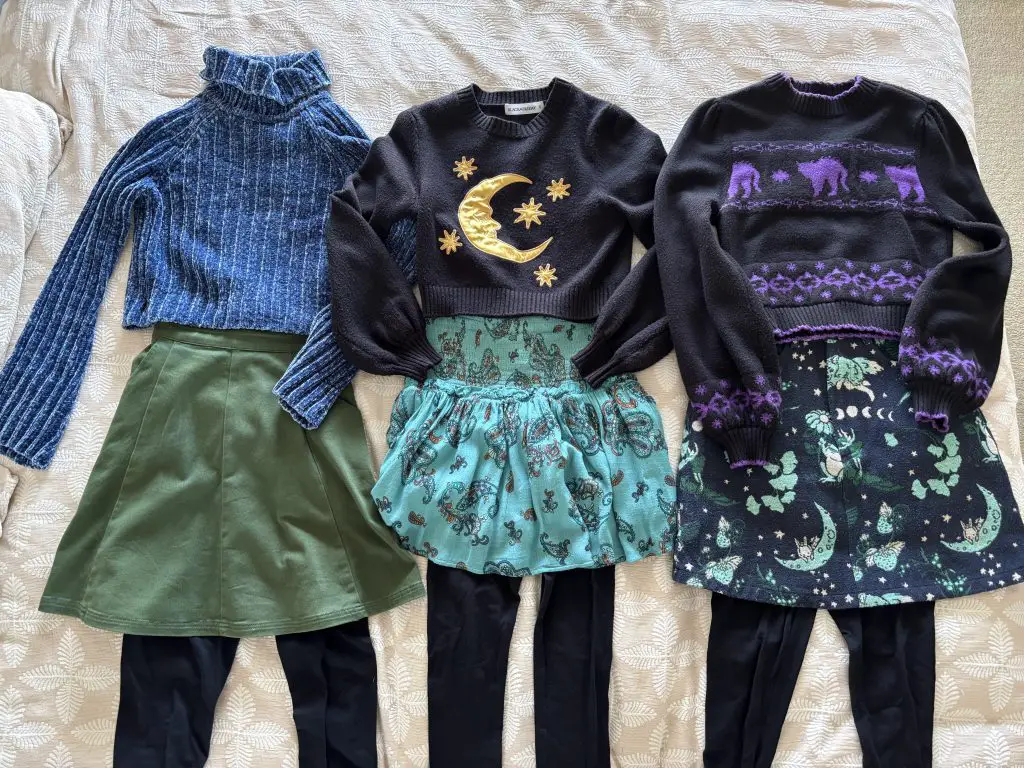
Once you’ve got a good snapshot of your winter wardrobe, it’s time to get creative with what you’ve got.
Instead of thinking in individual items, start thinking in combinations.
A simple way to approach winter outfits is with this formula:
👖 Base layer + 👗 outer layer + 🥻 accessories + 👢 footwear
Once you start thinking this way, outfit building becomes much simpler.
For example:
- Jeans + Jumper + Scarf & Boots
- Leggings + Dress + Knitwear
- Tights/leggings + Skirt + Layered top
- Long-sleeve base + Open knit + Coat
Then you can build variation through small changes:
✨ Swapping boots
✨ Adding scarves/jewellery
✨ Layering textures
✨ Changing outerwear
Once you start to mix and match what you’ve got into a variety of different combos, you realise something important…
You usually don’t need more clothes – you need more combinations.
And once you start experimenting, you’ll often find you already have far more outfit options than you even realised.
| 🌿 READ: My No-Buy Clothes Year → |
Use Outfit Photos to Reduce Decision Fatigue
One of the easiest ways to make winter mornings simpler is to remove the need to constantly figure out outfits from scratch.
As you create combinations that work, take quick mirror photos. Not styled photos – just real outfit snapshots that capture what actually works in your daily life.
Over time, this becomes a personal outfit reference library.
📲 Save these photos in an album (or multiple album categories) for easy navigation.
Creating an Outfit Photo Library helps because:
- You’re not relying on memory
- You’re not repeating decision-making every morning
- You’re removing overwhelm
- You already know what feels comfortable
So instead of standing in front of your wardrobe thinking, you’re simply choosing from outfits you’ve already approved.
🌿 Scroll → choose → get dressed.
That alone reduces a surprising amount of daily mental load.
How to Identify Real Clothing Gaps Before Shopping
After going through your wardrobe properly, the idea of “missing clothes” usually changes quite a bit.
Sometimes what feels like a gap is actually:
- Lack of outfit ideas
- Seasonal mindset shift
- Forgetting what you already own
Other times, it genuinely is a missing piece.
A real clothing gap usually looks like:
- Something you would wear regularly
- Something that works with multiple outfits
- Something replacing an item that is worn out or no longer functional
Everything else is usually just a ‘want’ disguised as a ‘need’ – created by comparison, habit, or seasonal change.
Once you can see that difference clearly, shopping becomes far more intentional.
And usually… much cheaper and easier!
Build a Winter Wardrobe You Love Over Time
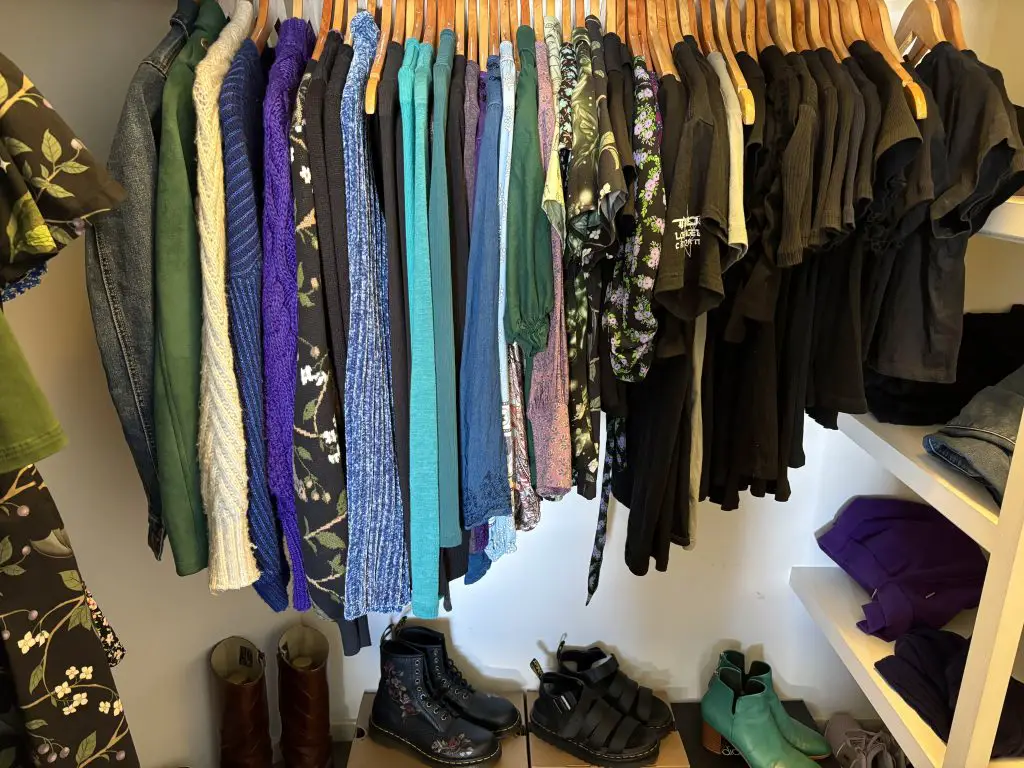
A winter wardrobe doesn’t need to be rebuilt every year. In fact, the most functional wardrobes tend to evolve piece by piece.
When you start shopping your own wardrobe first, your whole perspective starts to change.
You begin to notice:
- What you actually reach for
- What feels comfortable in real life
- What genuinely suits your lifestyle
And over time, that naturally shapes what you buy next, creating intentionality.
Instead of constant seasonal resets, your wardrobe becomes something that slowly improves year after year.
🌿 Worn-out staples get replaced
🌿 Items you don’t love get donated
🌿 More favourite pieces appear
This is how a truly authentic winter wardrobe is built slowly over time and grows with you.
Final Thoughts
Before you buy anything new this winter, it’s worth taking a slow, honest look at what you already own.
Not to restrict yourself, and not to aim for a perfect minimalist wardrobe – but simply to make sure you’re actually using what you have.
Because most of the time, you already own the winter wardrobe you think you need to go and buy.
It just needs to be seen again and appreciated in a new way.
| 🌿 READ: Planning a Capsule Wardrobe → |
Pin It