If you’re trying to cut your grocery bill, save money on groceries, or reduce your weekly food spending, most advice will tell you to start with coupons or shop at multiple stores.
But that’s not where the biggest savings come from.
In reality, most people are overspending on groceries in ways they don’t even realise – buying food they already have, shopping out of habit, or making last-minute decisions when they’re tired and need something easy.
If I needed to cut my grocery bill in half quickly, I wouldn’t start with coupons or change where I shop.
I’d start by changing a few simple habits – because that’s where the fastest, most consistent savings actually happen.
How to Cut Your Grocery Bill in Half Quickly
To cut your grocery bill fast, start by using the food you already have before buying more. Then shift to buying non-essential items only when they’re on sale, cook in a way that creates multiple meals, and keep a few easy backup options on hand for busy days. Simplifying your meals and avoiding last-minute grocery trips can significantly reduce your weekly food spending.
Watch: If I Had to Cut My Grocery Bill in Half, I’d Do This First
Prefer to watch?
Hit play on the video below as I go through the steps. 👇
1. Shop Your House First (Stop Grocery Shopping Temporarily)
The fastest way to reduce your grocery spending is to pause it.
Not permanently, but long enough to actually see what you already have.
Most kitchens are holding more meals than we realise. They’re just spread out – something in the freezer, something in the pantry, something half-used in the fridge… never quite coming together.
When you take the time to go through everything properly, something beautiful happens. You stop seeing random ingredients and start seeing possible meals.
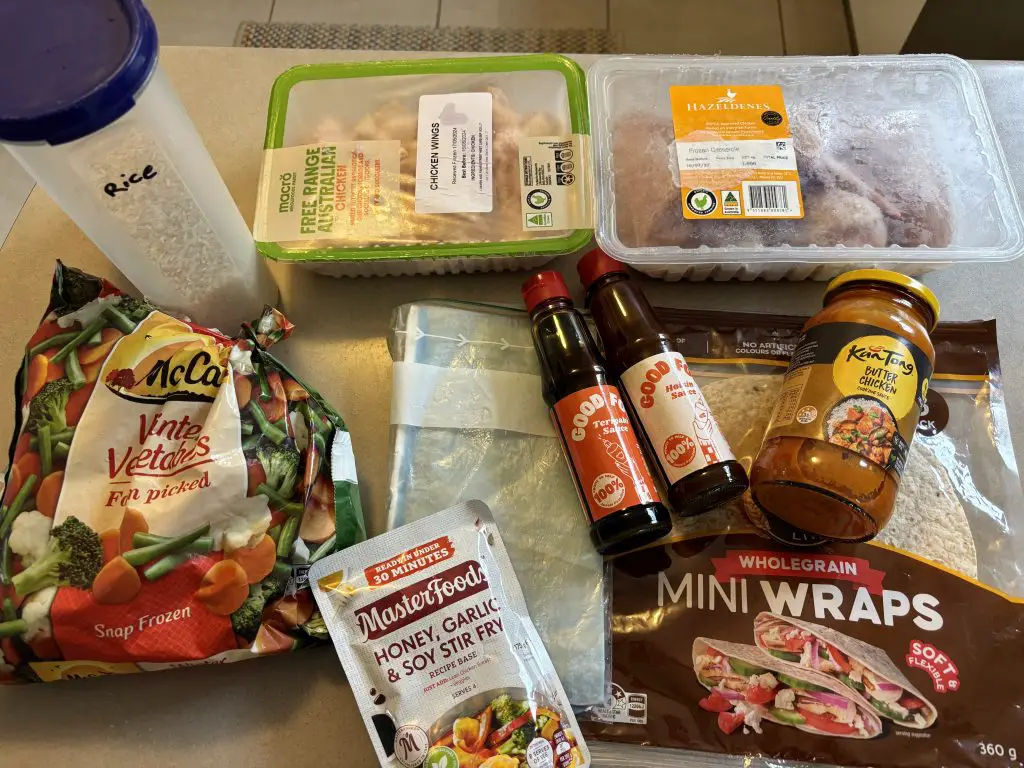
Tips for shopping your house first:
- Pull everything out instead of scanning shelves
- Group potential meal items together
- Note what’s already open or needs using
- Write a quick “use-it-up” list
From there, meals tend to come together naturally. Jot down your meal ideas onto a list and start working through them before buying anything else.
And often, you’ll find you can stretch this for several days… sometimes even a full week. That’s an entire grocery shop you didn’t need to do!

2. Change How You Shop (Weekly Basics vs On-Sale Items)
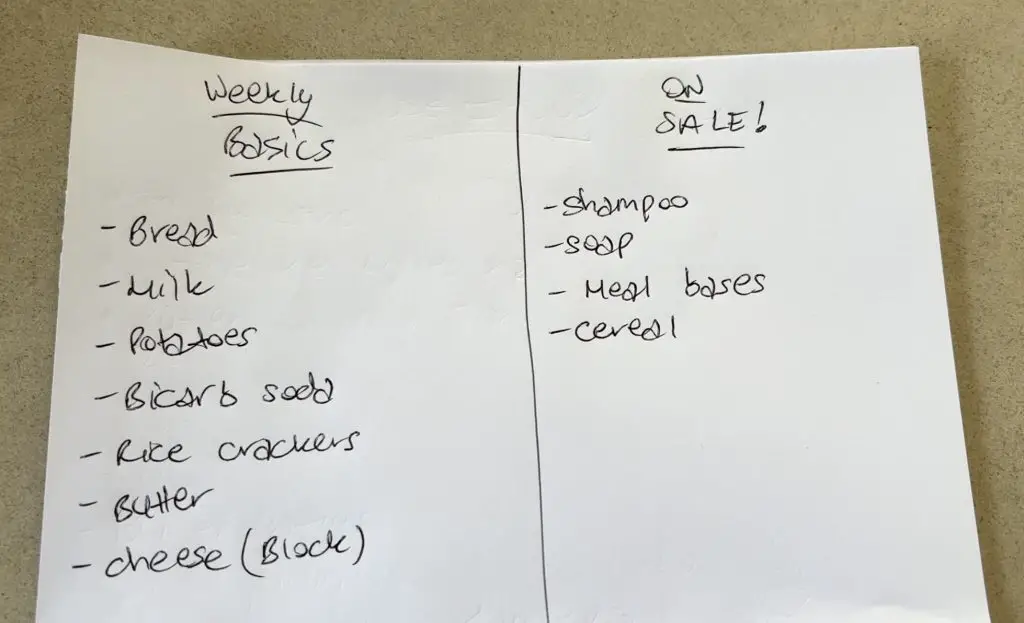
When you do go back to the shops, the goal isn’t just to spend less, it’s to shop differently.
Most grocery lists are reactive. You think of what you need, write it down, and buy it that week, regardless of price.
Let’s change how we’re writing our grocery lists…
Instead of one list, think in two categories:
- WEEKLY BASICS – what you need now
- WAIT FOR SALE – items you can wait till they’re on sale to buy
| Weekly Basics | Wait For Sale |
|---|---|
| Bread | Toilet Paper |
| Milk | Shampoo/ Conditioner |
| Potatoes | Coffee |
| Cheese Block | Cereal |
| Protein (chicken, beef, pork) | Snacks |
This creates a natural pause between needing something and buying it immediately.
Over time, you start to notice patterns – what regularly goes half price, what’s worth stocking up on, and what doesn’t need to be bought every single week.
That’s where this rule comes in:
If it’s not on sale, treat it like it’s out of stock (unless you truly need it).
Once you’ve built a buffer over time of having a few extra of the ‘sale’ items at home, you can afford to wait until you can get them at a better price. This simple habit shifts your entire spending pattern.
You’re no longer paying full price out of habit – you’re buying strategically, without needing a complicated system to do it.
3. Stop Cooking Every Night (Batch Cook or Cook Components Instead)
A lot of grocery spending is tied to how often we feel like we need to “start from scratch.”
Cooking every night creates a cycle of new meal, new ingredients, new effort. It’s expensive and exhausting!
And over time, that leads to buying more than you actually need. A more efficient approach is to let one cooking session carry more weight.
Instead of cooking a single meal, you cook something that can become multiple meals.
🎥 Watch: Chicken is a great example – check out my reel below to see how I made multiple meals from 1.2kg of chicken breast.
Cook a larger batch of chicken, and suddenly you’ve got the base for:
- Stir fry
- Wraps
- Rice dishes
- Something with a jar sauce
- Even quick homemade pies
You’re not locked into one outcome – you’ve just removed the hardest part (starting from zero).
Here’s how it changes your spending:
- Fewer “top-up” ingredients
- Less wasted food
- Less pressure to buy something new
- Utilising leftovers rather than having to cook every night
Because the more you can build from what’s already there, the less you need to keep adding.
4. Fix the Real Problem (Overspending Happens When You’re Tired)
Most grocery budgets don’t fall apart during the weekly shop. They fall apart on a random Tuesday night.
You open the fridge. There’s food there, but nothing feels like a meal. Everything requires effort.
That’s when the spending happens.
Not because you planned it – but because:
- It’s easier to grab something extra
- It’s easier to order takeout
- It’s easier to solve the problem quickly
This is less about budgeting and more about energy.
We all know these moments are going to pop up (usually at 5.30 pm on a Wednesday), so it helps to pre-empt them and plan ahead.
A few low-effort backup options can completely change how often this happens, and means you’ll always have easy, grabby meals on hand.
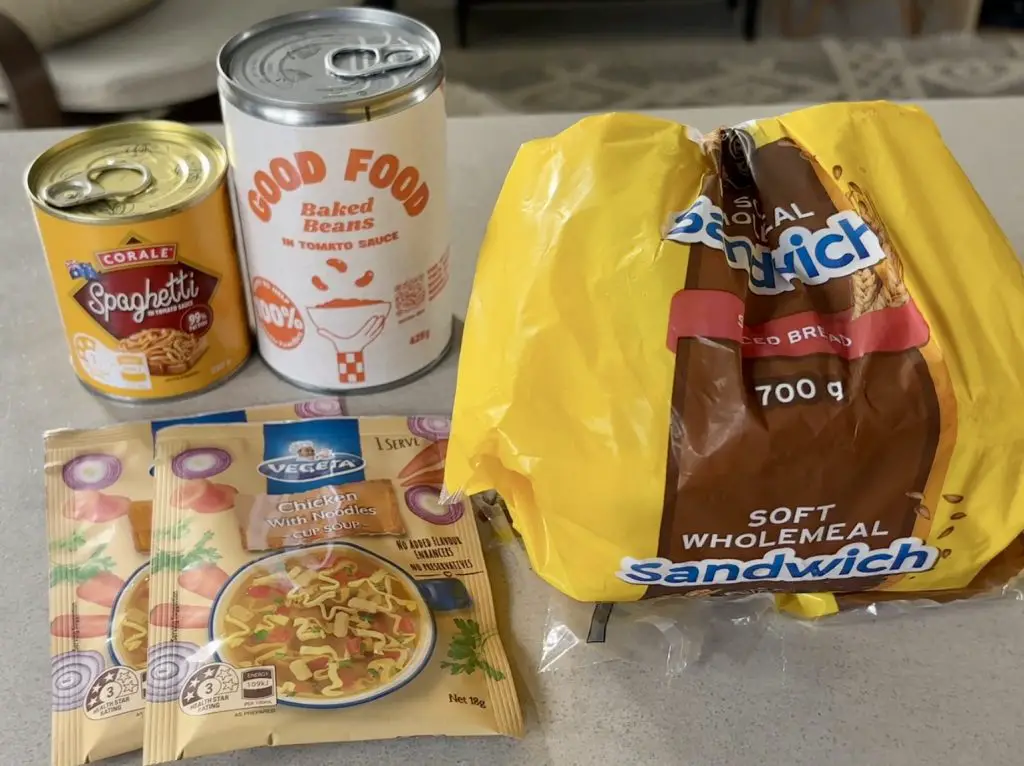
Back-up option ideas:
- Frozen portions of past meals
- Quick, homemade “fake-away” meals (e.g. burgers, pies, pizza)
- Simple, throw-together options like soup or toast-based meals
These aren’t exciting. But they’re not meant to be.
They’re there to bridge the gap between too tired to cook and spending money unnecessarily.
And because this is where a lot of overspending happens, solving this one area often makes a bigger difference to your grocery budget than anything else.
5. Rethink Where You Shop (Find Discount Groceries Near You)
Sometimes, the easiest savings come from looking slightly outside your usual routine.
Most of us default to the same supermarket without thinking about alternatives – but there are often lower-cost options nearby that just aren’t as visible.
Search Google Maps using terms like:
- “discount groceries”
- “food pantry”
- “food bank”
- “discount food”
- “fresh produce market”
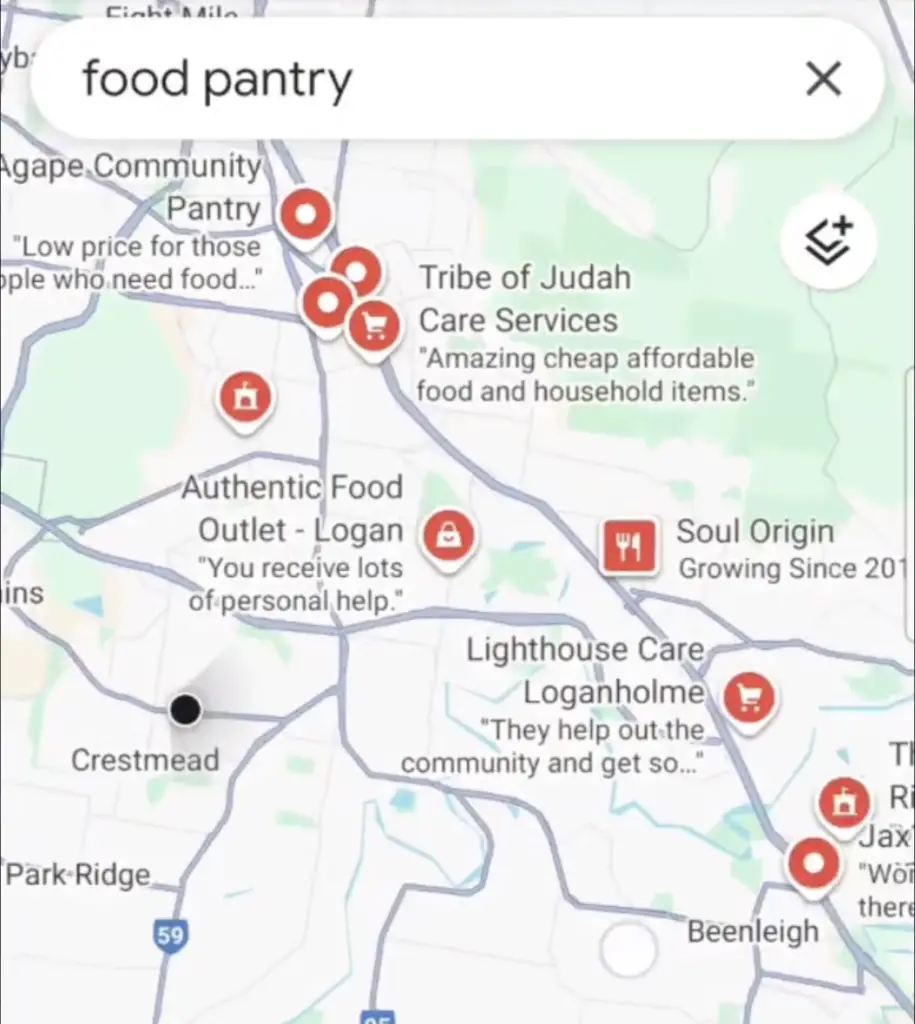
Doing a local search can sometimes reveal places you might not have known about or considered.
Even making the switch to Aldi from Coles or Woolworths can instantly reduce your grocery bill, especially for generic items.
For those who live in rural areas, going to the local fresh produce markets can sometimes work out cheaper than getting those items from the supermarket.
Sometimes even the cheap shops like The Reject Shop and Choice can sell pantry items, toiletries and household supplies cheaper than the supermarkets.
You don’t need to rely on these for everything. Even occasional use (picking up certain items at a lower cost) can reduce your overall grocery spend without changing your routine too much.
It’s simply about giving yourself more options.
If you live in the Brisbane area like me, below are a bunch of discount grocery stores I’ve found.
Discount Food Stores in Brisbane:
- Loaves & Fishes – Slacks Creek & Caboolture, QLD
- Tribe of Judah – Slacks Creek, QLD
- Lighthouse Care – Loganholme & Hillcrest, QLD
- Twin Rivers – Eagleby, QLD
6. Simplify Your Meals (This Alone Can Cut Grocery Costs Fast)
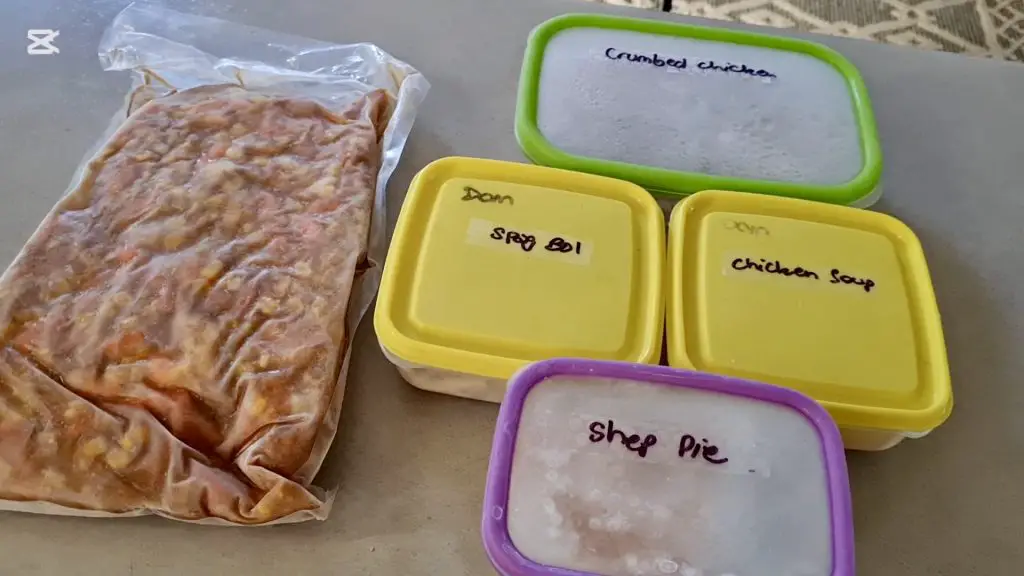
Hands up if you feel the pressure to make meals feel varied and interesting all the time? I think many of us do.
But that pressure often leads to:
- Buying extra ingredients
- Using things once & forgetting them
- Adding complexity where it’s not needed
Simplifying your meals doesn’t mean eating the same thing every day – it just means reducing unnecessary variety.
Simplifying meals can look like:
- Rotating a small number of meals that everyone eats
- Reusing the same ingredients in different ways
- Keeping meals flexible instead of recipe-heavy
When things are simpler:
- Your shopping list naturally gets smaller
- Your food waste drops
- Your decisions become easier
The simple act of simplifying is one strategic way to keep your grocery spending consistently lower without needing to think about it all the time.
Quick Summary: How to Cut Your Grocery Bill Fast
- Pause shopping & use what you already have first
- Separate essentials from “wait-for-sale” items
- Cook in a way that creates multiple meals
- Plan for low-energy nights (this is where money leaks)
- Look for lower-cost grocery options nearby
- Keep meals simple and repeatable
FAQs
Start by using what you already have before buying more. Then shift to buying non-essential items only when they’re on sale, and make sure you have easy meals available for busy or low-energy days.
No. While coupons can help, most savings come from habits – like avoiding full-price purchases, reducing food waste, using what you’ve got, and preventing impulse spending.
Yes. It helps you use ingredients more efficiently, reduces waste, and makes it easier to avoid buying extra food during the week.
Often, it’s unplanned spending when you’re tired or overwhelmed – extra grocery trips, convenience food, or takeout. Having simple backup meals can significantly reduce this.
Final Thoughts
Cutting your grocery bill in half doesn’t require extreme budgeting, complicated systems, or doing everything perfectly.
In most cases, it comes down to:
- Using what you already have
- Changing how you shop
- Removing the moments where overspending happens
Because the biggest savings aren’t found in doing more, they come from doing things differently.
Pin It