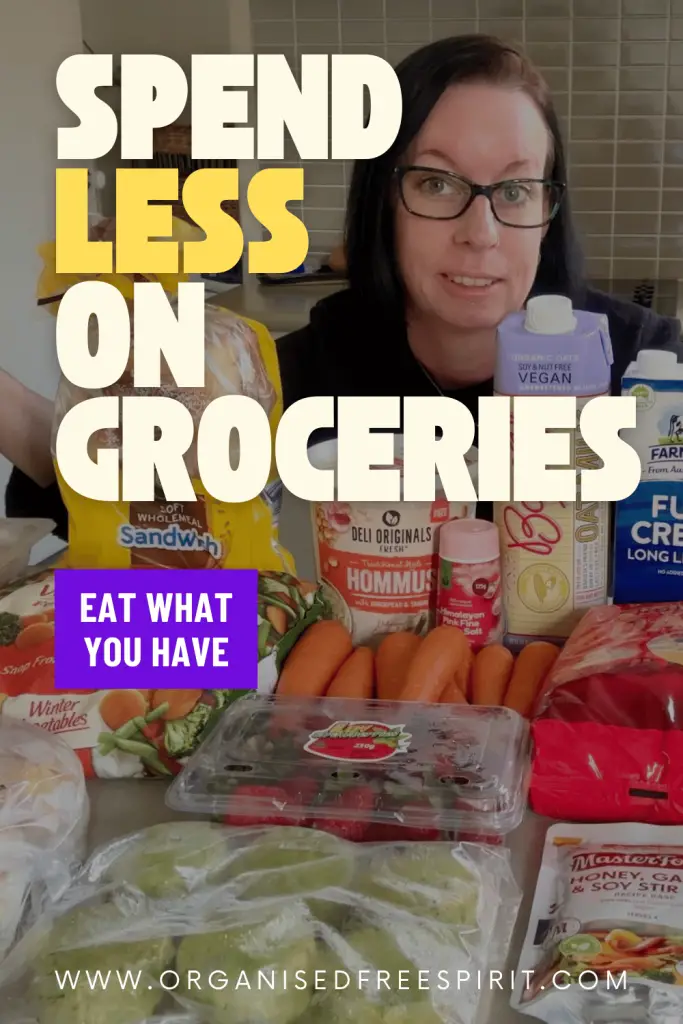

This week, I only spent $30 on groceries.
Not because I was trying to cut my grocery bill or do some sort of challenge, but because I didn’t need to.
I’ve found that the easiest way to spend less on groceries isn’t about shopping more carefully – it’s about using what you already have.
Over time, I’ve built up what I call a working pantry. And instead of constantly buying more food, I actually use what we already have before buying more.
That simple habit has completely changed the way I shop, and honestly, it’s been one of the most practical forms of financial security I’ve found.
Watch: I Only Spent $30 on Groceries Because of This
Come along with me below as I pull things out of the pantry and freezer for next week’s meals
(no grocery shop necessary!) 👇
How to Spend Less on Groceries (Quick Start)
If you want to spend less on groceries without overcomplicating things, it usually comes down to a small change in how you shop.
Most people start with a list and assume they’re beginning from empty. But in reality, there’s often quite a bit of food already sitting in the pantry, fridge, or freezer – it’s just not being used intentionally.
When you start there instead, everything changes.
Meals come together from what you already have, and the grocery shop becomes smaller by default.
A simple way to think about grocery shopping:
- Start by checking what you already have at home
- Build a few meals around those ingredients
- Only buy what’s missing, not everything
- Keep a small buffer of foods you actually use
It’s not about doing more. It’s about using what’s already there.
| 🌿 READ: Building a 1-Month Food Buffer → |

Why I Don’t Do a Full Grocery Shop Every Week
For a long time, I shopped the way most people do – starting from scratch each week.
✏️ Write a list.
🛒 Do a full shop.
🔄 Repeat.
But that approach unconsciously assumes that your kitchen is empty every time you shop. Except, in most cases, it’s not. And once you notice that, it’s hard to unsee.
These days, I rarely do a full grocery shop. Some weeks I will, but other weeks I’ll just pick up a few things to fill the gaps. Everything else comes from what we already have.
It feels lighter. Less pressure. Less urgency.
And over time, those smaller shops add up to a noticeable difference.
Buying random trolleys from local discount supermarkets has really helped me to build a pantry of varying items over time. Check out the post below to see how I do that.
| 🌿 READ: Feeding My Family for $67/wk → |
The Difference Between Stockpiling and Actually Using Your Food
This is where I think a lot of people get stuck.
When people talk about stocking up or building a pantry, it can easily turn into something separate – food that sits there “just in case,” untouched, forgotten, collecting dust, and going bad.
But that’s not how I approach it.
My pantry isn’t a backup system.
It’s our everyday food.
We use it. We rotate it. We replace it.
Because if you’re not using what you’ve got, it doesn’t take long before it turns into clutter—or worse, food waste.
And food waste is something I really try to avoid. There’s so much that goes into producing food, and letting it sit there unused feels disrespectful to me.
My Simple 5-Step “Shop Your Pantry” System
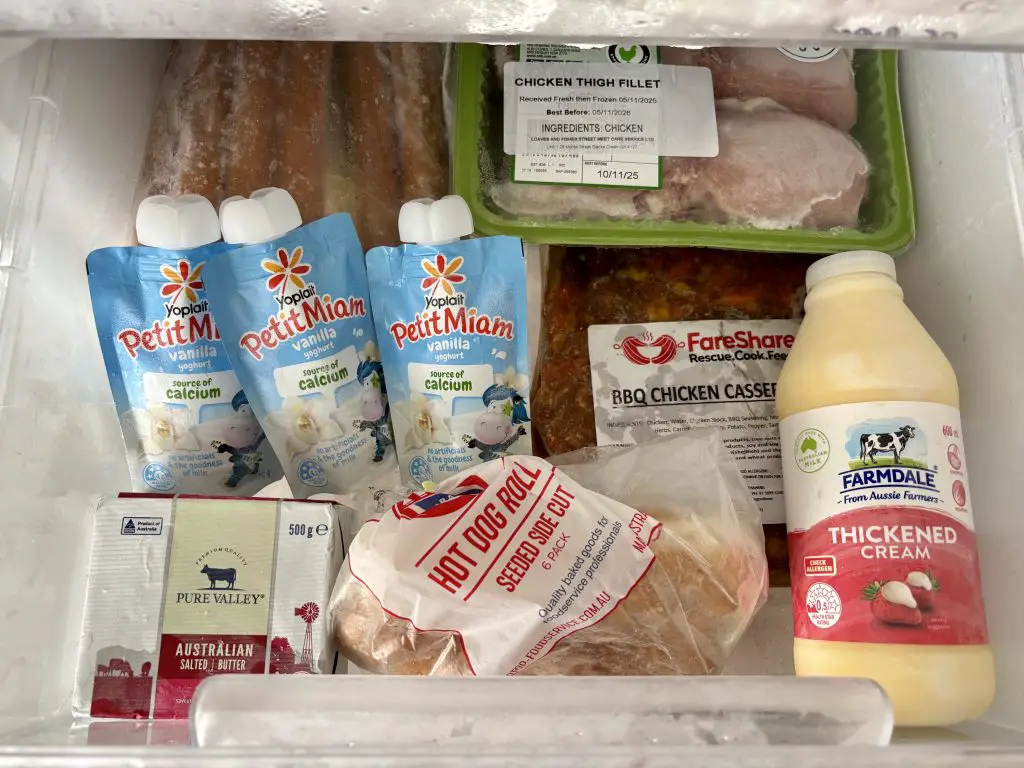
I don’t follow anything complicated here. This is just the simple rhythm I’ve fallen into over time. Something that works in real life, especially on busy or tight weeks.
Before I think about shopping, I start at home.
I’ll check what needs using first – fresh food, open packets, or anything that’s been sitting in the freezer a little too long. From there, I’ll loosely map out a few meals based on what’s already available.
Nothing rigid. Just a handful of options.
Then I make sure there are a couple of easy backup meals in the mix – things that don’t require much effort if the week gets busy (baked beans on toast is one of my go-tos).
Lunches and snacks usually fall into place from whatever we already have, and only after all of that do I write a small list, if anything is actually missing.
How to ‘Shop Your Pantry:’
- Check what needs using first
- Choose a few simple meals from what you already have
- Keep a couple of easy backup options
- Use what’s available for lunches & snacks
- Only buy what’s missing
It’s less about planning everything perfectly and more about having a simple rhythm you can come back to each week.
What a Low-Spend Grocery Week Looks Like (Real Example)

Low-spend grocery weeks like this are actually my favourite.
Sometimes it’s because I’m trying to spend as little as possible, but also because everything is being used the way it’s meant to be.
🌿 Food is getting rotated.
🌿 Nothing is being forgotten.
🌿 The freezer & pantry get a declutter.
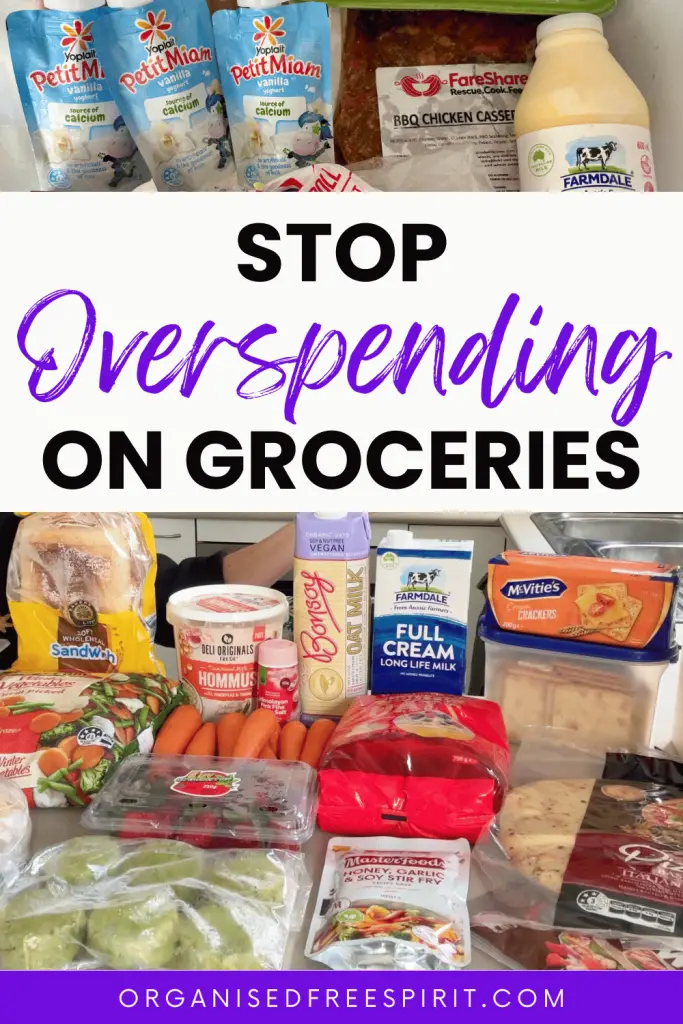
This week, dinner meals came together easily from what we already had:
- Loaded baked potatoes with butter, onion & bacon
- 1kg of chicken wings to pre-cook for wraps & other meals
- Stir-fry with the chicken, frozen vegetables & rice
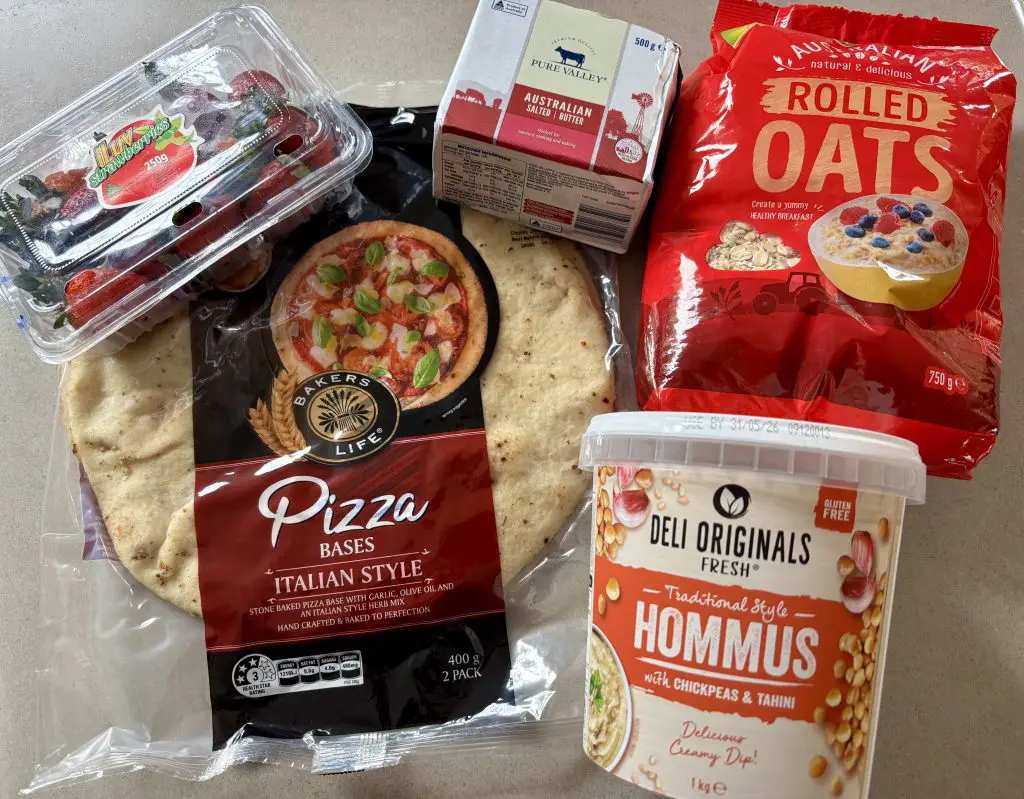
- A homemade pizza night with ingredients already on hand
Snacks were just as straightforward – carrots and hummus, strawberries, and frozen açaí portions with oats.
Lunches and breakfasts were already covered with basics like avocado, crackers, bread, ham, cereal, and milk.
This is what it looks like in real life.
Not perfectly planned, not complicated—just simple meals built from what’s already there.
Why This Feels Like Financial Security
Keeping a running food buffer like this absolutely saves money!
But it also provides flexibility and relieves some of the time pressure many of us feel around shopping, storing, preparing and cooking food.
There’s a difference between choosing to spend less and having to. And this approach creates that space.
👉 If I want to put money towards something else that week, I can.
👉 If I don’t feel like doing a big shop, I don’t have to.
👉 If life gets busy, we’re still covered.
You’re not forced into spending just because it’s “grocery day.”
And when prices shift (which we know they will), you’re not starting from zero every time.
It’s not about restriction.
It’s about having options.
Pantry Staples That Make This Easier
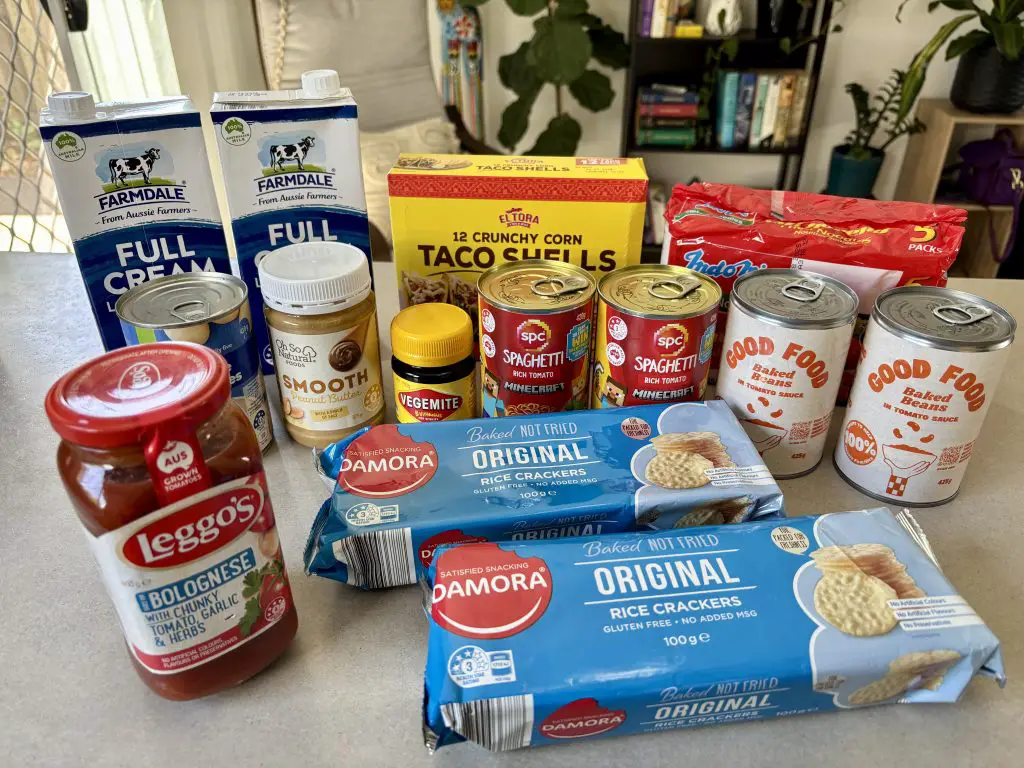
You don’t need anything extreme to make this work. It’s usually the simple, everyday foods that carry the most weight.
These are the kinds of ingredients that quietly turn into meals when you don’t feel like doing a full shop. Things that stretch, combine easily, and work across multiple dishes.
In our house, the staples look like:
- Basics – rice, pasta, crackers, longlife milk, cereal & oats
- Tinned staples – potatoes, baked beans & tomato paste
- Frozen – bread, vegetables & fruit
- Proteins – chicken, diced ham, sausages & mince
- Fresh staples – potatoes, onions, fruit, cheese, eggs, milk & butter
Over time, these build into a pantry that supports you, rather than something you have to manage.
| 🌿 READ: My 2-Pantry System → |
Who This Approach Works Best For
Keeping a running food buffer tends to work really well for people who already have a bit of food at home and want to make better use of it.
If you prefer a flexible approach to meals, rather than strict planning, it fits in quite naturally. It’s also a good middle ground if you want to reduce your grocery bill without going to extremes.
On the other hand, if you’re starting from a completely empty kitchen or relying heavily on takeaway, it can take a little time to build up.
But that’s okay. It doesn’t need to happen all at once.
Common Mistakes When Trying to Spend Less on Groceries

One of the biggest things that gets in the way of this working is continuing to buy more food without using what’s already there.
It’s easy to fall into the habit of shopping first and thinking later. Over time, that’s what leads to an overfilled pantry and food being forgotten.
Sometimes it’s also overcomplicating things – feeling like every meal needs to be planned out perfectly, when in reality, simple meals tend to work better.
Other times, it’s just a lack of visibility. Food gets pushed to the back of the freezer or pantry and quietly expires.
Common overspending mistakes:
- Buying more without using what you have
- Treating your pantry like a backup instead of everyday food
- Overcomplicating meals
- Letting food get lost & go to waste
The approach of “using what you’ve got before buying more” works best when it stays simple and consistent.
The Biggest Mistake That Leads to Food Waste
If there’s one thing that undermines all of this, it’s not using what you already have.
It sounds obvious, but it’s surprisingly easy to overlook.
🙈 Food gets pushed to the back.
🙈 New things get added to the front.
🙈 And before long, things are forgotten.
That’s why I like having regular “use it up” weeks.
“Use what you’ve got weeks…”
- Clear things out
- Reset the pantry
- Make sure everything is being used up
If I come across something we’re not going to eat, I’ll pass it on to someone who will. This doubles to reduce food wastage and declutters my own space.
Because the goal isn’t to have a full pantry – it’s to have a pantry that is moving and functioning well.
A Simpler Way to Think About Groceries
This isn’t about strict budgeting or perfect meal planning.
It’s just a small shift in how you think about food.
Instead of asking, “What do I need to buy?”
👉 You start with, “What do I already have?”
That one change makes everything feel simpler.
And over time, it naturally leads to lower grocery bills, less waste, and a whole lot less stress.
More on Food Savings
Pin It