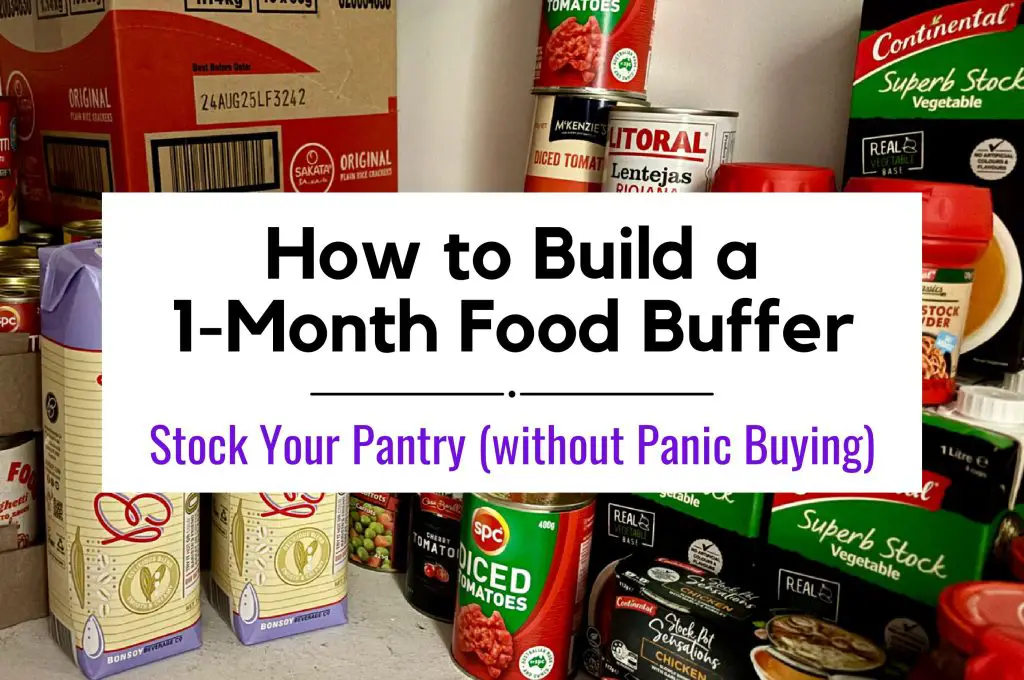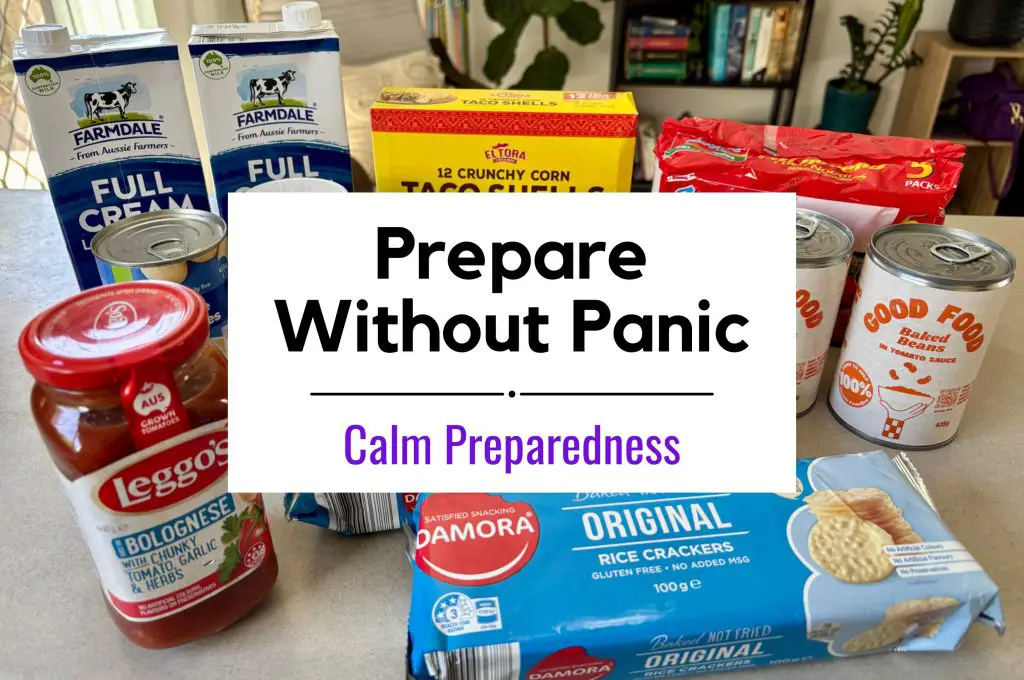

There was a time when I lived completely week-to-week with food.
If something ran out, I’d add it to my shopping list and grab it in my next shop. If the fridge looked empty, it simply meant it was time to go again. It felt normal—convenient, even—but it also meant I was constantly managing what we didn’t have.
I didn’t realise how much pressure that created until I stopped living that way.
These days, I run a simple two-pantry system, and it has completely changed how I run my home. Things feel calmer, more predictable, and far less reliant on the just-in-time delivery system.
🌿 It’s not about having a huge stockpile.
🌿 It’s not about fear or worst-case scenarios.
It’s about creating a small, steady layer of security and ease in everyday life.
A two-pantry system is a simple way of managing food at home by using:
• A working pantry for everyday use
∙ A second pantry for backstock & extra supplies
Instead of living week to week, you refill your main pantry from your backstock, helping you save money, reduce stress, and always stay a little ahead.
Watch: Why I Keep a Fully Stocked Second Pantry
It’s March 2026, and oil supplies around the world are coming to a halt.
Here’s my second pantry tour and a bit about
why I always keep one… especially now. 👇
What Is a Two-Pantry System?
A two-pantry system is simply a way of organising your food so that your home naturally stays ahead.
Instead of keeping everything in one space and constantly running it down to empty, you separate your food into two layers: what you’re using now, and what you’ll use next.
This is what a two-pantry system looks like:
- The working pantry – the one in the kitchen for everyday use
- The second pantry (backstock) – additional storage area/s for overflow & extras
Your kitchen pantry becomes a place you use from, not your entire supply.
Your second pantry becomes the quiet support system behind it.
Over time, this creates a natural buffer. You’re no longer relying on frequent top-up shops just to keep things going—you already have what you need, and you’re simply maintaining it.

Why Living Week-to-Week Feels So Stressful
Living week-to-week with food is incredibly common, and on the surface, it seems perfectly manageable.
But it often comes with a constant, low-level pressure that’s easy to overlook.
There’s always a level of dependency on the next shop. Meals depend on when you can get there, running out of something creates urgency, and even small disruptions can throw everything off.
It also means you’re constantly making decisions—what to buy, what to cook, what’s running low. That mental load adds up over time.
A two-pantry system softens all of that. Instead of operating on the edge of “just enough,” you create a margin—space where things don’t immediately fall apart if life doesn’t go to plan.
Why I Use a Two Pantry System

For me, this isn’t about having “extra food” for the sake of it.
It’s about recognising the very real, everyday situations where life doesn’t go to plan—and making sure my home can handle that without everything becoming stressful overnight.
It’s about buying yourself time.
These are the moments where a second pantry makes all the difference.
Unexpected Illness
Getting sick has a way of stopping everything.
Even a mild illness can make simple tasks feel difficult, and more serious ones can leave you completely unable to function for days—or even weeks. During those times, grocery shopping is usually the last thing you want to be doing.
With a second pantry in place, you don’t have to.
There’s already enough food in the house to put together simple meals, feed your family without extra effort, and get through the week without needing to leave home. It removes a huge layer of pressure at a time when your energy is already limited.
Job Loss or Decreased Income
Income changes can happen quickly, and when they do, groceries are often one of the first areas where pressure shows up.
Without any buffer, it can feel like you need to keep spending just to maintain the basics.
A second pantry gives you time.
Instead of needing to shop immediately, you can rely on what you already have at home. That might mean stretching meals a little further, skipping a shop entirely, or only topping up essentials.
It doesn’t solve everything—but it creates breathing room when you need it most.
Supply Chain Disruptions
Modern grocery systems are incredibly efficient—but they’re also very tightly timed.
Most stores operate on a “just-in-time” model, where stock is constantly moving in and out. When everything is running smoothly, it works well.
But when something slows down—whether it’s transport delays, product shortages, or increased demand—shelves can empty surprisingly quickly.
If you’re relying on frequent top-up shops, that can become stressful fast.
With a second pantry, those disruptions don’t affect you in the same way. You’re not dependent on what happens to be available that day—you already have a level of consistency at home.
| 🌿 READ: Creating a 1-Month Food Buffer → |
Natural Disasters (Including Power Outages)
In Australia, especially, natural disasters are something many of us have experienced in some form.
Floods, fires, storms, and even extended power outages can all disrupt normal routines very quickly. Shops may close, deliveries can be delayed, and access to basic items becomes less predictable.
Having a second pantry means you’re not starting from zero in those situations.
You already have shelf-stable food, basic household supplies, and the ability to get through a few days (or longer) without needing to restock. Even a power outage becomes easier to manage when you have options that don’t rely heavily on refrigeration.
Global Events
While we don’t live in a constant state of crisis, global events do have a way of affecting everyday life.
Things like fuel costs, food production, and transport systems can all flow through to grocery prices and availability over time.
You don’t need to react to every headline—but having a second pantry gives you a quiet layer of protection in the background.
It allows you to buy ahead when things are stable, avoid sudden price spikes where possible, and feel less affected by short-term changes.
Busy or Overwhelming Seasons of Life
Not every disruption is dramatic.
Sometimes life is just busy.
Work gets full, kids get sick, schedules stack up, and suddenly even a simple grocery run feels like too much.
A second pantry gives you flexibility in those moments.
You can lean on what you already have, simplify meals, and get through those weeks without needing to constantly restock. It takes one more thing off your plate when your capacity is already stretched.
A Simple Way to Stay Ahead
When you look at all of these situations together, a pattern starts to emerge.
This isn’t about preparing for one specific event. It’s about creating a home that can handle a range of normal life disruptions without everything becoming urgent or stressful.
A second pantry doesn’t need to be extreme to be effective. It just needs to keep you a little bit ahead.
| When a Second Pantry Helps Most |
|---|
| A second pantry becomes especially valuable during: • Illness • Low-energy weeks • Job loss or reduced income • Supply shortages • Natural disasters • Power outages • Busy/overwhelming seasons of life In short, it helps anytime life becomes less predictable. |
How My Two Pantry System Works

1. The Working Pantry (Kitchen)
This is the pantry I use every day.
It holds the food we’re currently eating—open packets, frequently used ingredients, and quick, easy options for meals and snacks.
I actually prefer this space to feel a little minimal.
When it’s not overcrowded, I can see everything clearly. I know exactly what needs refilling, and nothing gets lost or forgotten at the back.
If it looks slightly low, that’s intentional. It means food is being used properly and the system is flowing as it should.
2. The Second Pantry (Backstock)
My second pantry is where everything else lives.
It’s not styled or perfectly organised, it’s practical and functional. This is where I keep duplicates, bulk items, and anything with a longer shelf life.
It includes pantry staples, snacks, baking supplies, sauces, and household essentials.
When something runs low in the kitchen, I don’t immediately add it to a shopping list. I check the second pantry first and refill from there.
That simple habit is what keeps the whole system running smoothly.
Where to Create a Second Pantry (Even in Small Homes)

You don’t need a large or dedicated pantry space to make this work.
What matters more is the environment than the size. Ideally, your storage space should be cool, dry, and out of direct sunlight.
My second pantry is a storage cupboard under my stairs.
There is plenty of space, and it’s tucked away in the back of the laundry – easily accessible, but out of the way.
In many homes, this might look like a spare cupboard, laundry shelving, under-stair storage, or even a few stackable containers tucked into an existing space.
Some people use multiple spaces in the home for their backup storage – roll-out containers under the beds, a shelf in the linen closet, a storage unit in the garage.
It doesn’t need to be perfect. It just needs to be easy to get to and maintain.
How to Start a Second Pantry (Without Overwhelm)
Starting a second pantry can feel like a big task—but it doesn’t need to be.
In fact, the simplest approach is usually the most sustainable.
Start With Your Real Life
The most effective pantry is one that reflects how you actually live.
Take note of the meals you cook regularly, the snacks your family reaches for, and the basics you constantly replace. That’s your starting point.
Stock what you eat, eat what you stock.
There’s no benefit in stocking foods you don’t enjoy or won’t use.
Build Slowly Over Time
You don’t need to stock everything at once.
Start small by adding one or two extra items to your regular shop and setting them aside as backstock. Over time, those small additions build into a meaningful buffer.
It’s not about speed—it’s about consistency.
Use Sales to Your Advantage
When items you already use go on sale, that’s your opportunity to buy ahead.
Instead of purchasing one, you might buy a few and store the extras. Over time, this reduces how often you pay full price and helps your grocery budget stretch further.
| 🌿 READ: My $67/wk Grocery Budget → |
Keep Everything Moving
A second pantry works best when everything flows.
Food moves from your second pantry into your working pantry, and then onto your table. As you use items, you replace them.
Always rotate your stock, which means putting the newer items at the back and using up items from the front first.
Nothing sits untouched, and nothing goes to waste.
What to Keep in Your Second Pantry
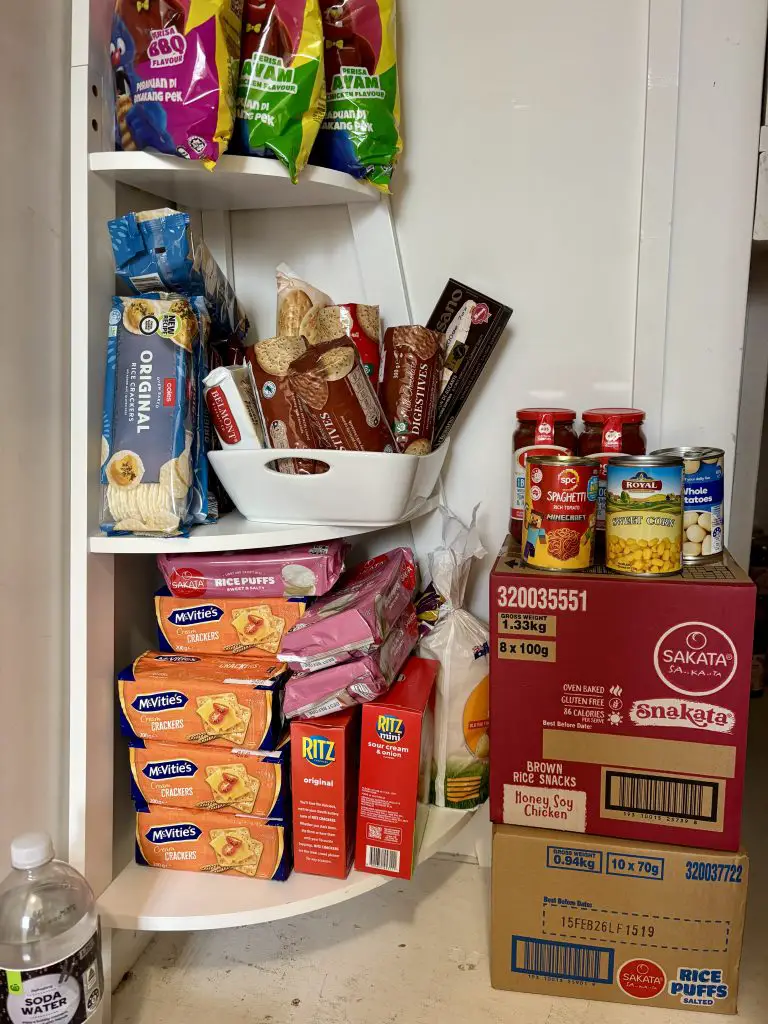
You don’t need a complicated system or a long checklist.
A second pantry is simply a reflection of what you already use.
That often includes everyday staples like rice, pasta, tinned food, and long-life milk. It might also include cooking basics like flour, oils, and spices, as well as household essentials like toilet paper and cleaning products.
Second pantry item examples:
- Rice & pasta
- Cereal
- Longlife milk
- Tinned food
- Flour & sugar
- Cooking oils
- Crackers, biscuits & chips
- Toothpaste, toilet paper & shampoo
- Deodorant, makeup & moisturiser
- Cleaning items
If it’s something you regularly reach for, it belongs in your system.
A Simpler Way to Think About It
Instead of asking what you should store or how much of it, think about the things you use on a daily basis and slowly get yourself ahead with those items.
Everyone’s second pantry will look different – and that’s okay.
Rather than aiming for a perfectly stocked pantry, focus on staying just a little bit ahead of your regular life.
That might mean having a few extra meals on hand, keeping backups of essentials, or simply reducing how often you need to shop.
Small additions will add up over time.
Final Thoughts
A second pantry isn’t about expecting something to go wrong.
It’s about making everyday life feel more manageable, more flexible, and less reactive.
It gives you options when you need them, reduces pressure in the background, and allows your home to support you in a quiet, practical way.
Once it’s in place, it becomes one of those systems you barely think about—but benefit from every single day.
| READ NEXT: How Freezing EVERYTHING Saves Money! → |
Pin It