Baking hasn’t always been wasteful. In fact, it was once a naturally low-waste kitchen activity, long before convenience products and single-use items became the norm. Over time, disposable liners, plastic wrap, and pre-packaged shortcuts have quietly crept in — and with them, a lot more unnecessary waste.
The good news? Zero waste baking doesn’t require a full kitchen overhaul. With a few easy swaps and some practical mindset shifts, you can significantly reduce waste while still baking the way you always have. Small changes really do add up in a low-waste kitchen.
One of the core principles of zero waste living is simple: use what you already own.
While materials like stainless steel and glass are ideal long-term, replacing perfectly usable plastic just for the sake of it creates more waste, not less. If it’s already in your kitchen, it deserves to be used.
From there, the biggest impact comes from ditching truly single-use baking items — the things designed to be thrown away after one use. They might seem convenient, but in most cases, they’re completely unnecessary and easy to replace with reusable alternatives.
ZERO WASTE BAKING:
- Use what you’ve got before buying new
- Replace items as needed with glass, metal or silicone
- Ditch single-use items for reusables
- Use compostable items if you’ve got a compost system
- Buy ingredients in bulk if possible
- Buy ingredients in recyclable packaging
- Consider the amount of resources that go into creating items
- Consider how items can be disposed of at the end of their life
So, let us explore how we can all make the transition into a more eco-friendly way of baking in the kitchen.
💡 This post may contain affiliate links (including eBay and Amazon Associates). If you buy through them, I may earn a small commission at no extra cost to you. I only recommend things I trust.
Zero Waste Baking Swaps
Butter
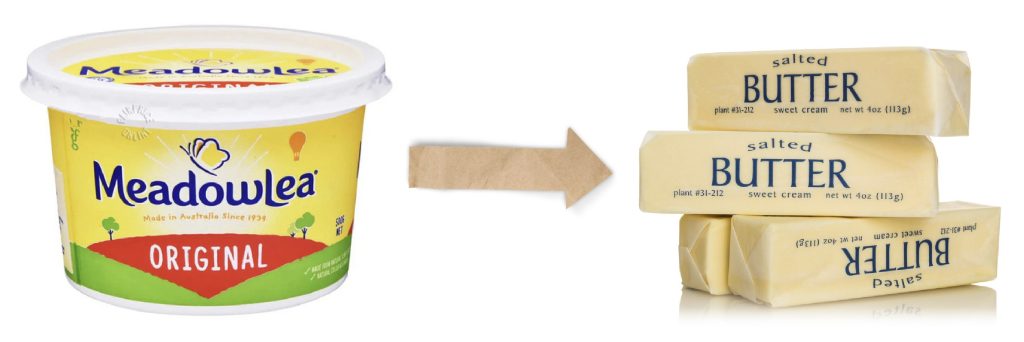
Plastic Margarine Containers → Paper-wrapped Butter
Buy blocks of butter, rather than butter or margarine in plastic containers. Take the butter out of the paper and store it in your own container or reuse an old butter container.
If your butter comes in a box, throw the box into the recycling bin or burn it in the fireplace.
Hang onto the waxed paper pieces that butter usually comes wrapped in. Wash them in warm, soapy water and stack them away in a drawer for your baking needs, or you can store them in a container in the fridge.
WAYS TO REPURPOSE BUTTER WRAPPERS:
- Baking tray liners – Use as a non-stick layer in the bottom of trays and pans when baking cakes, slices and muffins to prevent batter from sticking.
- Greasing trays – Use the paper to spread butter or oil onto baking trays, instead of paper towel.
Greasing the Tray
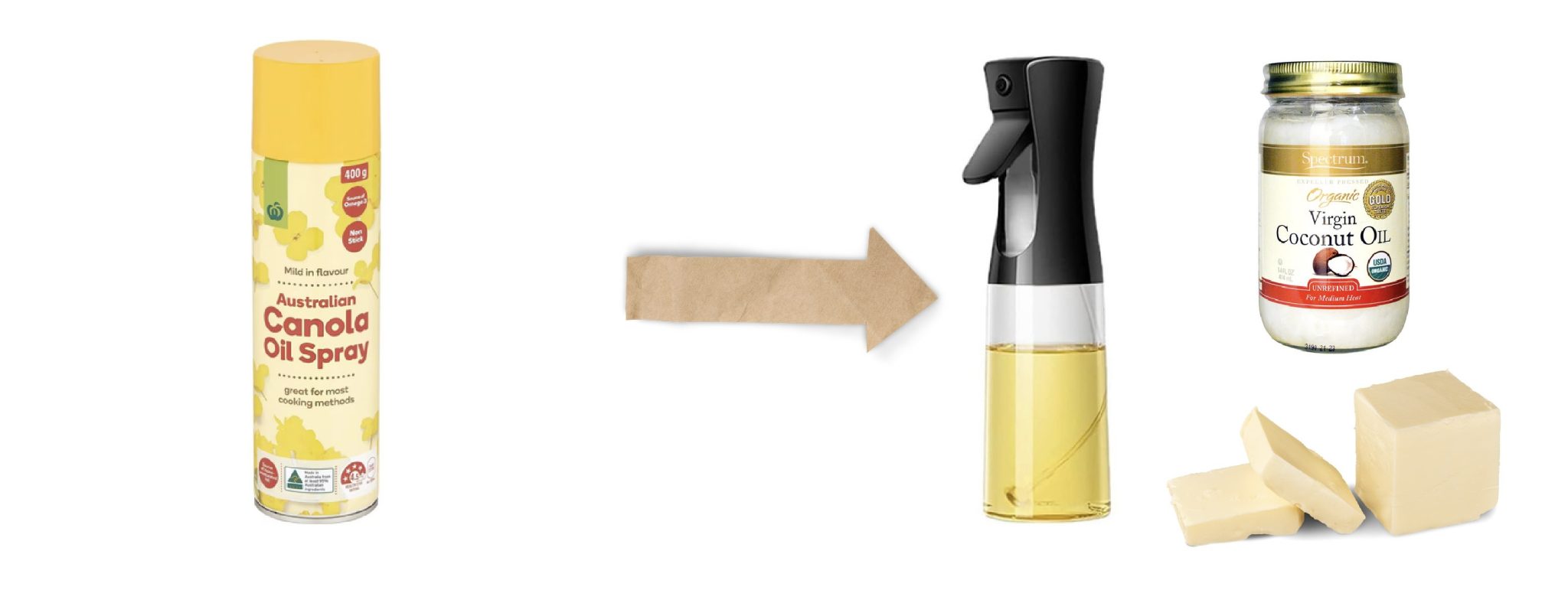
Disposable Spray Can → Refillable Sprayer/ Butter/ Coconut Oil
Do away with the disposable aerosol spray oil cans and buy a refillable spray bottle that you can pour oil into. Buying cooking oil in glass bottles (which are 100% recyclable) instead of plastic bottles (which can only be downcycled a handful of times) if you can.
Another alternative is to grease your trays with a bit of butter or oil instead. Coconut oil is a good, solid oil for greasing trays and works much the same as butter.
WAYS TO SPREAD GREASE ONTO TRAY:
- Unpaper towel – then rinse grease off under hot water & toss into the wash.
- Butter wrapper – either use it to then line the bottom of the baking tray or rinse and reuse it another day.
- Old fabric scraps – Cut up old fabric into squares for greasing trays and wiping out greasy dishes. Rinse, wash and reuse.
Unfortunately, compostable paper towels with grease or butter on them can’t go into a home compost system. If oil or grease ends up in compost, it can force air out, welcoming in anaerobic bacteria, which will ruin the compost and make it smelly.
Cupcake Liners
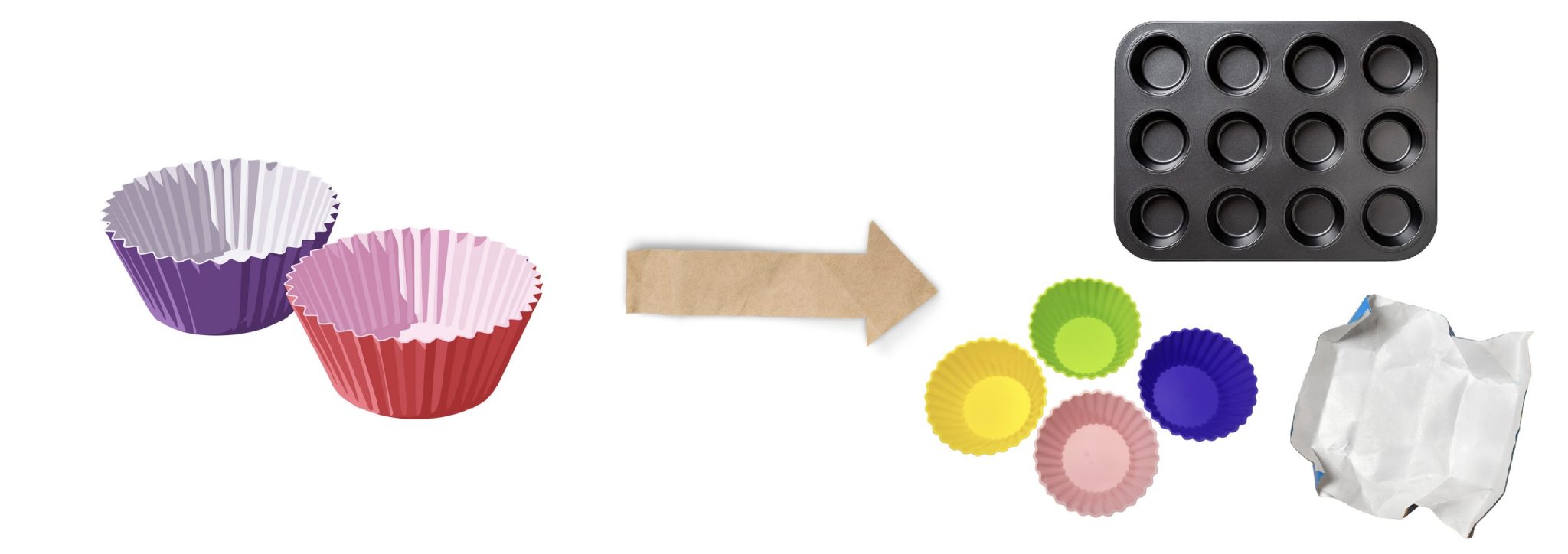
Paper Cupcake Liners → Silicone Liners/ Metal Trays/ Butter Wrappers
I know cupcake and muffin liners can look great (and reduce mess), especially when you’re serving up the cakes at a party or event, but they really are just more unnecessary paper waste.
Here are some cupcake liner alternatives for your zero waste baking.
Silicone Moulds
A great baking tool that doesn’t require greasing is silicone. Yes, it is still a plastic-type product, so metal is more sustainable in the long term, but silicone can be used over and over again. You can get dedicated silicone muffin trays or go for individual silicone cupcake moulds – all washable and reusable.
Metal Muffin Tray
Metal muffin trays (particularly stainless steel) are a great zero waste resource as they’re completely recyclable at the end of their life. Just grease each muffin slot with a bit of butter so that the batter doesn’t stick.
Butter Wrappers
Use your empty butter wrappers as muffin liners in your muffin trays. You can either store them in a container in the fridge until you’re ready to use them or wash them and stack them in a drawer. Don’t forget that you can keep washing and reusing them many times over.
Where to Buy:
Baking Paper
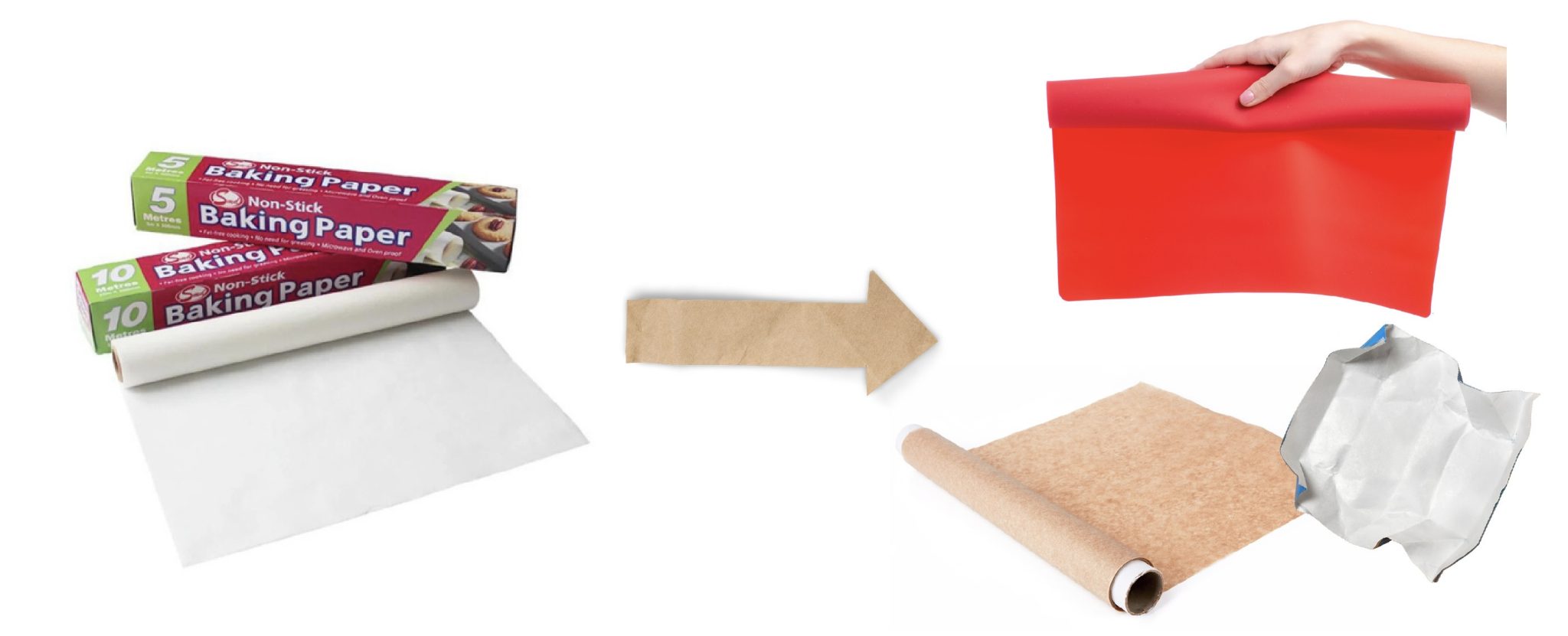
Baking Paper → Silicone Mat/ Butter Wrappers/ Compostable Paper
Historically, people haven’t always used baking paper for their baking needs. Although it is great at making sure foods don’t stick to the dish or tray and does reduce the amount of clean-up, it’s essentially another paper product that we don’t need to use.
Luckily, there are some baking paper alternatives.
Silicone Baking Mat
A silicone baking mat can be used over and over again, working the same as baking paper. They’re non-stick, washable and can retain high temperatures, making them totally safe to have sitting up against your food.
Grease the Tray
The age-old method of greasing your pans and trays with a bit of butter or oil will stop any food or batter from sticking. You can use the empty butter wrapper or some unpaper towel to spread some butter instead of reaching for the paper towel.
Compostable Baking Paper
If you’re still feeling the need for the occasional piece of baking paper and you have a compost bin, opt for a compostable baking paper. Make sure to read the packaging and make sure it’s suitable for home compost systems.
Butter Wrappers
As we’ve already touched on, you can wash your butter wrappers and use them to line your baking pans and muffin trays. They’re headed for landfill anyway, so you might as well give them a second life as a baking paper alternative.
Where to Buy:
Cling Wrap
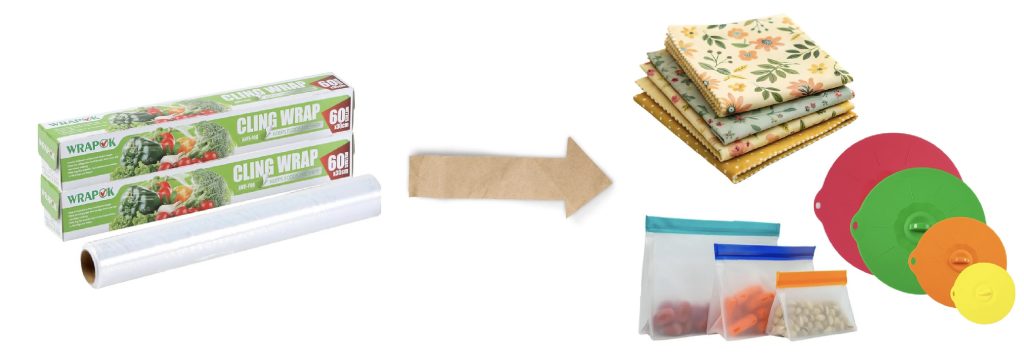
Plastic Wrap → Reusable Wraps, Covers, Pouches & Containers
I think we can all agree that plastic wrap is awful for the environment and will take hundreds of years to break down in the landfill hole.
If there’s only one thing you switch out in your zero waste baking efforts, make it cling wrap.
First of all, see if you can store the food in a container with a lid or throw a plate or tea towel over the dish to keep it fresh (and the flies off) before everyone is ready to eat.
Here are some more cling wrap alternatives…
Jars & Containers
The easiest way to store food and leftovers in the kitchen is to have a stash of recycled jars and containers. They are easily washable and can be reused for as long as you need.
Glass containers are better for the long term (when it comes to purchasing replacements), but if you’ve got plastic, then use up the plastic first.
Beeswax Wraps
For a versatile plastic wrap swap, get yourself a set of beeswax wraps. They’re basically pieces of fabric that have been coated in beeswax to lock in food freshness and moisture.
All you do is wrap the beeswax wrap over the dish or around the food that you want to store. The warmth of your hands will make the wrap pliable enough to mould it to whatever shape you need.
Silicone Bowl Covers
If you’re looking for a way to seal a bowl or pan, silicone bowl covers are the go. They create an airtight seal around any rim just by placing it on top.
Silicone can withstand high temperatures, which means you can use these in the microwave or on top of a pot on the stove, to stop splashes and keep moisture in. Also great for sealing bowls and containers in the fridge.

Fabric Bowl Covers
Another plastic wrap alternative is fabric bowl covers, which have an elastic or drawstring edge to hold the cover over the bowl, nice and snug.
Cloth bowl covers are great for keeping bugs and flies out on the serving table.
Reusable Food Pouches
There are many washable and reusable food bags, pockets and pouches available these days. They can be made from fabric (cotton, hemp or bamboo) or silicone. Perfect for storing small portions of food.
Compostable Cling Wrap
If you still want something you can discard (although I recommend going for a mix of the reusable options), you can opt for a compostable cling wrap. Bear in mind, it’s only better than the plastic wrap if you actually have a home compost system to dispose of it correctly.
Some of the compostable cling wraps on the market are merely ‘greenwashing,’ so make sure you read the label and get one that’s suitable for a home compost. True compostable cling wraps are made from plant-based materials, such as corn or sugar products.
Where to Buy:
Paper Towel
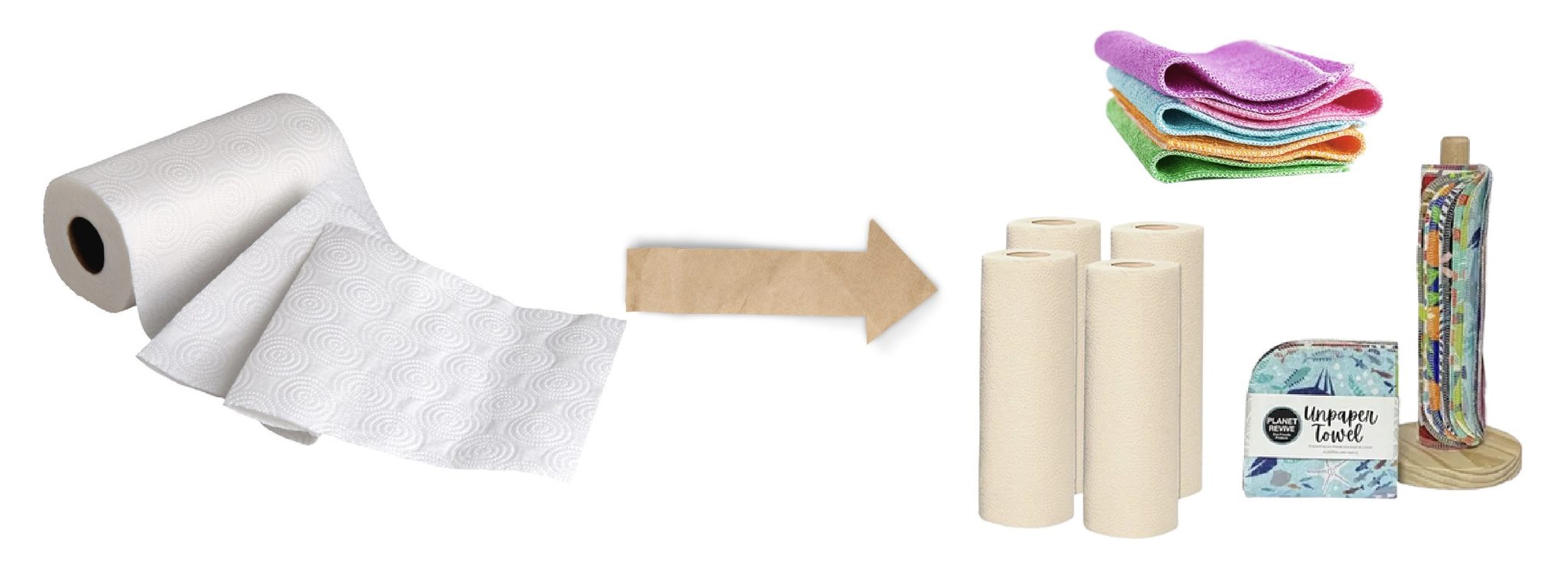
Paper Towel → Compostable or Unpaper Towel
Regular paper towel will eventually break down in landfill, but it will end up creating methane gas in the process. The other problem lies in the bleaches, additives and plastic wrap that all come with purchasing paper towels.
Another big consideration is that paper towels mostly come from logging virgin forests, wiping out natural habitats that have taken decades or even centuries to grow.
Although paper towel is paper, it can’t actually be recycled as the fibres are too short for them to be reused. So, paper towel inevitably ends up in landfill.
When it comes to zero waste paper towel options, there are a few to choose from, so let’s explore them.
Compostable Paper Towel
Any unbleached paper towel is generally compostable in your home compost. Note that the white paper towels from the supermarket have been bleached and won’t compost properly. Look for brown ‘compostable’ paper towels.
Bamboo Paper Towel
Bamboo paper towels are compostable as long as they don’t contain rayon (check the details on the packaging).
Recycled Paper Towel
The fibres that go into recycled paper towel include old clothing, newspapers and magazines, instead of cutting down virgin forests. Recycled paper towel isn’t compostable though, so it would still have to go into the trash.
Unpaper Towel
Basically, unpaper towels are a fabric version of paper towels. Therefore, you can rinse them, throw them into the washing machine and use over and over again. Great for cleaning up spills and mess, plus covering food in the microwave or fridge.
DIY Paper Towel (cut up rags)
You can cut up old shirts, towels, sheets, etc., into squares for your own DIY paper towels. They are easily rinsed and can be thrown in the wash with your other laundry.
Practical Zero Waste Baking Tips
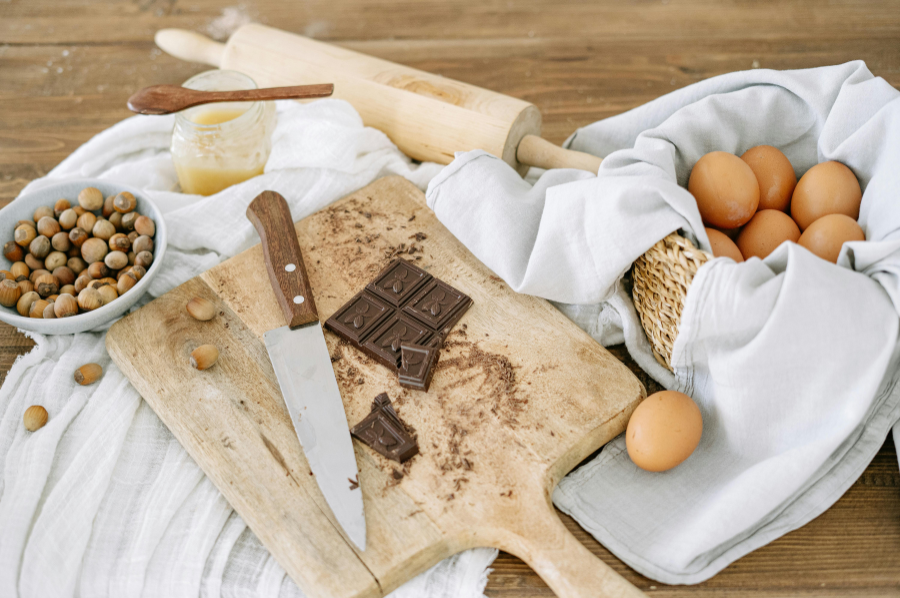
Zero Waste Baking Ingredients
If you have access to buying your baking ingredients from a bulk food store and can refill your own containers, all the better. Things like flour, sugar, chocolate, cocoa and some spices are often available in bulk.
For baking ingredients that you buy from the grocery store, look for items that are packaged in tins, jars, cardboard or paper. Often baking soda and flour come packed in cardboard boxes and paper bags.
Use your own fabric bags for fresh produce and say no to the plastic bags.
Don’t waste any of the food leftovers – eat them the next day and freeze up what you can.
Buying New Baking Tools
When it comes to replacing or adding new baking tools to your kitchen, see what you can pick up pre-loved before buying brand new. I’ve picked up some good quality 18/8 stainless steel pots and pans from thrift stores over the years (for a fraction of the price), which have replaced my cheap, crappy ones.
If you opt for buying brand new, go for glass and stainless steel over plastic. For utensils, look for wooden and stainless steel options.
Pots, Pans & Bakeware
When looking at pots, pans and bakeware, opt for quality stainless steel, cast iron, glass, silicone and ceramic items.
What’s the Deal with Silicone?
While silicone is a great alternative to disposable muffin cups and baking paper, it’s essentially still a plastic/rubber hybrid product.
Silicone can be downcycled a few times, much like plastic, but not usually through your local government’s waste facilities.
The jury (and long-term research) is still out on whether or not silicone leeches toxins into food at high temperatures, although the current studies don’t seem to share much concern.
You’ll notice that despite all of the above points, I’ve still recommended silicone throughout this post. That’s because although it can’t be recycled as readily at the end of its life, silicone is still a fantastic product that eliminates disposables, can withstand high temperatures and is non-stick.
If you’re not sure about silicone, I’d recommend doing some research to come to your own comfortable conclusion.
Why is Stainless Steel So Great?
There’s a reason chefs and restaurants all use food-grade stainless steel.
Here are some great pros for stainless steel:
- Buy once, use forever
- Won’t bow in high temperatures
- Doesn’t need non-stick coating
- Rust resistant
- Can be recycled
- Very hygienic
- Easy to clean
What to Do with Old Baking Tools?
If your old baking tools still have some life left in them, pass them along to someone else or donate them (think thrift stores, local charities, schools, kindergartens, etc.).
For items that are broken or beyond being useful, check your local council’s website to see what can go into your recycling bin. Interestingly, oven-proof glass dishes cannot be recycled in some areas, so it’s worth finding out before you sort your rubbish.
Zero Waste Baking Storage
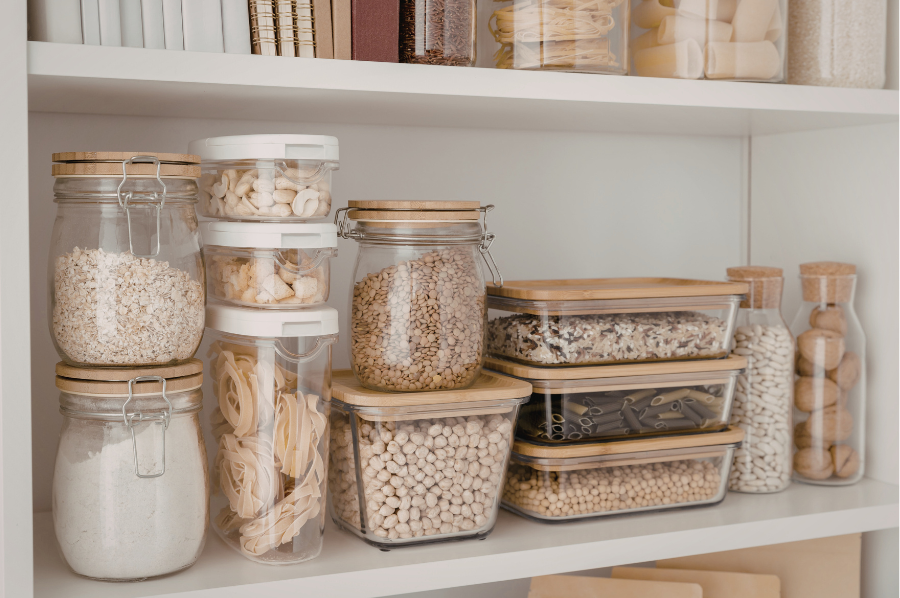
For zero waste baking storage, avoid disposable bags and wraps and opt for reusables that can be washed out and used over and over again.
Containers
Use whatever containers you’ve already got on hand. If you’re looking for something of a different size, shape or material, check out the thrift stores and second-hand market to see what you can find
The best zero waste baking storage option is the one that you’ve already got.
Glass Jars
Always rinse out sauce and food jars and repurpose them as storage vessels. Not only are they great for leftovers and for storing food from packets, but they are also great for pantry organisation.
You can also use glass jars for buttons, ribbons, rubber bands, etc. Everything always looks better in glass jars!
Beeswax Wraps
Wrap your food up in beeswax wraps or use them to seal open cheeses and fruits, etc. Another idea is to store food in a nice baking dish, then cover the dish with a beeswax wrap to keep it fresh.
Food Pouches
There are many different reusable food pockets, pouches and bags around these days. They’re often made from fabric, silicone or plastic. They make great snack bags that can be washed and used many times over. The best choice would be fabric pouches.
More on Zero Waste
• Zero Waste Bathroom →
• Zero Waste Baby →
• Zero Waste Periods →
• Stainless Steel Pegs (that last forever!)→
• Who Gives a Crap Toilet Paper (Review) →
• 10 Norwex Eco Cleaning Products →
Pin It