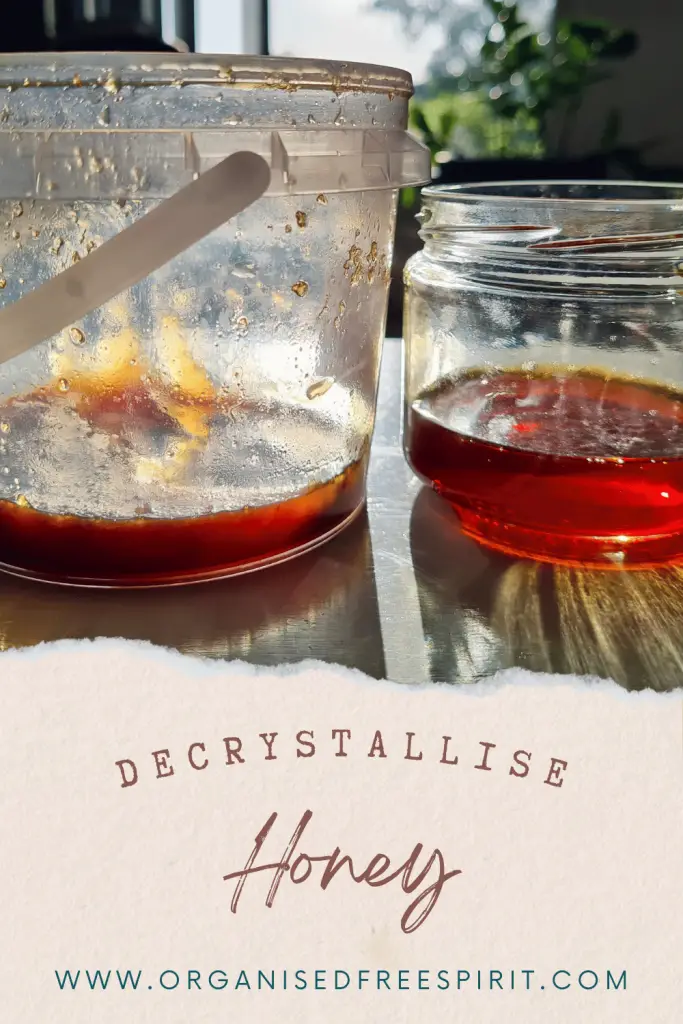
If you’ve ever reached the bottom of a jar of natural honey and found a thick, grainy or rock-hard layer, don’t panic — your honey hasn’t gone bad.
Crystallisation is completely natural, especially in raw or organic honey. The good news? You can easily turn that chunky honey back into smooth, pourable liquid without wasting a single drop.
In this article, I’ll explain why honey crystallises, the best natural way to decrystallise honey using sunlight, and a few safe alternative methods if sunshine isn’t an option.
Watch: How to Fix Chunky Honey Fast
View the quick video below of how I decrystallised honey in the sun. 👇
Why Honey Crystallises (And Why That’s a Good Thing)
Honey crystallises because it’s a natural sugar solution.
Raw and minimally processed honey contains pollen, enzymes and tiny particles that act as crystallisation starters.
Over time, the glucose separates from the water and forms crystals, especially when:
- The honey is raw or organic
- It’s stored at cooler temperatures
- The jar has been sitting for a while
- You’re near the bottom of the jar
Crystallised honey is actually a sign of high quality honey, not spoilage.

The Best Natural Way to Decrystallise Honey: Sunlight
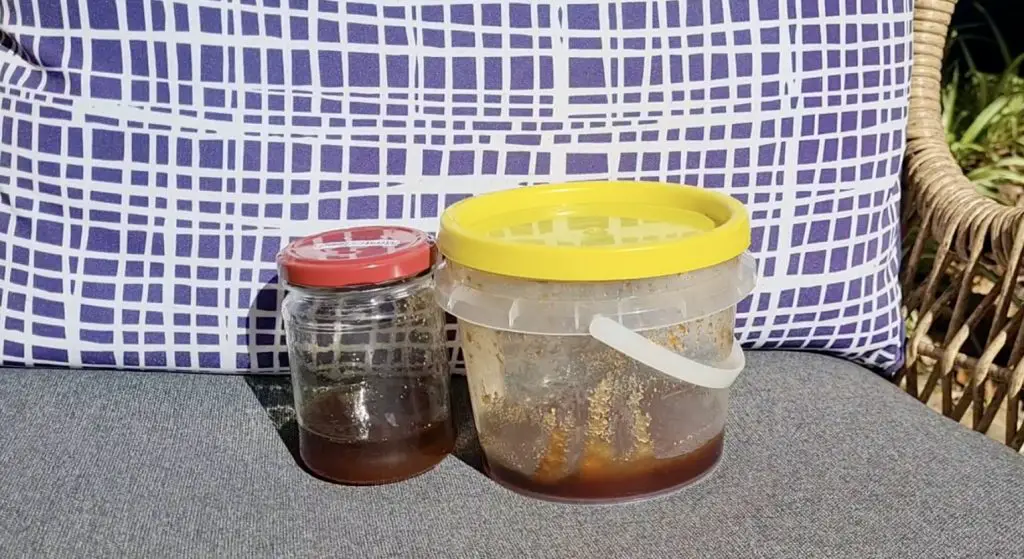
If you have access to direct sunlight, this is one of the easiest and most gentle methods for decrystallising honey.
How to Decrystallise Honey Using the Sun
- Make sure the lid is tightly sealed
- Place the jar in direct sunlight (a sunny windowsill or outdoors)
- Leave it for several hours a day
- Bring it inside at night
- Repeat for 1–3 days until fully liquid
You’ll usually see the honey start melting from the top down. The thicker the crystallisation, the longer it will take.
Important:
Indirect sunlight or cloudy conditions don’t work nearly as well. This method relies on consistent warmth from direct sun.
Why Sunlight Works So Well
Sunlight gently warms the honey without overheating it.
This matters because excessive heat can damage honey’s natural enzymes and beneficial compounds. Sunlight provides a slow, even warmth that allows the crystals to dissolve naturally back into liquid form.
Faster Alternative: Hot Water Bath
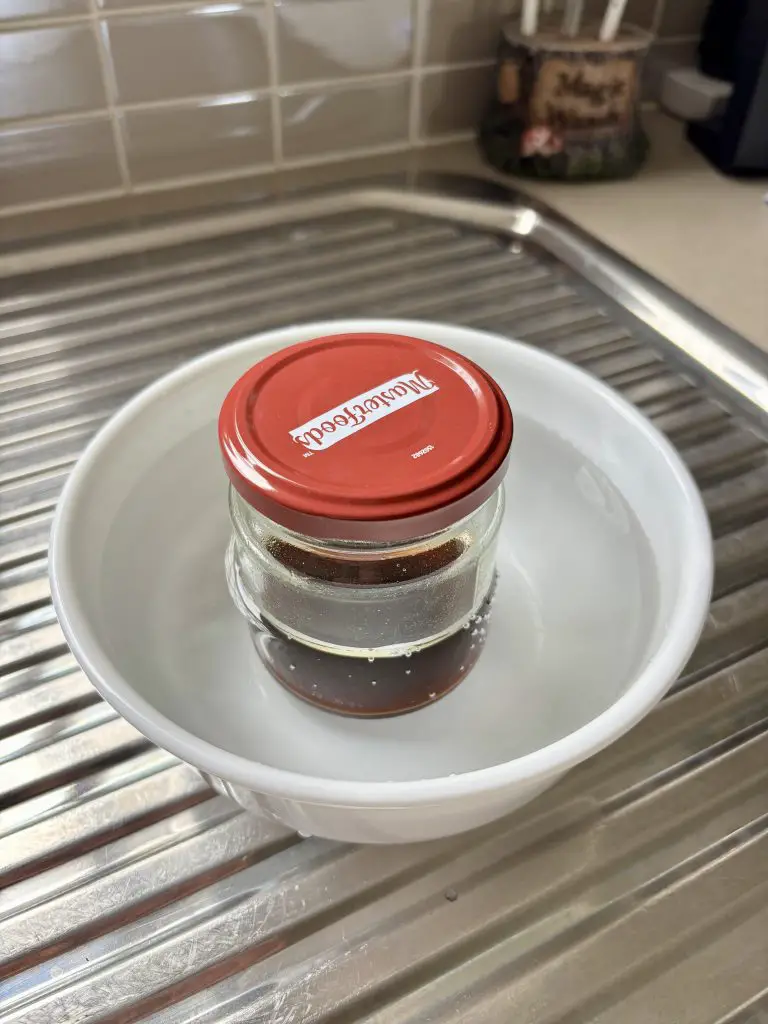
If you don’t have reliable sunshine, a hot water bath is the next best option for decrystallising honey.
How to Use a Hot Water Bath Safely
- Place the sealed honey jar in a sink or container
- Fill with hot (not boiling) water
- Let it sit for 10–15 minutes
- Stir or swirl the jar occasionally
- Refresh the hot water as needed
This method works faster than sunlight but still avoids overheating.
Can You Microwave Honey?
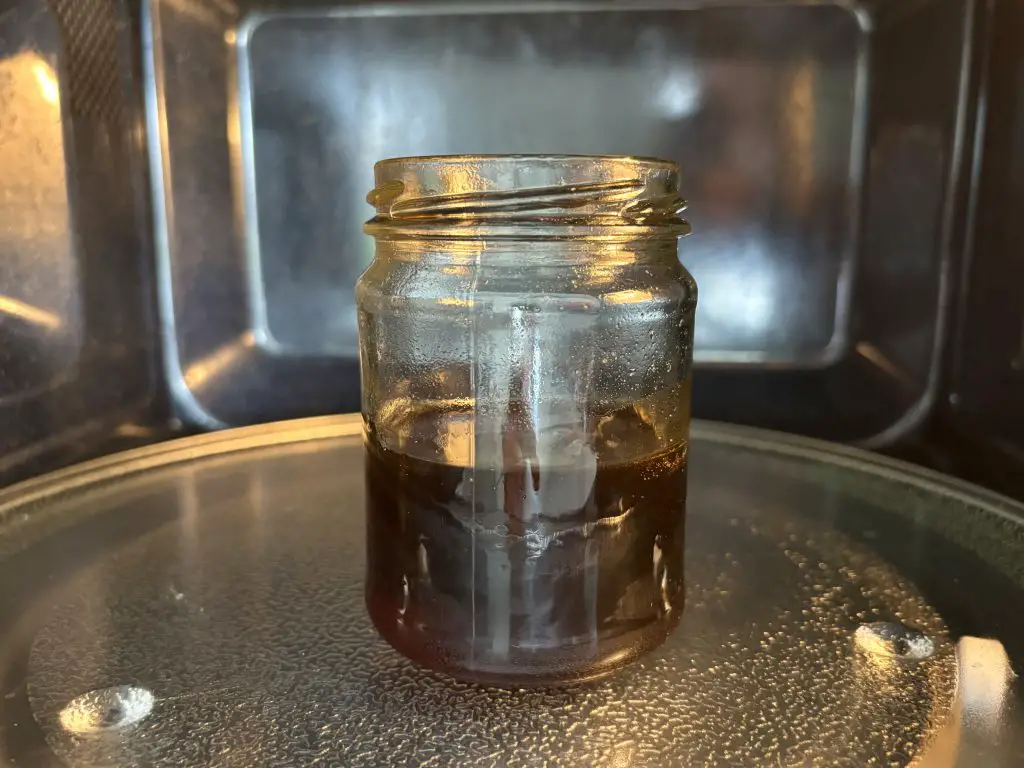
Yes, you can microwave honey to decrystallise it — with caution.
If your honey is in a glass jar without a metal lid, you can microwave it safely.
Microwave Method (Last Resort)
- Remove any metal lid
- Microwave in 30-second increments
- Stir between intervals
- Stop as soon as it liquefies
Avoid overheating — honey doesn’t need to be piping hot to melt.
What Not to Do When Decrystallising Honey
Here’s what NOT to do when decrystallising honey:
❌ Don’t boil honey
❌ Don’t leave it on a stovetop
❌ Don’t overheat for long periods
❌ Don’t assume crystallised honey is spoiled
Excessive heat can darken honey and reduce its nutritional value.
Will Honey Crystallise Again?
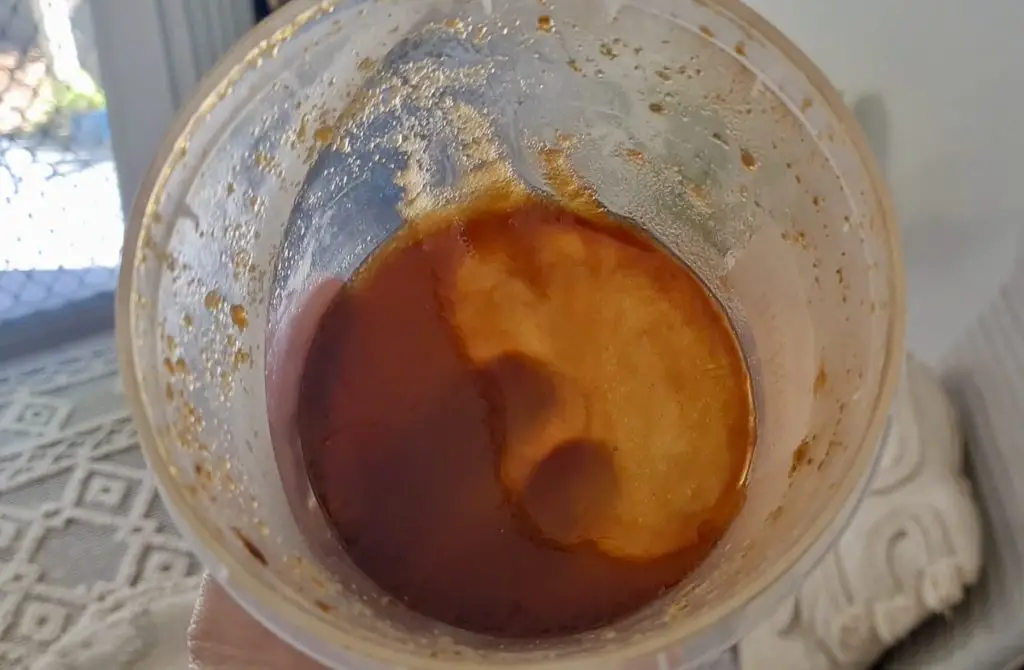
Yes, the honey most likely will crystallise again before you get to the bottom of the container, and that’s completely normal.
Once honey has crystallised, it’s more likely to do so again over time. Simply repeat any of the methods above whenever needed.
Final Thoughts
Crystallised honey is nothing to throw away or worry about. It’s a natural process — and easily reversible.
Whether you use sunlight, a hot water bath, or a gentle microwave method, you can restore your honey to smooth, golden perfection in no time.
No waste. No additives. Just good honey.
Pin It