
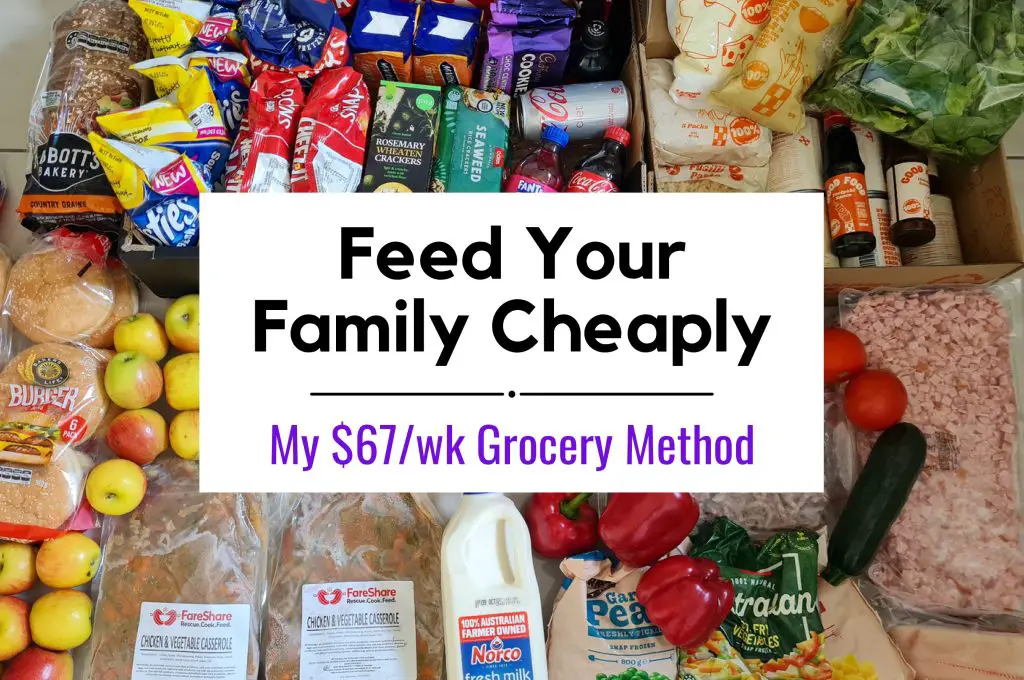
Grocery prices keep rising, but feeding a family on a tight budget is still possible with the right systems in place. Instead of relying on coupons or extreme restrictions, I focus on sourcing food differently, storing it well, and tracking spending consistently.
In 2025, I averaged just $67 per week feeding my household of three, and the approach behind that number is what really matters. These strategies can be adapted to suit different locations, family sizes, and income levels, making them useful long-term.
While I can acknowledge that not everyone has access to the same grocery stores as I do, I’ll share my strategy as inspiration to see what you’ve got in your area and adapt this method to best suit your situation.
Watch: How I Fed My Family for $67/Week
Join me below as I walk you through my entire grocery-savings system. 👇
1. Track Your Grocery Spending First
Before you can lower your grocery bill, you need to know what you’re actually spending. Tracking removes guesswork and shows you exactly where your money is going.
Once you can see your weekly average, it becomes easier to set realistic goals and make small adjustments. Even a basic budgeting app or spreadsheet can reveal patterns you wouldn’t otherwise notice.
Tracking helps you:
- Identify spending leaks
- Spot impulse purchases
- Set a realistic grocery target
- Measure progress over time
The goal isn’t perfection — it’s awareness. When you understand your numbers, every decision becomes more intentional.
How I Track My Grocery Spendings
I use a free app called Money Manager to track all of my incomings and outgoings, which includes my grocery costs.
Money Manager App:
Every time I make a purchase, I’ll add it into the app as an expense for that date on the calendar, and the same goes for whenever income hits my bank account. Over the year, you can easily see percentages and numbers to give you a really good snapshot of your income and costs.
| 💡 TIP: Get receipts for spendings while you’re out and about so you can log them in your app later. |

This is exactly how I was able to see that last year I spent a total of $3,501 on grocery costs. I simply divided that figure by 52 to get the weekly average.
$3501 ➗ 52 = $67 per week Grocery Average

2. Change Where You Source Your Food

The biggest savings often come not from shopping cheaper, but from shopping differently. Discount grocers, community food outlets, and surplus food programs can reduce costs dramatically.
Many of these organisations sell short-dated or surplus food that’s still perfectly safe to eat. Shopping this way supports food rescue efforts while stretching your grocery budget much further.
Places worth searching for in your area:
- Food pantries or food banks
- Surplus or rescued food stores
- Community grocery hubs
- Discount produce markets
- Food outlets
Search your maps app using terms like food pantry, discount groceries, or community food. You may be surprised by how many options exist once you start looking.
Grocery Discount Stores Examples in the Brisbane Area
- Lighthouse Care (Loganholme & Hillcrest)
- Tribe of Judah (Slacks Creek)
- Loaves & Fishes (Slacks Creek)
- Loaves & Fishes (Caboolture)
- Twin Rivers (Eagleby)
- A4 Community Care (Pallara)
Buying Pre-Packed Trolleys

The biggest way that I’ve been able to keep my grocery costs right down is by buying a pre-packed trolley of food every 2–3 weeks from my local Loaves & Fishes (for $50) or Lighthouse (for $55).
These trolleys come with well over $200 worth of food, including pantry items, fresh produce, bread and bakery items, plus often some dairy items.
The variety varies from day to day depending on availability, but the trolleys are always amazing value! Some of the items may be close to or just past their best-before dates, but that doesn’t bother me.
If the food’s still good, I’m eating it!
I freeze as much as I can so we always have a good supply on hand, save money, and reduce food wastage. With the items we receive that we won’t eat (or can’t eat in time), I always try to find someone else to give them to, so nothing is wasted.
🎥 VIDEO: An example of one of the trolleys from Lighthouse Care. 👇
3. Storage Is What Makes Cheap Groceries Work
Buying food cheaply only helps if you can store it properly. Storage turns opportunistic shopping into a long-term cost-saving strategy.
Extra freezer or pantry space lets you stock up when prices are low instead of buying only when you run out. This reduces waste, cuts emergency supermarket trips, and spreads savings across weeks or months.
Helpful storage options include:
- A second freezer
- Shelving in a laundry or garage
- Stackable pantry bins
- Under-stairs cupboards
The goal isn’t a perfect pantry — it’s flexibility. When you have room to store food, you gain control over when and how you shop.
4. Build a “Second Pantry” Mindset

Most people have a regular ‘working’ pantry in their home, but how many have a ‘second pantry?’
A second pantry is somewhere you can store extra food supplies, which you use to keep the working pantry topped up. It’s especially handy to have when you come across good deals and bulk buys of things you know you’ll eat anyway.
This extra pantry changes the way you think about groceries. Instead of shopping week-to-week, you start building a buffer of food at home.
This buffer means some weeks you barely shop at all because you’re eating from what you’ve already stored. Over time, that rhythm smooths out grocery spending and reduces stress around price spikes.
Benefits of having a second pantry:
- Fewer urgent supermarket trips
- Protection against sudden price rises/ weather events/ job loss/ emergencies
- Less food waste
- More meal flexibility
A second pantry can look like a shelf in the garage, a spare cupboard, or, in my case, the empty storage space under the stairs.
It also creates a quiet sense of security, knowing you have food available even if money gets tight, the world gets chaotic, or life gets busy.
Cheap Groceries Also Reduce Waste
Lowering grocery costs often goes hand-in-hand with reducing food waste. When you buy surplus or rescued food, you’re helping divert perfectly edible items from landfill.
For many people (me included!), this becomes just as motivating as the financial savings. Knowing your groceries are both budget-friendly and environmentally helpful adds extra purpose to the process.
This approach turns grocery shopping from a chore into something more intentional. You’re not just saving money — you’re using resources more thoughtfully.
Will This Work for Everyone?
Every household has different constraints, so no system works identically for everyone. Factors like storage space, local food access, family size, and dietary needs all play a role.
But most people can adopt at least one part of this approach. Even small changes — tracking spending, stocking up on staples, or exploring local food programs — can reduce grocery costs over time.
The key isn’t in trying to replicate someone else’s system exactly. It’s finding the version that works in your own home and builds savings gradually.
FAQs: Feeding a Family on a Budget

Yes — the biggest savings usually come from changing where you shop rather than chasing discounts at the supermarket. Sourcing surplus food, buying in bulk when prices are low, and storing food properly often has a bigger impact than couponing alone.
Grocery budgets vary widely depending on location, dietary needs, and access to discount food options. Instead of comparing numbers, it’s more helpful to focus on reducing your own weekly average over time.
Even small reductions add up significantly across a year.
Getting into the habit of working through the food you’ve already got before buying more is one of the quickest ways to reduce your grocery costs.
Then start tracking your spending so you know your baseline. Then look for one immediate change you can make, such as buying staples in bulk, reducing food waste, or exploring alternative food sources in your area.
Quick wins often come from awareness rather than drastic lifestyle changes.
Yes — “best before” dates refer to quality, not safety. If food is stored properly and still looks and smells fine, it’s often perfectly usable past that date. “Used by” means that the food is no longer safe to consume beyond that date.
Learning the difference between best before and use by can save a lot of money and prevent unnecessary waste.
Even small storage solutions can help. Stackable bins, shelf organisers, or dedicating a cupboard to bulk items can give you more flexibility without needing extra appliances.
The goal isn’t to stockpile — it’s to create enough buffer to shop strategically instead of urgently.
Conclusion
Feeding a family cheaply isn’t about extreme frugality or eating less — it’s about building systems that make food stretch further over time. When you change how you source, store, and plan your groceries, the savings start to happen naturally.
The most important step is simply starting where you are. Whether that means tracking your spending, exploring local food options, or organising your pantry, each small change builds momentum toward a grocery routine that feels calmer, cheaper, and more sustainable long term.
More Food Savings
Pin It