
Living with ARFID (Avoidant Restrictive Food Intake Disorder) can make something as ordinary as eating feel unpredictable, stressful, and at times overwhelming. For many people, it isn’t about food preferences or being “fussy.” It’s about whether food feels possible at all in that moment.
ARFID is an eating disorder that is not connected to body image or weight concerns, unlike anorexia or bulimia. Instead, it is usually shaped by sensory sensitivities, fear responses around food, or a consistently low appetite that makes eating feel difficult rather than automatic.
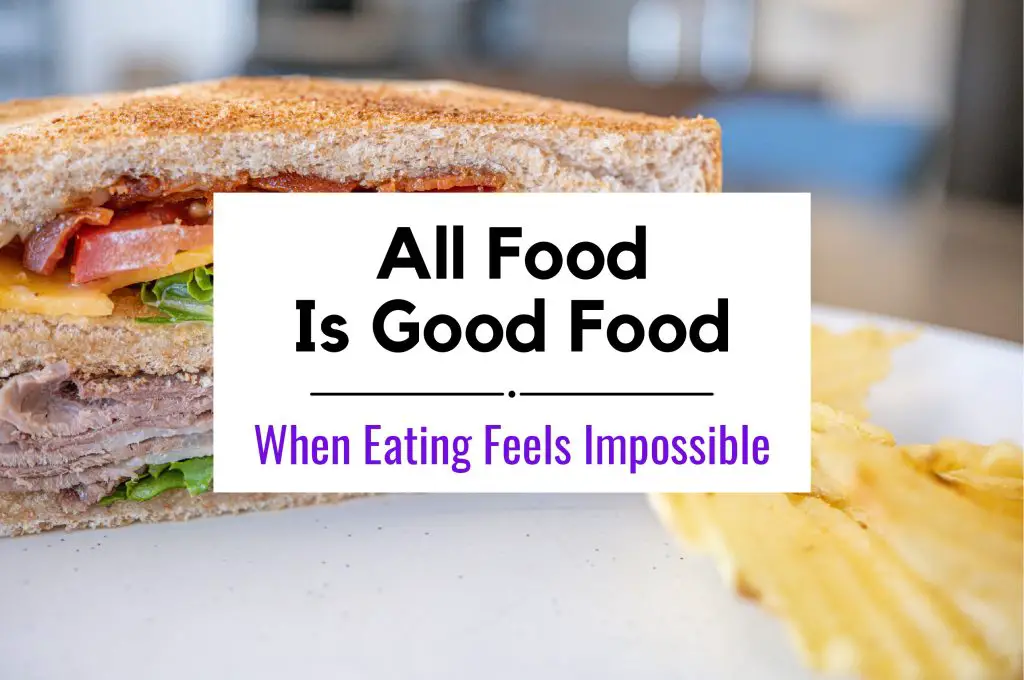
In that reality, the idea of “all food is good food” starts to make sense – not as a wellness phrase, but as a survival-based way of understanding nourishment.
Watch: All Food Is “Good Food” When You Have ARFID
Press play as I chat about the theory of ‘all food being good food’ for those who have ARFID. 👇
What ARFID Feels Like in Daily Life
ARFID is often described clinically as a restrictive eating disorder, but lived experience is far less structured. It tends to feel like a constant negotiation between needing to eat and being able to tolerate food in front of you.
For some people, ARFID is driven by sensory experience. For others, it’s fear-based. And for many, it is simply a lack of appetite that makes eating feel more like effort than it should be.
Common ARFID experiences can include:
- Feeling overwhelmed by food choices
- Relying on a very small range of “safe foods”
- Skipping meals because nothing feels tolerable
- Eating feels emotionally or physically difficult
- Eating only small amounts at a time – just enough to get themselves through
These experiences don’t always stay consistent. They can shift from day to day, or even meal to meal, depending on stress, fatigue, or sensory sensitivity.

When Food Becomes Something You Have to Work Around

One of the most difficult parts of ARFID is that it quietly reshapes daily routines without always being visible to others.
From the outside, it might look like picky eating, irregular meals, or lots of tiny snacks. Internally, it often feels like constant adjustment.
You’re always trying to find whatever version of food feels possible in that moment, plus making sure you’re still getting enough calories into your body to keep functioning.
There are times when:
- Opening the fridge feels manageable
- And times when every option feels wrong, overwhelming, or completely neutral
Hunger may still be present, but not strong enough to override the internal resistance to eating something that feels unsafe or intolerable.
Over time, many people begin relying on predictable foods that feel “safe enough” to eat consistently, even if they are repetitive or simple.
ARFID Food Aversion & Sensory Sensitivities
For many people living with ARFID, food aversion is strongly sensory-based rather than preference-based.
A food isn’t avoided because it is disliked in a typical sense, but because something about it creates an immediate physical or emotional reaction.
For me, I can’t even look at jelly without feeling queezy!
This can include sensitivity to:
- Textures (soft, mushy, crunchy, or mixed textures)
- Smells (strong or unfamiliar aromas)
- Tastes (bitterness, spice, sweetness intensity)
- Visual appearance (mixed foods, colours, or presentation)
These reactions are often automatic. They are not something a person chooses or reasons through in the moment. They simply happen, and they can make certain foods feel completely inaccessible even if the person can’t always put their finger on why.
Why “Just Eat Something” Doesn’t Work With ARFID

A common misunderstanding around restrictive eating is the belief that hunger will eventually override all barriers to eating.
But with ARFID, that assumption doesn’t reflect how the nervous system responds.
When food feels distressing or intolerable, the body can override hunger signals in favour of protection and avoidance. Even when energy is low, the available food may still feel impossible to eat.
This creates a difficult disconnect between:
- The body’s need for nourishment
- The body’s ability to tolerate available food
For many people with ARFID, hunger can become familiar and sometimes even easier to sit with than the distress of forcing down food that feels wrong.
Looking At Food Differently
Understanding ARFID isn’t just about awareness – it changes how we approach eating entirely.
When food is difficult, standard ideas about nutrition, balance, or variety can unintentionally add pressure. What tends to be more helpful is shifting focus toward what is actually achievable.
That often means:
- Reducing pressure around food choices
- Prioritising consistency over variety
- Allowing “good enough” meals rather than ideal meals
This aligns closely with my idea of food and meal simplicity. It’s all about removing unnecessary complexity so eating becomes more possible, not more overwhelming.
I’ve come to realise that for me, ARFID is a journey towards learning to find joy in food… even if that menu is still very small.
Why “All Food Is Good Food” Matters in ARFID

In ARFID, food is not always about nutritional ideals or variety. It becomes about what is tolerable, accessible, and emotionally manageable in the moment.
“All food is good food” reflects that reality.
‘All food is good food’ can look like:
- Eating very simple foods during difficult periods
- Relying on repetitive “safe foods”
- Choosing convenience foods when nothing else feels possible
- Prioritising intake over variety or balance
A packet of chips or a plain sandwich isn’t a “better” or “worse” choice in that moment – it can simply be the only option that the body and nervous system will allow.
From my own lived experience perspective, ARFID food choices are often guided by:
👉 Safety
👉 Predictability
👉 Familiarity
👉 Sensory tolerance
rather than external expectations of what a “healthy diet” should look like.
Misunderstandings About ARFID
ARFID is frequently misunderstood because it can look like a chosen behaviour rather than a subconscious experience. From the outside, eating difficulty can be misread as a lack of effort, unwillingness, or even rebellious entitlement.
But internally, even small eating decisions can require significant mental and emotional effort.
What often gets missed is how much internal negotiation is happening just to eat something… especially when most options feel difficult or unsafe.
Guilting, shaming, or ‘educating about nutrition’ only increases the difficulty level of eating for someone with ARFID.
Pressure, encouragement, or guilt-based messaging (“just try it”, “you’ll eat if you’re hungry”) often makes eating harder rather than easier, because it adds emotional weight to something already challenging.
Supporting Someone Living With ARFID

Supporting someone with ARFID doesn’t need to be complex, but it does need to be low-pressure and inclusive.
What support for those with ARFID looks like:
- Respecting safe foods without judgement
- Removing pressure to try new foods
- Focusing on eating something, not eating “well”
- Recognising that small or repetitive meals still matter
The goal isn’t to force variety or improvement in the moment – it’s to make eating feel more possible and less emotionally loaded.
Rethinking Food When You Live With ARFID
Living with ARFID can shift the entire relationship with food. Instead of being automatic or enjoyable, eating becomes something that depends on capacity, tolerance, and nervous system response.
Some days, eating is easier. Some days it is not. Both are valid experiences within the same person.
In that context, “good food” is not defined by external rules or nutrition ideals. It is defined by what can be eaten safely enough to support the body in that moment.
Final Thought
ARFID is often misunderstood because it doesn’t fit neatly into common ideas of eating or food behaviour. But for those living with it, food can be one of the most complex parts of daily life.
Reframing eating as “all food is good food” isn’t about lowering expectations. It’s about recognising reality – that when eating is difficult, the priority is not perfection, but possibility.
And sometimes, possibility looks like whatever food can be safely and gently managed in that moment.
| 🌿 READ NEXT: I Thought I Was Just a Picky Eater → |
Pin It