
If you’ve ever wondered whether you can make butter with an immersion blender, the answer is yes — and it’s surprisingly simple. Making homemade butter with a stick blender is a great way to use up excess cream, save money, and stock your freezer with real butter made from a single ingredient.
In this step-by-step guide, you’ll learn exactly how to make butter using an immersion blender, how long it takes, how to know when it’s ready, and how to rinse and store it properly so it lasts.
Whether you only have a hand blender or just want an easy, small-batch method, this technique works beautifully.
💡 This post may contain affiliate links (including eBay and Amazon Associates). If you buy through them, I may earn a small commission at no extra cost to you. I only recommend things I trust.
Watch: How to Make Butter with a Stick Blender
Follow along below as I (successfully!) make butter for the first time with my immersion blender. 👇
What You Need for Butter-Making with a Stick Blender
Although cream is the only ingredient you’ll need for making butter, there are a few tools to get ready so the process can run smoothly.
Ingredients & Materials
Here’s what you’ll need:
- Thickened cream or heavy cream (no additives if possible)
- Immersion blender / stick blender
- Tall narrow container or jar
- Strainer or sieve
- Bowl of cold or iced water – prepare this a bit later
- Optional: salt

When making butter with an immersion blender (instead of a standing mixer), using a tall, narrow vessel is recommended. I used a tall glass vase, which was perfect for this.
Why a tall container matters:
- Helps the cream circulate properly
- Prevents splashing
- Makes butter form faster

Step 1: Start Blending the Cream

Pour your cream into a tall container and insert the immersion blender so the blade is fully submerged.
It helps to have a tea towel underneath the container to soak up the condensation.
Begin blending on low speed and keep the blender mostly still (holding onto the container, so it doesn’t move). Let the cream move around naturally rather than pushing the blender through it.
What you’ll notice:
- After 1–3 minutes, the cream thickens
- It becomes soft whipped cream
- It may feel like nothing is happening — this is normal
💡 Tip for beginners:
Butter forms from fat molecules clumping together. The whipped cream stage is part of the process, not a mistake.
Step 2: Keep Going Until the Cream Turns Grainy

Increase the speed on your appliance and continue blending.
After several minutes, the texture will change from smooth whipped cream to grainy and lumpy.
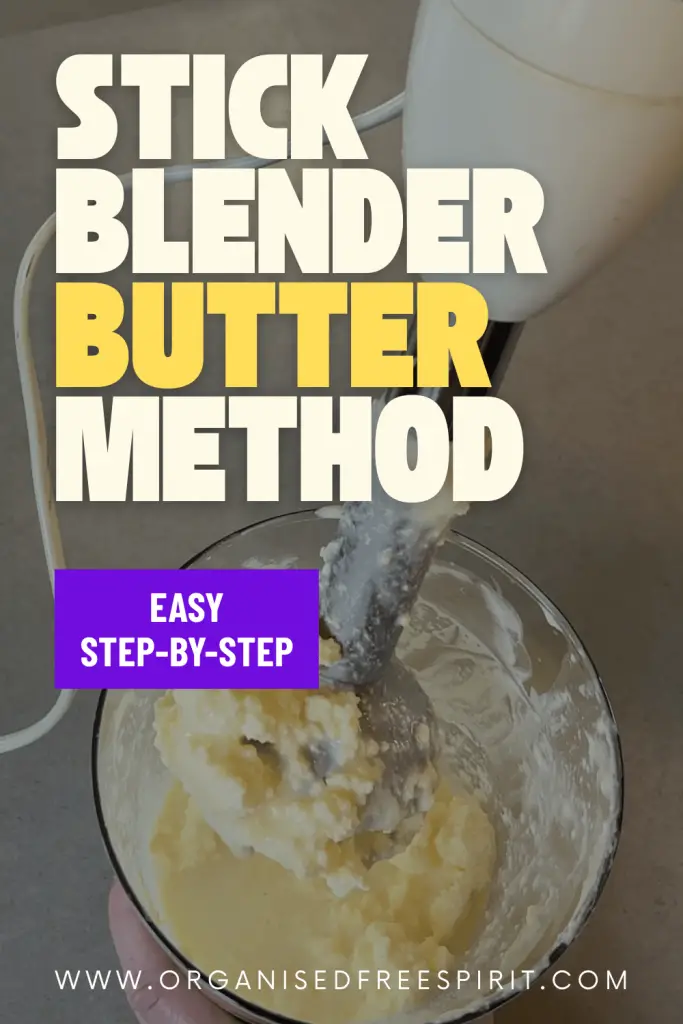
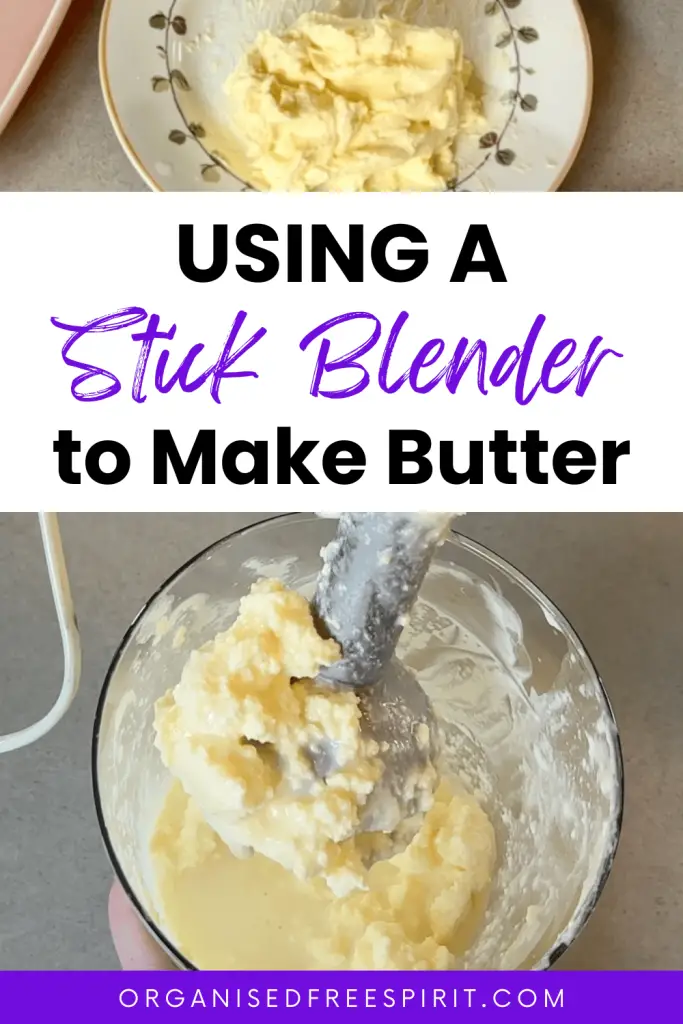
After a while, you’ll see liquid pooling at the bottom — this is buttermilk separating from the butter.
Signs Butter is Forming
After the first go of making butter, you’ll quickly get to recognise the telltale signs that you’ve gone from whipped cream to butter and buttermilk.
Here’s how to know you’ve got butter happening:
- Yellowish clumps appear (almost like it’s curdling)
- Liquid gathers underneath
- The sound of the blender changes
- The mixture suddenly looks “broken”
If your blender gets hot (which it most likely will), stop and let it cool before continuing in short bursts.
With an immersion blender, this stage can take 20–30 minutes, depending on how much cream you’re using.
Step 3: Strain the Butter from the Buttermilk

Once you clearly see clumps of butter floating in liquid, stop blending. It may feel like you need to keep going, but trust me, you’re done!
Overblending can cause the butter to become too soft and greasy.
How to Strain the Butter
Put a strainer over the top of a bowl and pour everything from the container through the strainer. Use a spatula to gently move the butter around in the strainer to help get the bulk of the buttermilk out.
Set the strainer, which is still holding all of the butter, on a plate.
Don’t Waste the Buttermilk
You can pour the buttermilk down the sink if you don’t want to use it. However, buttermilk is great for baking if you want to try and use it for something else.
Homemade buttermilk has a mild flavour and works well in most recipes. Just pour the buttermilk from the bowl into a jar, and store it in the fridge for up to 1 week.
Uses for buttermilk:
- Use in pancakes
- Add to muffins or cakes
- Use in savoury baking
- Use for mashed potatoes
Step 4: Rinse the Butter Properly

This step is essential for beginners because it determines how long your butter will last. Proper rinsing removes leftover buttermilk (which can spoil quickly) and helps your butter maintain a clean, smooth texture that’s easier to shape and store.
How to Rinse the Butter
- Fill a bowl 3/4 full of water and add about 6 ice cubes.
This creates very cold water, which helps to solidify the butter and make rinsing out the buttermilk easier. - Place all of the butter into the bowl of cold water.
- Gently squeeze and fold the butter with your hands or a spoon.
- Take the butter out and set it in another bowl.
- Tip out the water & refill the bowl with fresh water and more ice cubes.
- Rinse again by putting the butter back into the cold water & squeezing the buttermilk out.
- Repeat this process one more time.
Rinse the butter at least 3 times.
Why Rinsing Matters
Rinsing the buttermilk out of the butter is important because it prevents the butter from spoiling quickly. You’ll notice if you keep the buttermilk in the fridge, that by the end of a week it will quickly start to smell sour and rancid.
Removing the buttermilk liquid also gives it better flavour and gives us that thick, soft, spreadable butter we all love.
You’ll know the butter is ready when:
🧈 The water stays mostly clear
🧈 The butter feels firm & smooth
🧈 No milky liquid seeps out when squeezed
Step 5: Add Salt (Optional)

If you prefer salted butter, now is the time to add it. After all of the rinsing, put your butter onto a clean plate.
How to salt the butter:
- Start with about ¼ teaspoon salt per 2 cups of butter
- Knead it through evenly & taste
- Add more salt if desired
You can always add more later, but you can’t remove it — so start small.
Why Salt Helps the Butter
Salt is not at all necessary when it comes to buttermaking; many people have become accustomed to ‘Salted Butter.’
Salt does enhance the flavour of the butter and gives it a taste closer to the store-bought butter. It also slightly improves the shelf life if you don’t plan on freezing it.
Step 6: Shape and Store Your Butter

The easiest way to shape and portion the butter is to use silicone moulds. I just used the silicone cupcake moulds that I had, and they’re perfect, albeit a little small, but that’s okay.
If you don’t have moulds, you can just use small containers or even glass jars. Use whatever you’ve got on hand.
Then choose how you’re going to store your butter.
I made a lot and already had butter in the fridge, so I decided to set the butter in moulds in the fridge, then pop them out and continue to store them in ziplock bags in the freezer.
I have three small containers for butter, which I store short-term in the fridge (and one on the bench for softness). So as each container empties and gets washed, I simply refill it with another butter portion from the freezer.
Butter Storage Options
Where you store your butter is up to you. It will last a few days on the bench, depending on your climate. Otherwise, the fridge is best for short-term use and the freezer for longer-term storage if you have excess.
Storing butter:
- Fridge: lasts about 1–2 weeks
- Freezer: lasts several months
- Small portions: easy to thaw as needed
Freezing works especially well if you’re making butter in bulk.
How Long Does It Take with a Stick Blender?
Making butter with an immersion (stick) blender does take longer than with a regular stand mixer. But, if you’re like me and that’s all you’ve got – use it! It works perfectly fine, and I find the process quite relaxing and meditative.
Butter-making times:
- Stand mixer: 5–10 minutes
- Food processor: 5–8 minutes
- Immersion blender: about 20–30 minutes (longer if you need to keep stopping to cool down the blender)
Beginner Tips for Success

If you’re new to making butter, don’t be afraid! The first time I did it, I wasn’t even sure if it was going to work with my stick blender, but it did!
It’s not as hard as you think, and after a few goes, you’ll be an old hand.
Beginner butter-making tips:
- Use pure cream with high fat content
- Tall containers work better than wide bowls
- Pause if your blender overheats – allow it to cool as you go
- Always rinse butter thoroughly
- Freeze extra butter in containers or ziplock bags for use later
FAQs for Making Butter with an Immersion Blender
– Use heavy cream or thickened cream with at least 35% fat.
– Low-fat cream or milk won’t form butter properly.
– Avoid ultra-pasteurised cream if possible; fresh cream gives a better taste and faster separation.
– With an immersion blender, expect 20–30 minutes (longer if the blender keeps getting hot).
– Stand mixers or food processors can do it in 5–10 minutes.
– Time depends on the container shape, cream temperature, and blender power.
– Overblending once separation is complete can make butter greasy or watery.
– Texture may become too soft, and water may start separating.
– Stop blending once butter clumps appear and buttermilk is visible at the bottom.
– Rinsing removes leftover buttermilk that can spoil quickly.
– It helps the butter last longer and keeps the texture smooth and easy to shape.
– Usually, 2–3 cold water rinses are enough.
– Yes! Add ¼ teaspoon salt per 2 cups of butter after rinsing.
– Knead gently and taste; you can always add more if desired.
– Salt slightly extends shelf life and enhances flavour.
– Use it in pancakes, muffins, or other baking recipes.
– Store in the fridge for up to a week.
– Homemade buttermilk is mild and versatile — don’t throw it away!
Fridge: 1–2 weeks
Freezer: several months
Shape into blocks or use moulds for easy thawing.
Freeze extra butter if making in bulk — it holds up very well.
Yes, a tall, narrow container is ideal when using a stick or immersion blender.
It helps cream circulate efficiently and prevents splashing.
Wide bowls make the process slower and messier.
Pin It