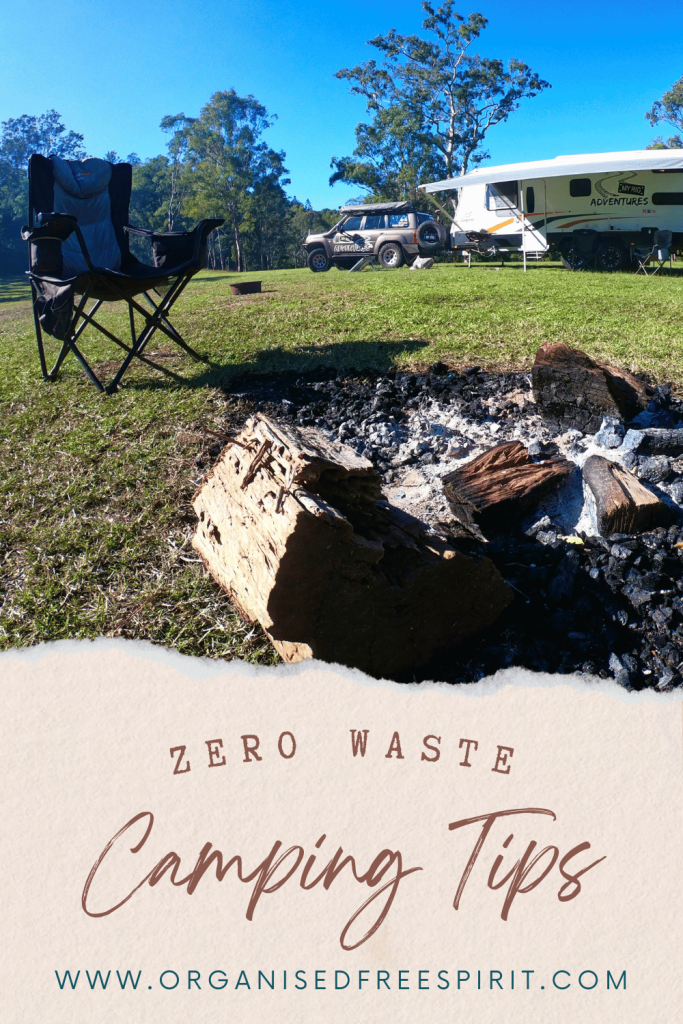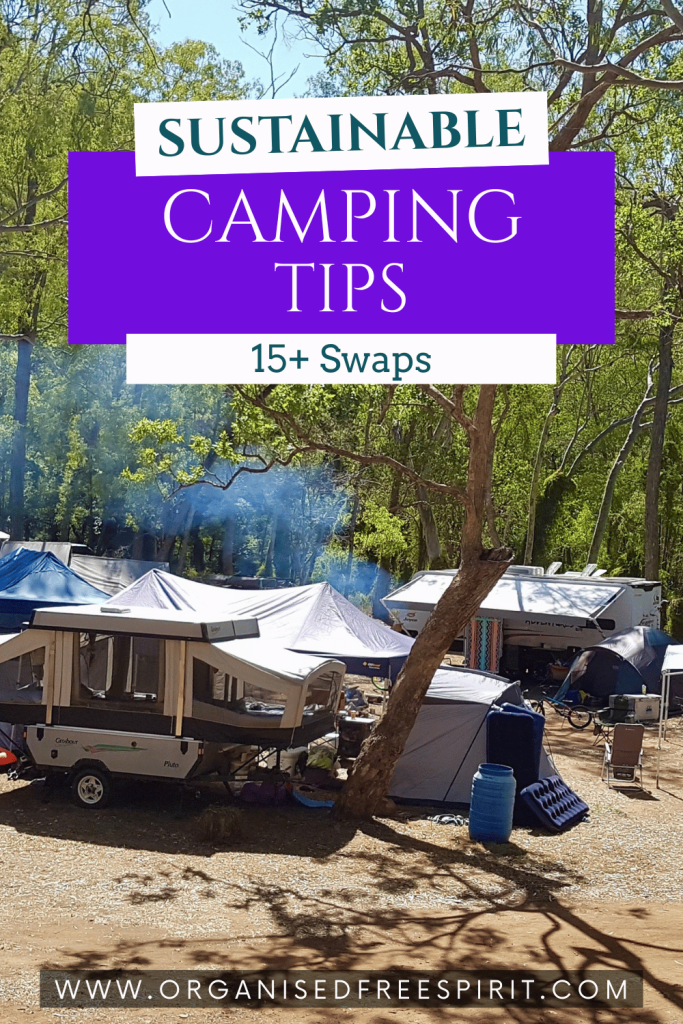
After living on the road full-time in a caravan for several years, I’ve learned that zero waste camping isn’t about perfection — it’s about making better choices where you can. Whether you’re camping for a weekend or travelling long-term, small low-waste swaps can dramatically reduce the rubbish you create while on the road.
Zero waste camping can be especially challenging in outback and rural areas, where bulk food stores and refill stations often don’t exist. That’s why this guide focuses on practical, realistic tips that actually work when you’re travelling — not just in ideal, eco-friendly locations.
If you’re looking to camp more sustainably without adding stress or guilt to your travels, these zero waste camping tips will help you reduce waste, save money, and travel more consciously, no matter where the road takes you.
💡 This post may contain affiliate links (including eBay and Amazon Associates). If you buy through them, I may earn a small commission at no extra cost to you. I only recommend things I trust.
Zero Waste Camping Tips
Water
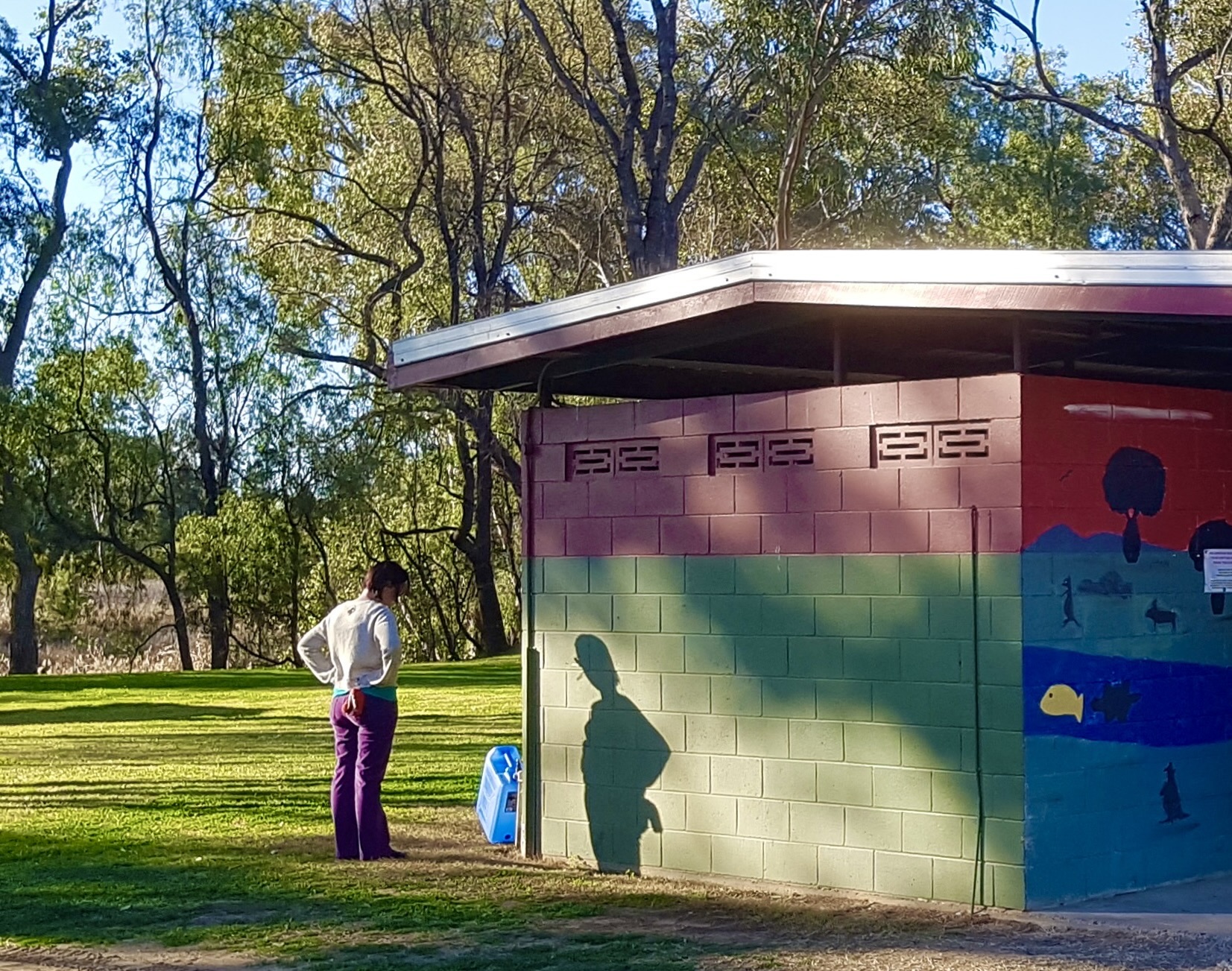
Water is the number one resource you’ll need for camping, whether it’s an overnight trip or a two-week trip.
The rule of thumb is always carry more water than you think you’ll need. It’s wise to anticipate situations where the car may break down, there’s an emergency, or it ends up being a muddy weekend with lots of extra cleaning!
There are a few options for transporting water for camping (on eBay):
Water bladders are great for larger amounts of water and are best stored across the passenger seat floor or in the back of the ute/car. The great thing about a bladder is that it can be rolled up and stored away once it’s empty.
We had a 100L water bladder while living on the road, which made it easier to drive to the nearest town and restock. There are plenty of ways to find water while camping.
20L water jerry cans and 10–20L collapsible water bags are great for smaller quantities of water and are handy to have on your camp table for everyday use.
Rather than buying individual bottles of water, take an insulated water bottle each and keep refilling from the larger water source that you have.

Ice
If you’re storing your food and drinks in eskies with ice, there is a way to avoid plastic-wrapped ice from the servo.
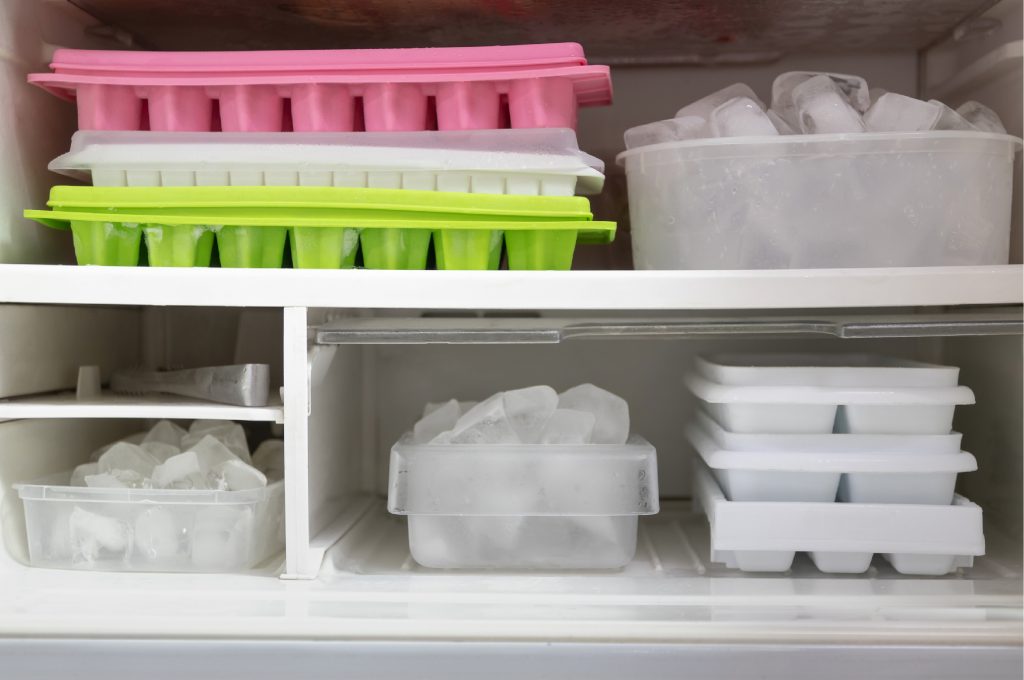
Make your own ice blocks at home if you’ve got the freezer space.
- Block Ice – Use empty containers to freeze up water and make your own big blocks of ice. Take the ice blocks out of the containers and put them into the esky just before you leave.
- Crushed Ice – If you’ve got a spare freezer, invest in a heap of ice trays and make up a big batch of ice cubes.
- Water Bottles – You can fill any plastic water bottles that you’ve already got with water and freeze them up for your esky.
- Frozen Meals – Pre-make your camping meals and freeze them at home. Put them into the esky to create more frozen blocks, plus you’ll be eating through them as you go.
To keep that ice frozen as long as possible, keep your eskies in the shade (you may have to keep shuffling them around as the sun moves throughout the day).
You can also add some salt to your ice for a longer-lasting block, as long as it’s not drinking ice.
Rubbish
When it comes to rubbish while zero waste camping, reducing the amount you’re actually taking with you is the best starting point.
Leave the campsite cleaner than when you arrived. If you see any rubbish lying around, collect it and dispose of it in the best way that you can.
Tips for reducing rubbish
- Buy your snacks and ingredients from a bulk food store where you can fill up your own containers
- Store food in reusable containers & cloth bags instead of plastic bags and packets
- Avoid disposable plates & cutlery
- Buy things that are packaged in boxes and cans, rather than plastic
- Avoid snack packs and individually wrapped food
For any rubbish that you do accumulate while camping, disposing of it in the most environmentally-friendly way possible is the goal.
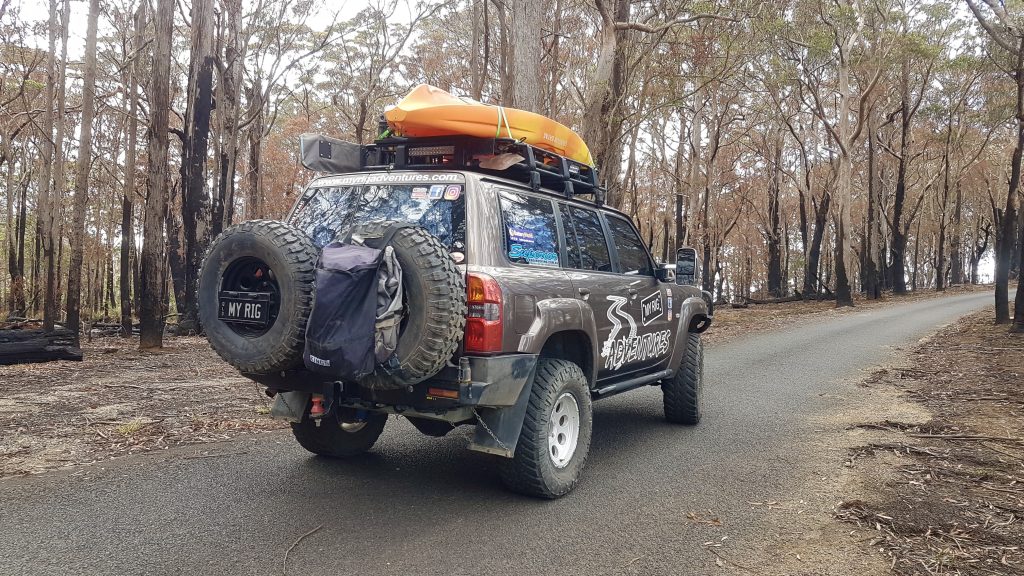
A Dirty Gear Bag (as picted above) that straps to your spare wheel on the back of the car is perfect for storing rubbish, cans, bottles, and recycling until you get home.
Disposal of rubbish
BURN IT – Any paper and cardboard waste can go into the campfire.
RECYCLE IT – Use a dirty gear bag to store things that can go into the recycling bin at home.
CASH IT IN – Find your nearest ‘cash for cans’ depot and recycle any cans and glass bottles that are eligible.
COMPOST IT – Use a lidded bucket or container to store food scraps that can go into your home compost system or to the chickens if you have them. Don’t throw food scraps into the bush – they take too long to decompose, encourage scavengers and can introduce species that aren’t endemic to that environment.
Personal Hygiene
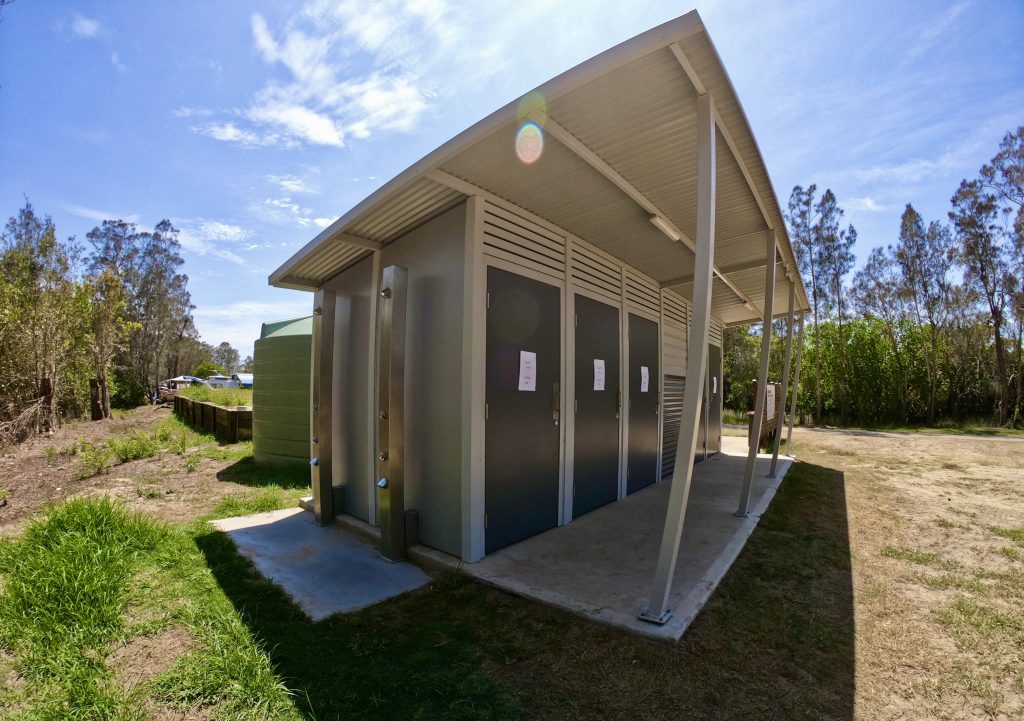
Just because you’re camping doesn’t mean you can’t stay clean and hygienic. Here are some zero waste camping hygiene tips.
Washing yourself
One of the most wasteful personal hygiene consumables that people use while camping is the dreaded wet wipes or baby wipes.
Most baby wipes are made from non-biodegradable materials and plastics. They will still be hanging around landfill holes 100 years after the day you used them.
Instead of cleaning yourself with wipes, use a damp face washer instead. Give it a quick hand wash with a dash of detergent and water in a bucket, then hang it to dry for later use.
Taking a bar of soap in a soap container produces less waste than liquid soap in a pump bottle, plus a bar of soap takes up way less room!
TIP
Remember not to discard soapy water anywhere near waterways, as the rain run-off can still see those contaminants heading downstream.
Never use detergents or soaps in natural waterways.
Periods
For women who are on their moon cycle, try using a menstrual cup. You can easily empty it in the toilet and rinse it in the shower or a bucket of water.
If you’re more comfortable using tampons, opt for organic cotton.
Lastly, if you have the privacy and water facilities, you can use cloth pads. You may be able to rinse each one out after you’ve used it; if not, it’s not a big deal if you’re heading home to a washing machine in the next two days or so. Throw used cloth liners into a lidded bucket of water to soak.
| 🌿 READ: 5 Eco Period Options → |
Nappies
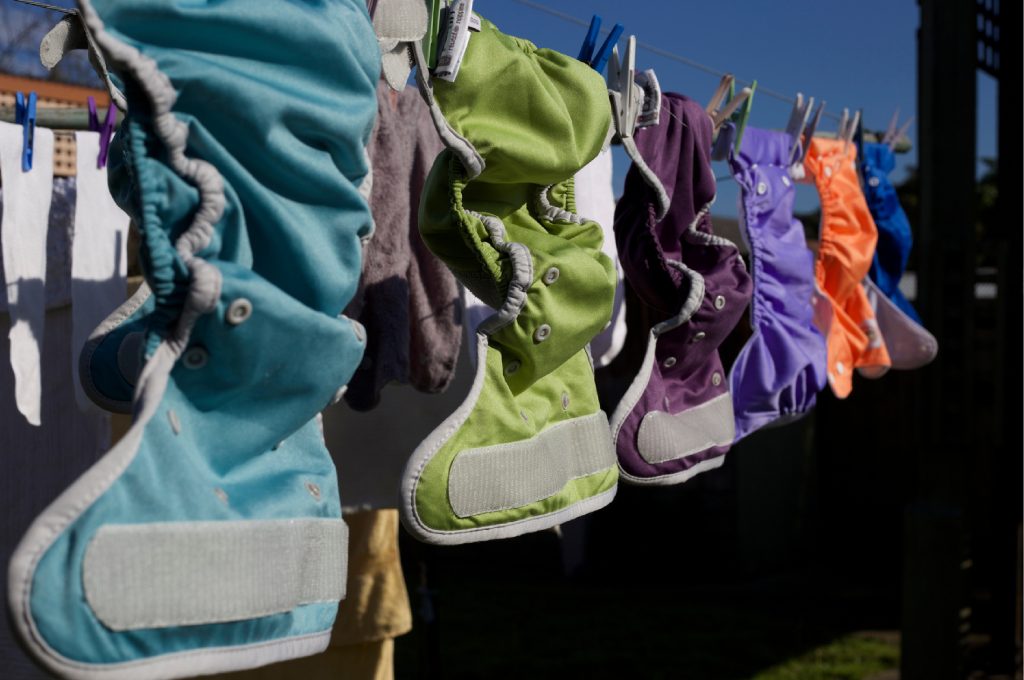
If possible, use cloth nappies. You can either hand-wash them in a bucket and hang them to dry or head to the nearest town (if there’s one close by) and wash them at the Laundromat.
Use damp face washers instead of disposable wipes for wiping messy hands and dirty bums.
If you really can’t wrap your head around cloth wipes for dirty nappies while camping, opt for biodegradable wipes. They’ll still end up in landfill, but they have the possibility of decomposing a little quicker.
The same goes for ‘eco nappies.’ Don’t be fooled by the greenwashing term; the nappies will still end up in landfill for hundreds of years.
The pro for eco nappies is that the manufacturing process is slightly less detrimental to the environment, so they’re still a better option than regular nappies, if you’re going that route.
| 🌿 READ: 10 Eco Baby Tips → |
Toilet Paper

Did you know that most toilet paper you find in the supermarket is actually harvested from virgin forests (naturally grown, untouched bushland)?
For a more sustainable toilet paper solution, go for bamboo toilet paper (a sustainable, fast-growing grass) or recycled toilet paper (made from recycled paper waste).
Sustainable toilet paper is hard to find at Coles and Woolworths, but the good news is that Who Gives A Crap recycled toilet paper can be easily picked up in Aldi supermarkets now in Australia!
| 🌿 READ: All About ‘Who Gives A Crap’ → |
If you need to use the bush as a toilet, here are some tips:
- Head well away from pathways and anywhere that people would walk through
- Dig a hole at least 15cm x 15cm (6 in x 6 in)
- Do your business in the hole
- Use natural toilet paper (leaves, etc.) or minimal plain, unscented toilet paper. A very small amount of toilet paper can be buried; put it into a bag to dispose of in a rubbish bin later
- Fill the hole in and cover with natural materials
Toiletries
For toiletries, go for a bamboo toothbrush and a little jar of homemade deodorant (here’s my recipe). Bars of shampoo and conditioner are a great hair washing option, rather than plastic bottles.
Bar soap in a tin or container is also a much more eco-friendly option than a plastic bottle of liquid soap.
You could try your hand at DIY sunscreen and DIY insect repellent. If that doesn’t appeal to you, opt for natural, zero waste options. Etsy is a good place to source out those types of products.
| 🌿 READ: 17 Eco Bathroom Swaps → |
Power, Cooking & Lights
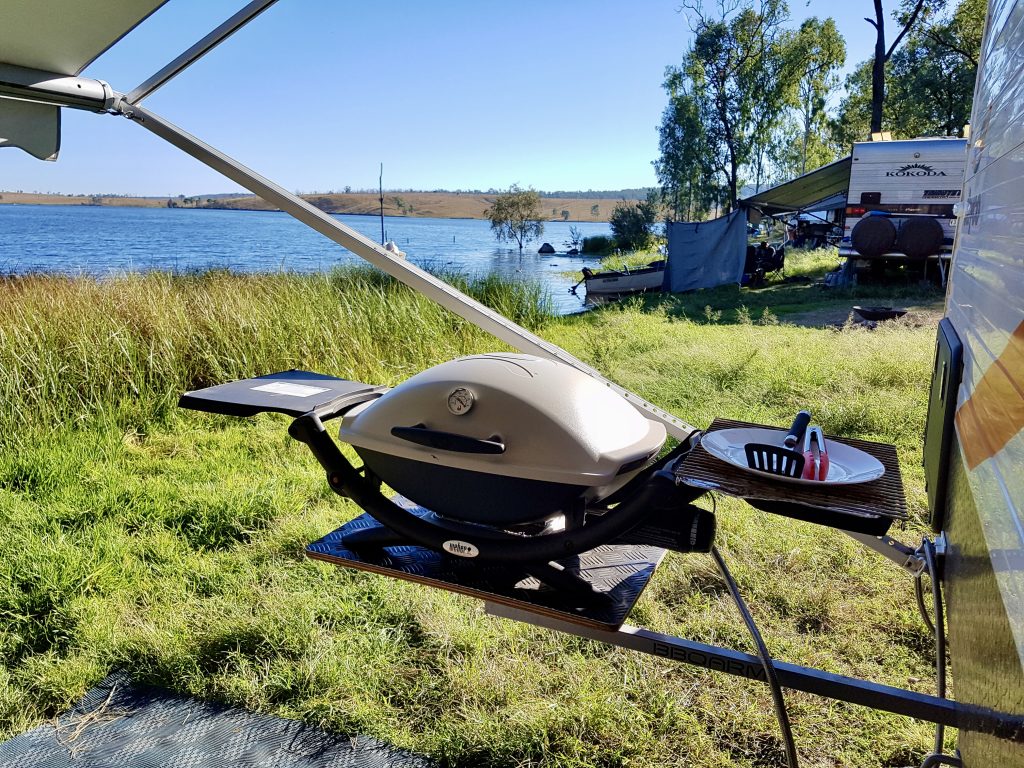
The main things you’re going to need power for are lights, charging devices and cooking. Plus, you’ll need to keep your fridge running if you opt for a 12 volt fridge rather than an esky.
Solar
If you’re going to be camping on the regular, I’d invest in some type of solar and battery setup.
You can get a little USB solar pack with an inbuilt battery that’s perfect for recharging phones, speakers and anything that runs off a USB cord.
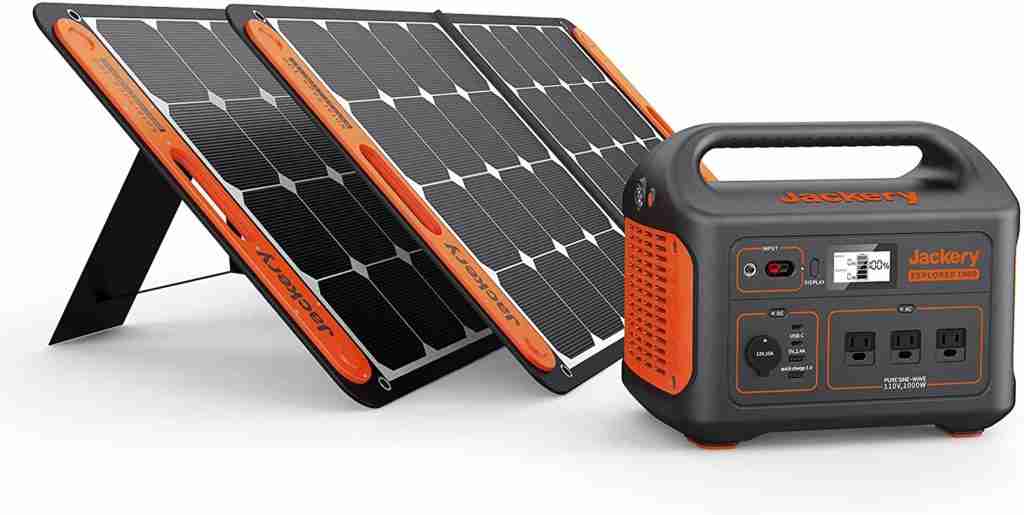
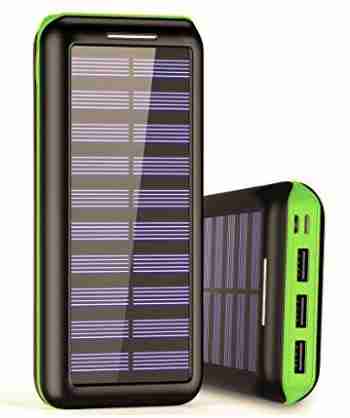
For something that holds a lot more power, look into a solar generator.
The pros of a solar generator versus a fuel generator are that the solar ones are quiet, don’t require fuel and therefore don’t emit any emissions. You can charge them from the sun, by plugging into 240-volt power and even from the car while driving.
Solar Generators:
- No fuel required
- Can charge via the sun, 240-volt power or the car while driving
- Quiet (no noise like a petrol generator)
- No emissions
Solar generators are great for powering a fridge and lighting. You could even run a 12-volt washing machine if you wanted to!
Cooking
The best way to cook while zero waste camping is over the fire. You can use regular stainless steel pots and pans on a BBQ plate or stand. Otherwise, you can opt for heavy-duty cast iron. It’s amazing how many things you can cook in a single cast-iron camp oven!
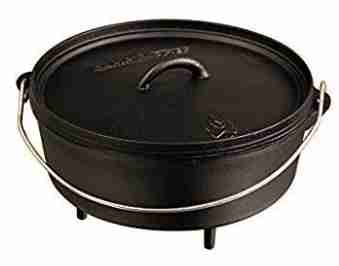
It’s not a bad idea to have a backup cooking device, though, just in case you can’t get enough firewood or it rains.
A little gas camp stove or BBQ is perfect, especially for boiling the kettle in the morning if the fire’s not yet going. A gas BBQ is also a very versatile cooking apparatus for camping.
When I was living in a caravan on the road, I didn’t have an oven, so I literally used a Weber BBQ for four years as my oven and grill!
Lights
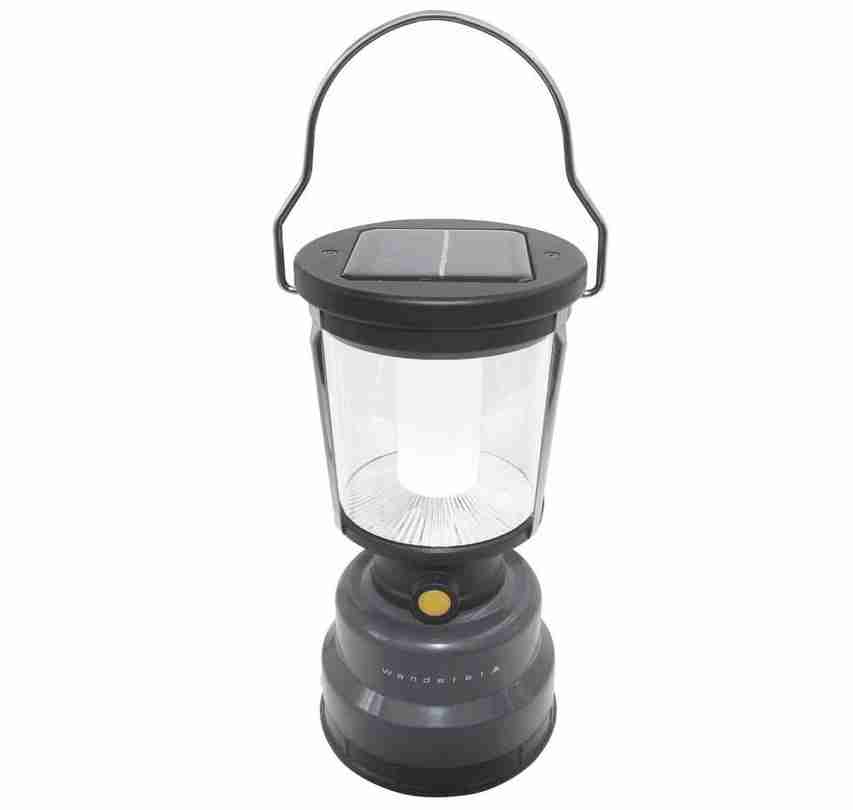
There is a range of USB rechargeable lights, LED strip lights and solar lanterns available. Most of them can be recharged with the sun or via a USB power source.
Utensils & Crockery

For a truly zero waste camping experience, ditch the disposable plates, cups and cutlery that are so common in the campground.
If you really must use disposable plates, go for recycled paper plates that can be tossed into the fire or compostable plates if you’ve got a compost bin at home.
Otherwise, metal and wooden cutlery and utensils from home are perfect. For plates, anything washable and reusable is good. If you’re looking to buy a dedicated camping set, bamboo is a very sustainable resource.
For people who like to eat off ‘real’ plates, Corelle crockery is extremely light. Being made from vitrelle glass makes them chip and break-resistant. I can personally vouch for Corelle, as I had a full set of their dinner plates, side plates and bowls bouncing around in a caravan for years, and they never got so much as a chip in them!
Making sure each camper has their own reusable, insulated cup is essential. Whether it’s a hot cuppa in the morning or a cold drink at happy hour, that same mug can be washed and reused for all occasions.
Take a few beeswax wraps, containers or silicone ziplock bags to store food leftovers to avoid plastic bags and wraps.
| 🌿 READ: 11 Low-Waste Kitchen Swaps → |
Cleaning

Although it’s tempting to pack paper towels, disposable dishcloths and wet wipes, there are far better alternatives for zero waste camping.
A reusable dishcloth, like the Norwex microfibre one, is perfect for washing the dishes and wiping down the table. Just hang it to dry between uses.
A few tea towels for drying dishes and wet hands will do the trick, and again, keep one hanging somewhere handy so that you’re not tempted to reach for paper towels.
To avoid wet wipes, take a tub or bucket for washing your dishes after each meal. Easy as and no need for disposables!
| 🌿 READ: Reusable Cleaning with Norwex → |
Campfire
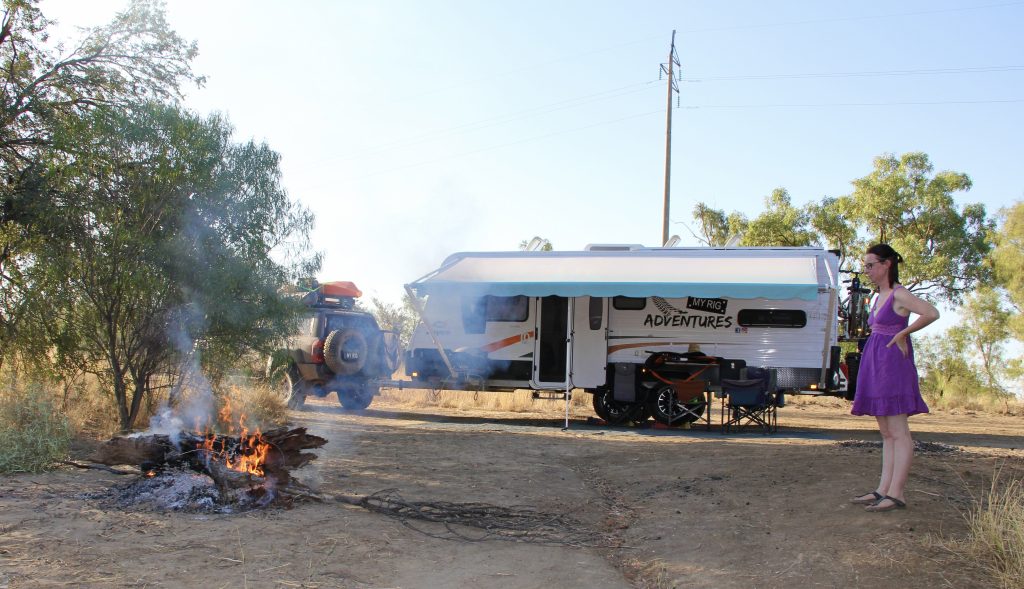
When it comes to campfire considerations, make sure you stick to the designated campfire spots, if there are spaces already provided.
You can forage for fallen timber and kindling for a campfire, but sometimes the popular camps are quite well-scoured. You might have to take your own firewood in, especially if you’re relying on it for cooking.
If you want to avoid using those plastic-wrapped fire starters, check out the options and ideas below.
TIP
Put leftover candles into an empty can and then into a pot of boiling water on the stove.
Once the wax has melted, you can use it to make fire starters.
How to Make Homemade Fire Starters
LINT Fire Starters:
- Put lint & melted candle wax in egg carton slots
- Use a fork to make sure the lint has fully soaked up the wax
- Let it set, then cut up the slots for individual fire starters
SAWDUST Fire Starters:
- Put a spoonful of sawdust into paper cupcake cups or egg carton slots
- Pour melted wax over the sawdust and let them set
SHREDDED PAPER Fire Starters:
- Shred up recycled paper or cardboard with scissors
- Put the shredded bits into paper cupcake cups or egg carton slots
- Pour melted wax over top and allow to set
COTTON WOOL & VASELINE Fire Starters:
- Rub vaseline into cotton wool balls
- Store in a container & use as fire starters as needed
ORANGE PEEL Fire Starters:
- Leave orange peels to fully dry out
- Store in a container & use as fire starters as needed
PINE CONE Fire Starters
- Completely dry out pine cones
- Store in a dry place and use as fire starters as needed
Camping Gear
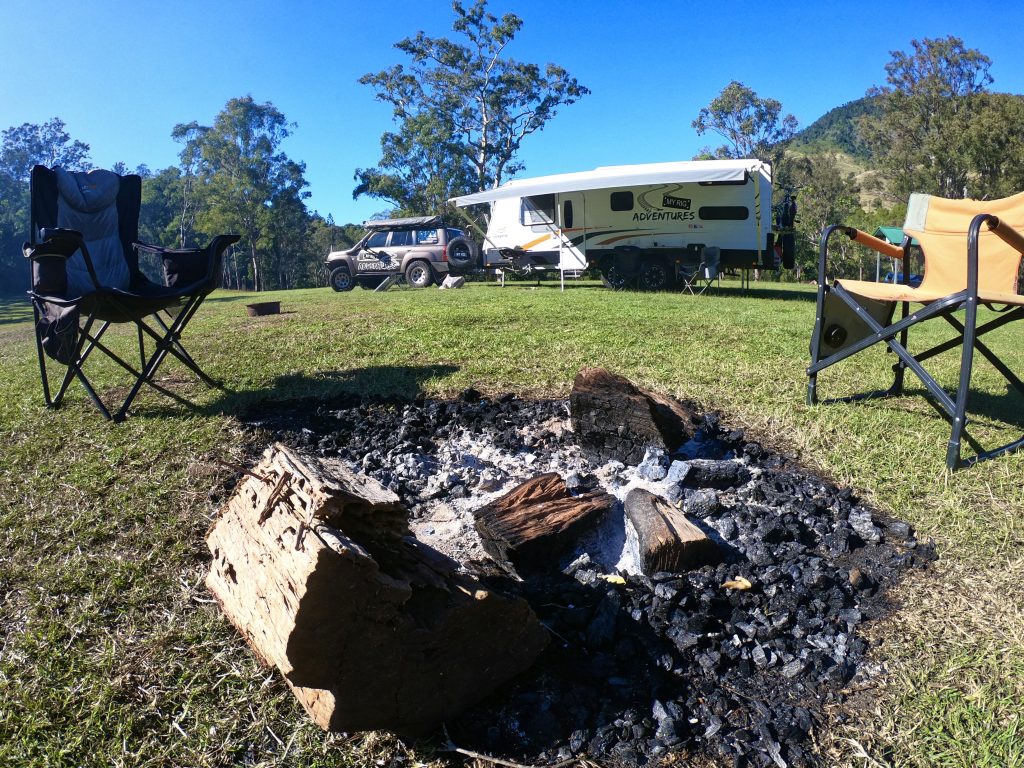
For your camping gear, always buy the best quality that you can afford. That way, your items should last you the longest time possible, reducing the need to throw out and replace things regularly.
If you’re only an occasional camper, maybe you can consider borrowing some items from a friend or family member who has what you need. You can repay the favour by loaning them the items that you have, reducing the need for both of you to buy more stuff.
Another option is to shop for camping items on the second-hand market. It’s amazing how many people buy all the gear and never get around to actually using it! You can grab some really good quality items for a fraction of the cost, eliminating the need to buy new.
Now it’s over to you to have a crack at implementing some new habits into your zero waste camping journey.
More On Zero Waste
Pin It